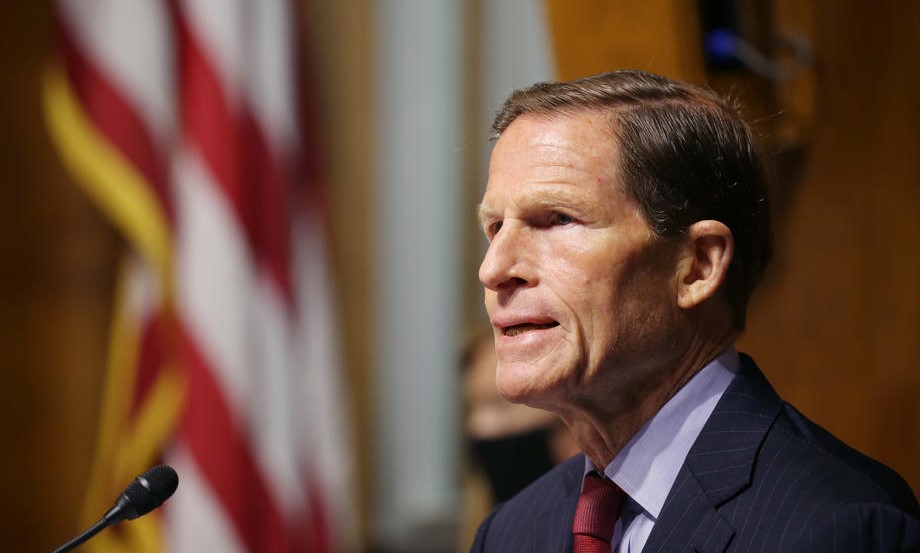
Steve Wittkoff is flying to Moscow. Jared Kushner appears at negotiations. 28-point plans are being published. But American Democratic Senator from Connecticut Richard Blumenthal believes all these moves are merely decorative — until one specific condition changes.
"We can talk about sending Steve Wittkoff here and Jared Kushner there, and all that. But as long as the situation on the battlefield and the domestic situation in Russia are not putting great pressure on Putin — the negotiations are not real."
Richard Blumenthal, Democratic Senator from Connecticut, comment for LIGA.net
Maximalism Without Cost
According to Blumenthal, the key problem with the current diplomatic process is that Russia is making demands for territories it failed to seize on the battlefield. In other words, negotiations are being used to obtain diplomatically what could not be achieved militarily. Responding to such an approach with concessions means rewarding aggression, the senator emphasizes.
This logic is confirmed by the context of November 2025: the American-Russian 28-point peace plan that Wittkoff worked on together with Kirill Dmitriev was characterized by the Ukrainian side as a document that reproduces Moscow's maximalist demands. Even after the plan's revision, perceptions in Kyiv and among European allies remained negative.
What Will Change the Equation
According to Blumenthal, the only path to real negotiations is to make Putin feel the cost of war: through pressure on the battlefield and through domestic instability within Russia itself. In parallel, the senator insists on passing a bill that he co-authored with Republican Lindsey Graham.
The bill provides for a 500-percent tariff on imports from countries that buy Russian oil, gas, and uranium. It takes effect if Russia refuses good-faith negotiations or again violates Ukraine's sovereignty after any agreement is signed. Blumenthal and Graham stated that the bill is supported by more than 80 senators out of 100 — enough to overcome a filibuster.
- Pressure Mechanism: secondary sanctions against China, India, Hungary, and other buyers of Russian energy
- Activation Condition: Moscow's refusal of genuine negotiations or new aggression after an agreement
- Status: 80+ co-sponsors, but Senate voting has not yet been scheduled
"Just" Is Not a Synonym for "Quick"
Blumenthal separately emphasizes: any agreement must be not just a formal ceasefire, but a durable peace. "You can always declare peace, but it must be both just and lasting peace" — that is, not a temporary pause after which Russia regroups for new aggression. According to him, this criterion is precisely what none of the current negotiating formats currently provides.
Notably, even Secretary of State Marco Rubio admitted in April 2025 before a Senate subcommittee: Russia agreed to provide its list of conditions for a ceasefire "within a few days" — but if it turns out to be "the same," Blumenthal and Graham warned of "decisive action."
Since then, Moscow has not changed its conditions. Senate voting on the bill has not taken place. If Putin does not feel real economic costs by the time the next peace plan reaches the table — is there any reason to expect a different outcome than in previous rounds?





