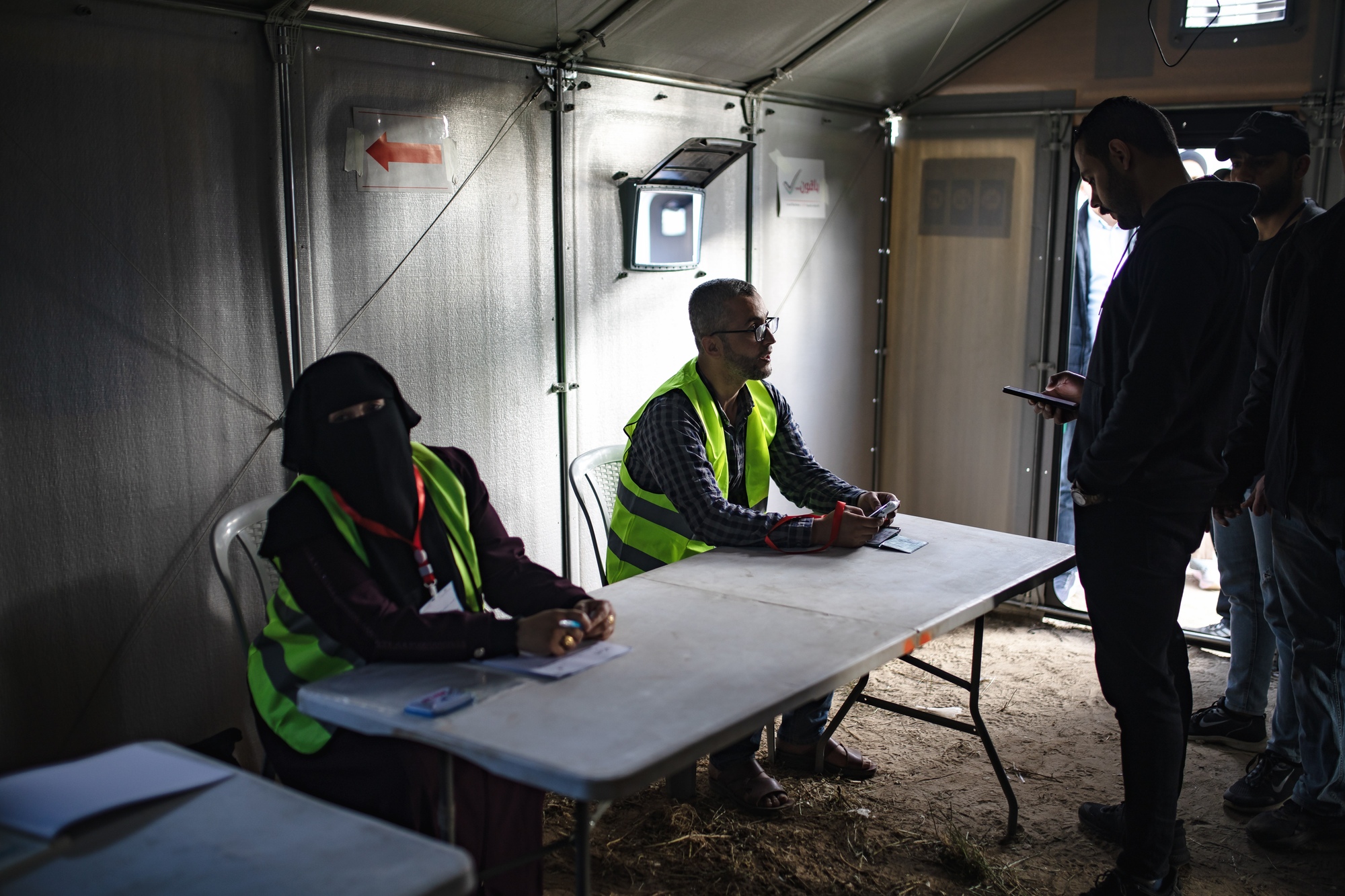
On Saturday, April 25, local elections were held in the Gaza Strip for the first time since 2006. The only city — Deir al-Balah in the central part of the enclave. The only reason why it: less destroyed than the rest.
But "less destroyed" does not mean intact. In December 2024, Israeli forces carried out an airstrike on the Deir al-Balah city council building, killing then-mayor Diab al-Jaru and 10 employees while performing their duties. The strike occurred despite the city having the status of a "safe zone" designated by Israel itself.
Now there are new candidates in place of that council. Voting took place in 12 polling centers: stadiums, women's activity centers, former clinics. Some polling stations were set up in tents — schools are occupied by displaced persons.
Four lists without party banners
There are no formal parties in the elections. Candidates united mainly by tribal or professional affiliations. Four lists are competing: "Peace and Reconstruction," "Deir al-Balah Unites Us," "Future of Deir al-Balah," and "Rebirth of Deir al-Balah."
HAMAS officially boycotts the elections, citing disagreements with the Palestinian Administration — in particular the condition that candidates must accept a framework that includes recognition of Israel. At the same time, observers note: some of the lists are associated with people who sympathize with HAMAS, although the movement has not officially endorsed any.
"A citizen today is looking not for slogans, but for real solutions"
— Rabha al-Bhaisi, resident of Deir al-Balah, Al Jazeera
What stands behind one city
Some Palestinian analysts believe: the Palestinian Administration is using these elections to restore its presence in Gaza, counter HAMAS, and send a signal to the international community — Gaza remains politically connected to the West Bank within a single Palestinian structure.
Palestinians themselves perceive the vote as a symbol of national unity in the face of American proposals regarding Gaza, which many believe are aimed at deepening the rift between Gaza and the West Bank.
- Approximately 70,000 voters had the right to vote — adults registered residents of the city.
- Displaced persons temporarily staying in the city were not allowed to vote — only registered original residents.
- Hundreds of observers from local and international organizations, dozens of journalists and approximately 675 members of electoral commissions were accredited for observation.
Organizers say: the elections are meant not only to restore local government, but also to help attract international funding and prove that democratic institutions are possible even during war.
If the vote in Deir al-Balah is recognized as successful, the Central Electoral Commission plans to expand this format to other cities in Gaza. But the real question is different: will the elected municipality have anything to rebuild — and will it not repeat the fate of its predecessor, destroyed in the "safe zone."





