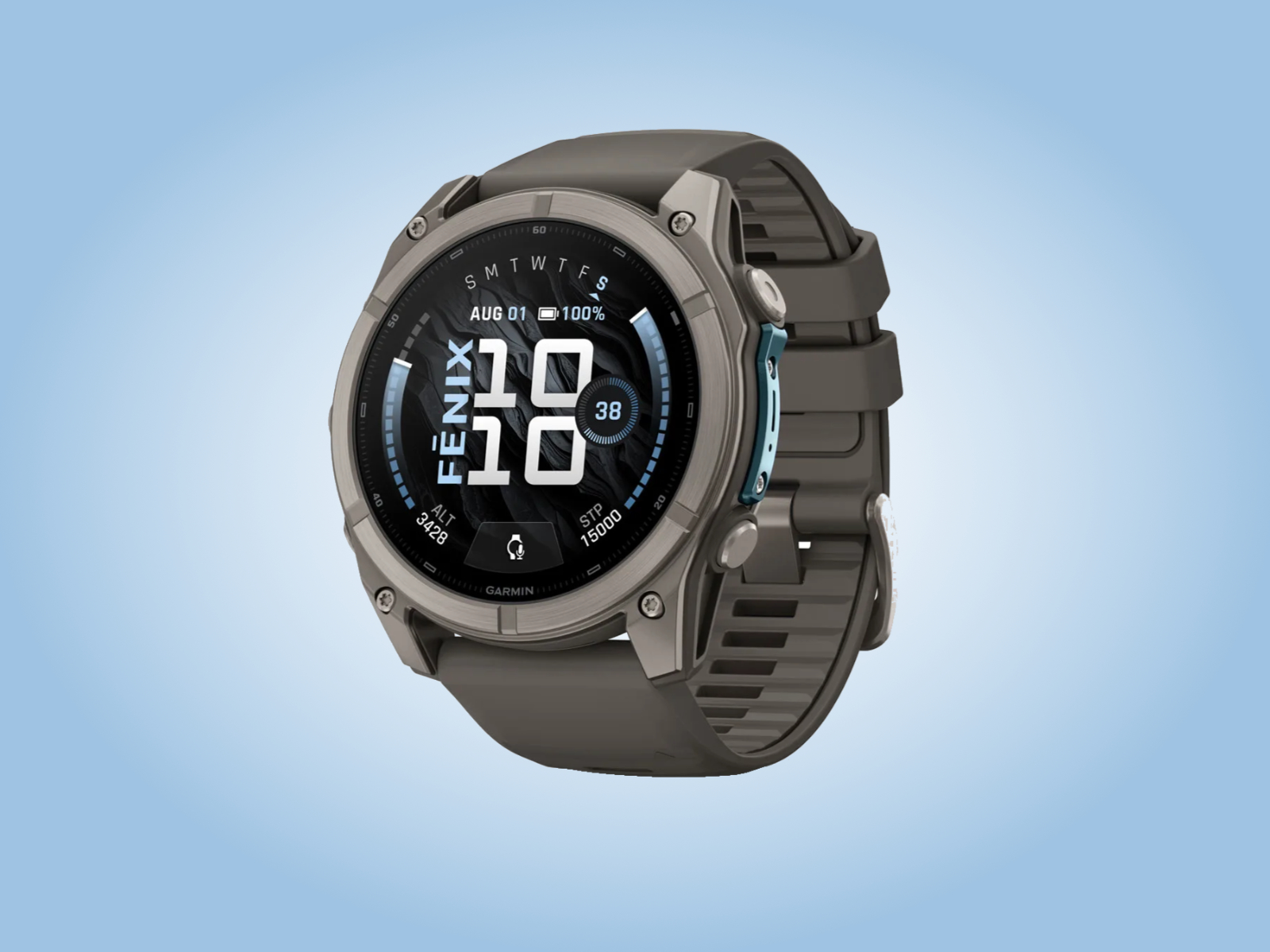
Garmin unveiled the Fenix 9 — a watch that at first glance looks like a standard annual update: a brighter screen, more memory, new training metrics. But behind the numbers lies a more interesting story — about how the company deliberately refuses to compete for the mass market.
What has actually changed
The 1.4-inch AMOLED display became twice as bright as its predecessor, storage increased to 64 GB, and RAM was boosted by 50%. Stamina Curve and Stamina Zones appeared — functions that forecast how much energy remains over a distance — and Garmin Epic, which consolidates health data into a long-term picture. This is no longer just a running watch — it's a tool for planning workloads weeks and months ahead.
Battery life is Garmin's main argument: 10, 16, or 29 days depending on case size (43, 47, 51 mm). By comparison, the flagship Apple Watch holds a charge for a day or two. This is a fundamental difference in philosophy: Apple makes a smartphone on your wrist, Garmin makes a survival device that doesn't need to be taken off at night.
Practical angle: what you're really paying $1000 for
A price tag of $1000 to $1100 is not just "an expensive gadget." It's an audience filter. Fenix 9 is bought not by those who want to look good with a watch, but by those who need critical battery life in the mountains, at ultramarathons, or on expeditions where there's no power outlet for weeks.
Compared to basic fitness trackers at $100–200, the Fenix 9 justifies its price only for a narrow group — professional athletes, guides, military personnel, and travelers in autonomous conditions.
For an average user who runs on weekends or goes to the gym, the difference between the Fenix 9 and a model costing a third of the price is mostly cosmetic: a slightly brighter screen and a few metrics that 90% of people will never access.
Garmin's strategy in market context
While Apple and Samsung compete for scale and ecosystem, Garmin builds a brand reputation for those who "really" train. It's a risky, but consistent strategy: lower sales volume, higher margins, a loyal audience that won't switch to competitors due to the lack of NFC payments or messengers.
Sales kick off on August 28. The question isn't whether someone will buy the Fenix 9 — demand among Garmin fans is guaranteed. The real question is this: will this niche strategy withstand the pressure when Apple Watch Ultra with each generation approaches 20+ days of battery life, erasing Garmin's main advantage.