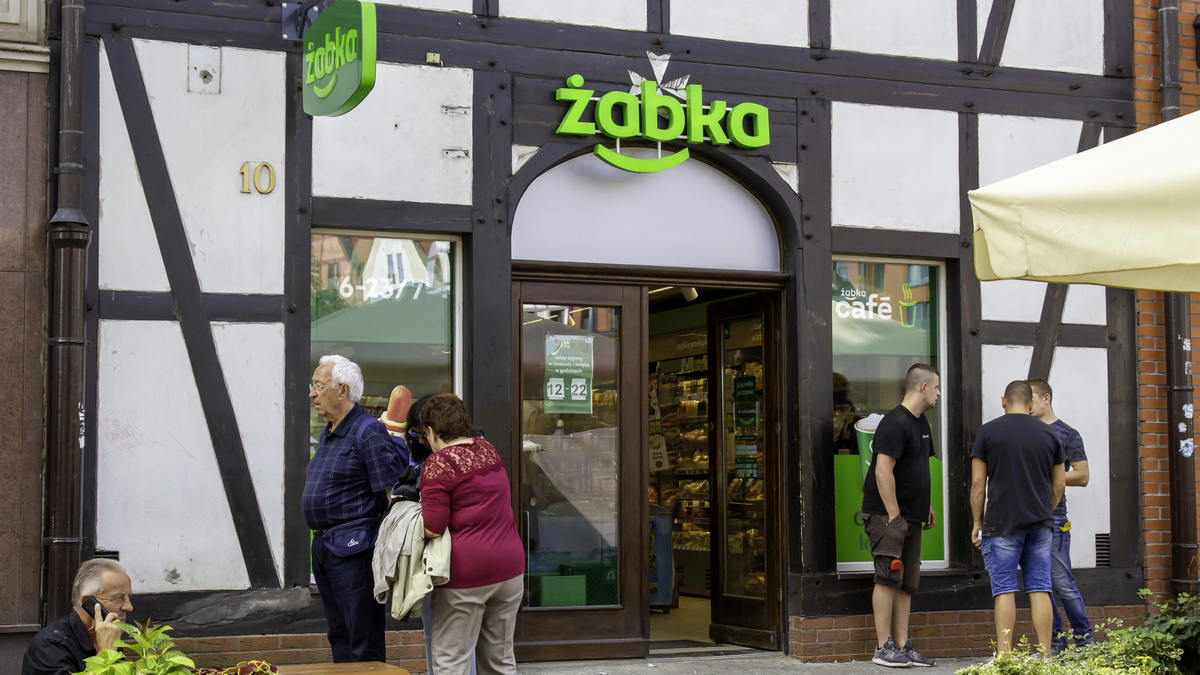
Last year, Żabka was a story about how a Polish green-colored startup defeated major retail on its own turf: over 10,000 stores in a "two steps from home" format, franchises for small entrepreneurs, and a stock exchange debut in 2024 with a valuation in the billions of dollars. Now it's a story about how a Canadian giant buys such a company, one that recently lost a battle for the Japanese 7-Eleven chain and is looking for where else to expand.
Alimentation Couche-Tard announced a tender offer for 100% of Żabka Group shares at 32 zlotys per share — approximately $8.7 billion for the entire company. The purchase will be made through the Polish subsidiary Circle K Polska, with applications accepted from August 27 to September 25, 2026.
The deal is already effectively closed — before the tender launch
Formally, Couche-Tard currently owns no Żabka shares. However, the company has already reached an agreement with majority shareholders and management to sell 57.245% of shares — enough to control the company before minority shareholders even have time to read the terms of the offer. This is typical tactics for deals of this scale: first secure the consent of decision-makers, then make a public offer to the rest.
If Couche-Tard receives 95% of votes, the company plans to forcibly buy out minority shareholders' shares and delist Żabka from the stock exchange — meaning the Polish retailer, which traded publicly for less than two years, will become private again, only under the Canadian flag.
Why now and why Poland
For Couche-Tard, this is the largest purchase in the company's history. The logic is simple: after a failed attempt to buy Seven & i Holdings — a $46 billion deal that could have become Japan's largest foreign acquisition — the Canadians were looking for an alternative platform for expansion. Poland, with a population of about 38 million and a dense network of convenience stores, proved to be a more convenient target: a smaller market, less political resistance, and ready infrastructure with thousands of sales points.
Interestingly, back in July, Japanese Seven & i Holdings itself was considering buying a stake in Żabka — and it was rumors about this deal that drove up the Polish company's valuations. But on July 27, negotiations fell through: the parties could not agree on terms. Couche-Tard apparently took advantage of the pause and made its own offer just a few weeks later.
"The bidder intends to implement a long-term strategy that provides for cooperation between the bidder's group of companies and the company, in particular through the exchange of best practices, knowledge, as well as ensuring supervision and support in making strategic decisions," the official stock exchange announcement states.
What this means for customers in a Polish store
For millions of Poles who visit Żabka daily for coffee or ready-made lunch, a change of ownership is unlikely to be immediately noticeable — the franchise model will remain, the brand will likely stay as well. But in the long term, it means integration into the global Circle K network with its procurement standards, logistics, and digital services. For tens of thousands of franchisees, this could mean both new opportunities and less autonomy in decisions that were previously made by Polish management.
The main question now is whether minority shareholders will agree to the proposed price, or whether someone will try to outbid the offer the way Seven & i tried to do. If the deal goes through without complications, Poland will have another example of how local business success ends with a sale to foreign capital — a scenario well known to the Ukrainian market as well.