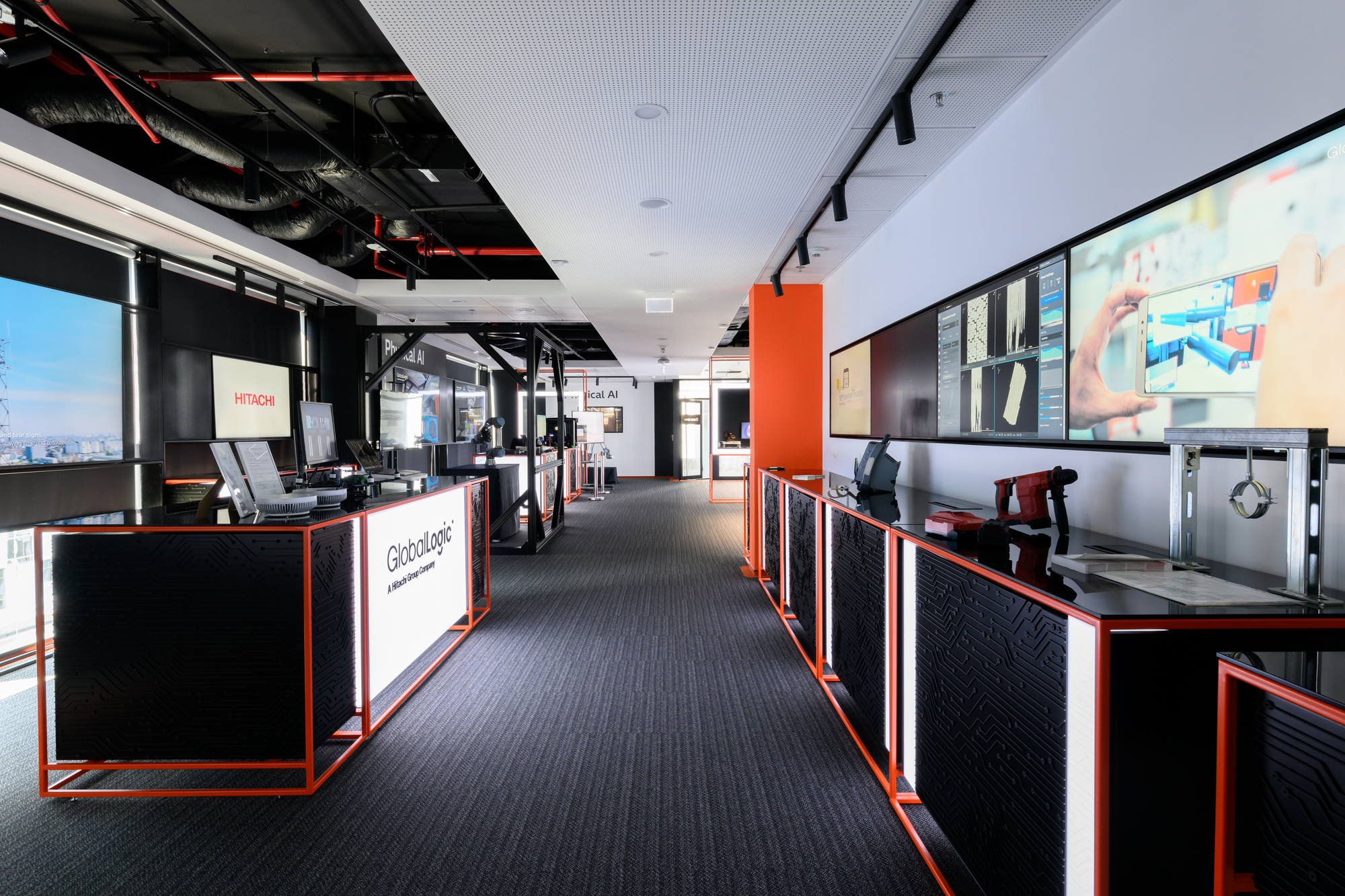
An engineer writing code for an industrial robot or a factory's digital twin usually never sees how their solution looks "live" — in metal, with cameras and manipulators. GlobalLogic, a company from the Hitachi group with a powerful engineering base in Ukraine, decided to change that and opened Europe's first Physical AI demo zone in Krakow — a physical space where clients can see robots, drones, and digital twins in action, not just in presentations.
What they're showing in Krakow
The demo zone covers five areas: cognitive assets, digital twins and simulations, autonomous operations, robotics and automation, and autonomous infrastructure. Among specific projects are data collection systems using computer vision, infrastructure monitoring with drones, robotic complexes, and tools for equipment maintenance and quality control.
The company emphasizes that at its foundation is over 25 years of experience in developing embedded systems, computer vision, and industrial automation, which is now being applied in industry, transport, medicine, and critical infrastructure.
Why this isn't just PR, but money
According to industry analysts, the European Physical AI market was valued at $1.18 billion in 2025 and is projected to grow to nearly $19 billion by 2035 at an average annual growth rate of about 32%.
This is not an abstract figure — behind it stand contracts for implementation, production line upgrades, and consequently, demand for engineers who can combine software with hardware.
Analysts also note a structural shift: acute labor shortages, rising industrial salaries, and the need for uninterrupted 24/7 supplies are actively pushing companies toward robotics adoption.
For business, this means one thing — investments in Physical AI right now are not a luxury, but a way to keep production afloat where there simply aren't enough people.
Krakow instead of Kyiv — and what it means for Ukrainian engineers
GlobalLogic has one of the largest engineering teams precisely in Ukraine — and it's Ukrainian teams who for years have been developing solutions for computer vision, embedded systems, and industrial automation, which are now being demonstrated to Polish and European clients. But the company is building its physical "storefront" for investors and customers in Krakow — a city without air raid alerts, with predictable logistics, and EU member status.
This is a mundane, but important economic logic of war: intellectual work remains in Ukraine, while capital investments and showrooms settle where risk is predictable. For the labor market, this means that jobs for mid-level and senior engineers aren't disappearing, but new production and demonstration facilities — around which added value is formed — are being built abroad.
- GlobalLogic recently presented the VelocityAI platform for faster AI implementation in business.
- The company shared what skills entry-level IT specialists will need in 2026.
- In 2025, Hitachi, GlobalLogic's owner, acquired German Synvert — another step toward consolidating engineering capabilities in Europe.
The question for the coming years is simple: will this model — development in Ukraine, demonstration and capital in Europe — become a permanent architecture for the entire Ukrainian IT sector, and what will it mean for local investments when (and if) the security situation allows building such centers at home?