What happened
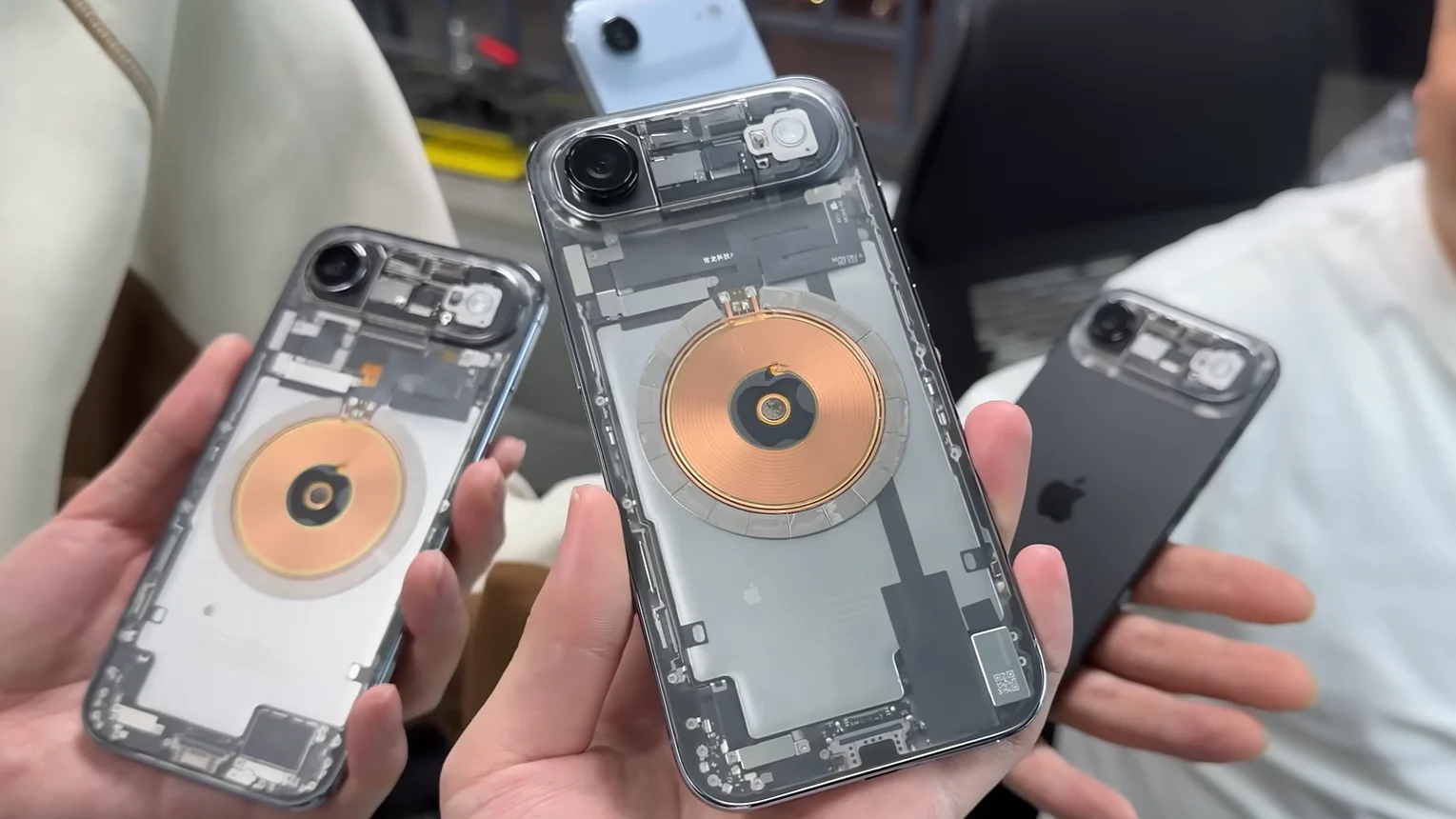
In a YouTube video a Taiwanese blogger demonstrated two key modifications to the iPhone Air: he made the back panel completely transparent by removing the opaque coating using laser processing, and integrated a physical nano‑SIM tray into the housing of a model for which Apple provided only eSIM.
According to the video's author, during the work he preserved the MagSafe module, but the battery, logic board and other protective structural elements are now visible. To install the slot he had to make a cutout in the bottom of the case, remove the stock Taptic Engine and replace it with a more compact vibration motor, and connect the SIM reader to the board via micro‑soldering.
"The device works successfully with a physical SIM card and connects to the mobile network."
— Taiwanese blogger, author of the YouTube video
Technical consequences and risks
The modification looks impressive, but has a number of significant side effects. According to the author, the thermal pads were removed during processing, which changed heat dissipation: the smartphone throttles more quickly under load. The device also loses its factory water- and dust-resistance under the IP68 standard, and warranty service becomes invalid.
In addition, micro‑soldering and interference with radio-frequency circuits carry risks: unstable connections, interference or antenna damage can, in the long run, reduce connection quality. There are public cases where replacing and inserting slots into phones led to mobile connection problems for the end user.
What this means for users and the market
On the one hand, such tuning is an example of the ingenuity of communities and users' desire to have options (for example, a physical SIM). On the other hand, it is a clear reminder of the trade-off between aesthetics/functionality and reliability and service. For the average user the risks outweigh the benefits: loss of warranty, reduced performance under load and lack of water protection are strong arguments against such interventions.
From a broader perspective, incidents like this highlight the importance of service independence and repairability — topics that matter for Ukraine as well. Modding skills and local workshops can compensate for service shortages in crisis conditions, but systemic solutions (manufacturer-provided options, transparent warranty policies) would be a better outcome for consumers.
"It's an interesting technical trick, but not a recipe for daily use — especially if you rely on stable connectivity and service support."
— representative of the tech community/analyst
Summary: the modification attracts attention and demonstrates technical skill, but at the same time raises questions about safety, thermal management and service independence. Whether it's worth the risk depends on the user's priorities; but manufacturers and the market should listen to the demand for greater flexibility and repairability.