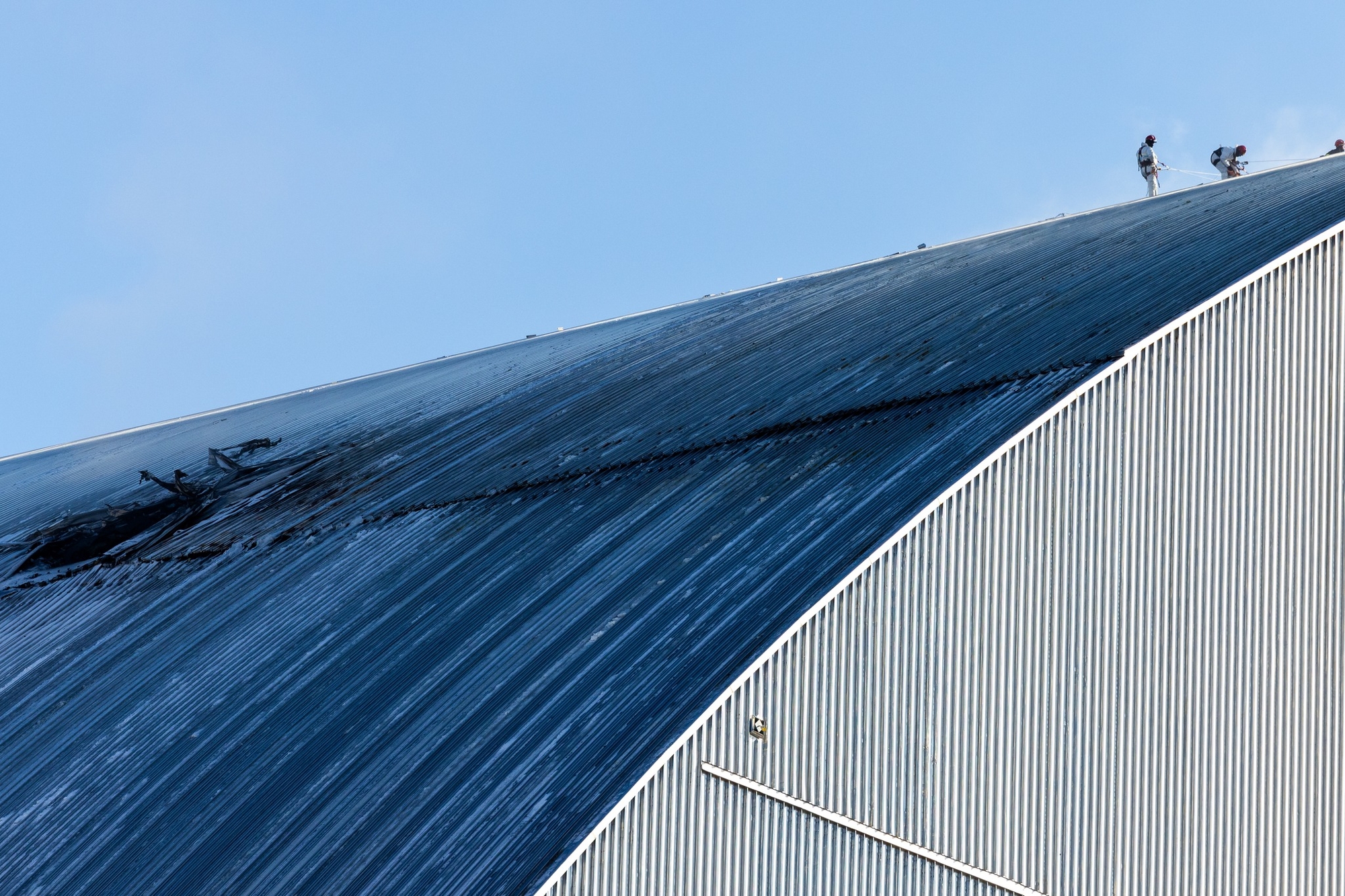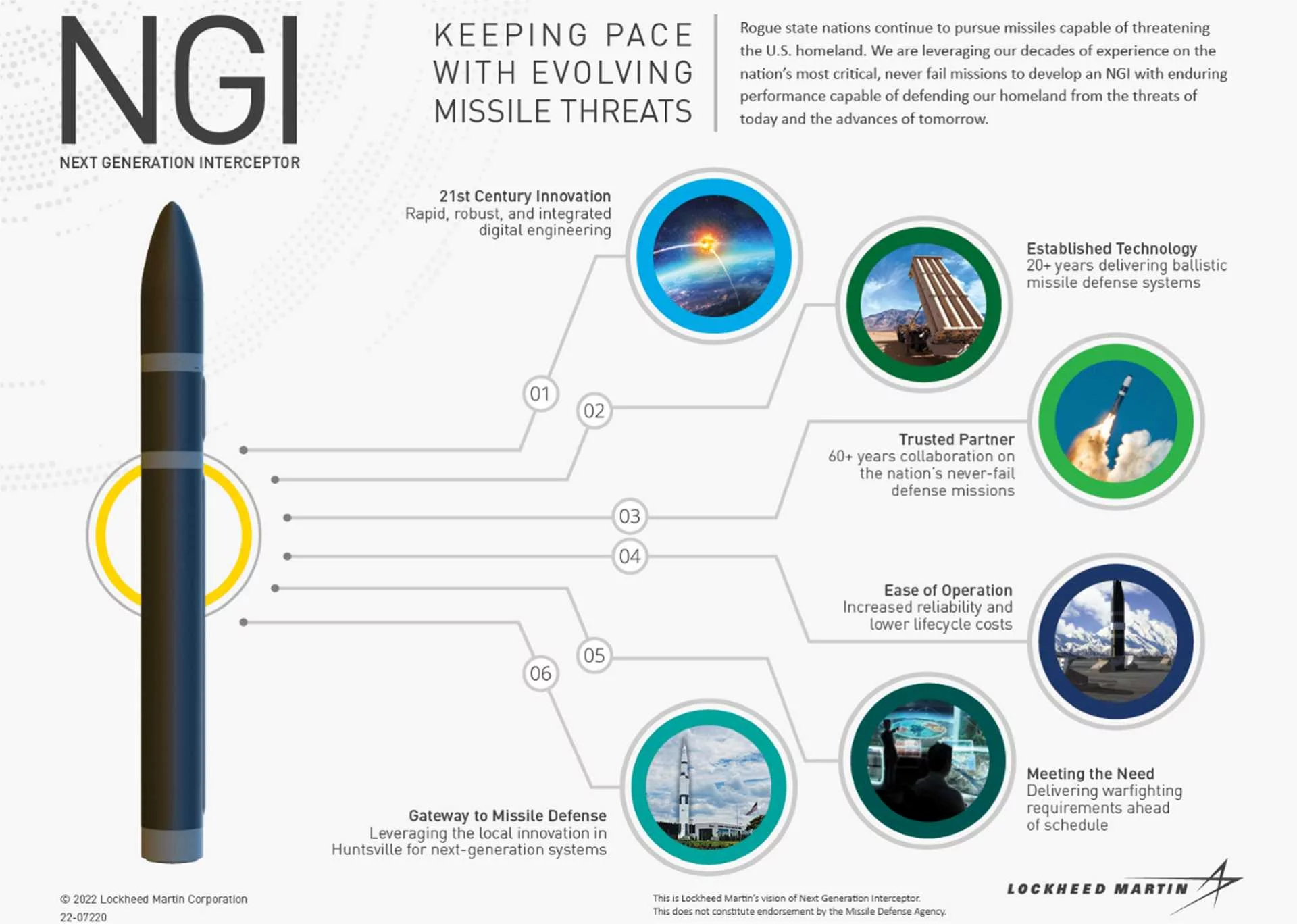
On June 1, Lockheed Martin opened the Missile Assembly Building 5 (MAB-5) facility in Cortland, Alabama — 88,000 square feet of specialized production space for Next Generation Interceptor (NGI) missiles. The opening ceremony was attended by Lieutenant General Bryan Gibson, deputy director of the Golden Dome program.
What is NGI and why it matters
NGI is a replacement for the current Ground-Based Interceptor (GBI) systems, which have been on alert in silos at Fort Greely in Alaska and Vandenberg Space Force Base in California since 2004. Currently, 44 GBIs are deployed. The Pentagon calls the program the largest update to ground-based missile defense in two decades — the system is designed to destroy intercontinental ballistic missiles in the exoatmospheric phase of their trajectory, before they enter the atmosphere over the United States.
Lockheed Martin and its partner Aerojet Rocketdyne (an L3Harris division) were selected as the sole contractor in April 2024, a year and a half ahead of the originally scheduled competition timeline. The Missile Defense Agency (MDA) cited budgetary priorities as the reason, effectively ending competition with the Northrop/RTX team.
The factory exists — but schedules have slipped
MAB-5 employs approaches from the THAAD and hypersonic systems programs: digital product twins, automated workflows, direct connection of design data to production stations. In parallel, a second facility in Troy, Alabama, will handle hardware integration of large-scale components.
However, the factory opening comes against the backdrop of already documented delays. In 2025, MDA acknowledged an 18-month delay, attributing it to supply chain disruptions and problems with the solid rocket motor design — a new engine developed from scratch.
"There are no unresolved fundamental concerns with the system design at this stage"
— Lieutenant General Heath Collins, director of MDA, testifying before the Senate Armed Services Committee, April 2026
According to Collins, NGI will complete the design phase by the end of 2026, move into qualification testing, with first deliveries planned for 2028. Flight tests are scheduled for 2029. However, the MDA director noted that he continues to closely monitor risks in three components: the solid rocket motor, the inertial measurement unit, and sensor systems.
Golden Dome and potential expansion
The NGI program is part of the Trump administration's ambitious Golden Dome air defense concept. According to Defense News, the official system architecture has not yet been publicly released, but it will likely involve purchasing significantly more NGIs than the current 44 GBIs. Boeing is already expanding the number of silos at Fort Greely by 20 units — and MDA has not yet decided whether to fill them with old GBIs, new NGIs, or both types.
The factory is scaled for increased production rates: if Golden Dome receives full funding and Lockheed solves the engine problem without new delays, MAB-5 will become the key hub for deploying the entire system.
The question is not whether the factory opened — it did. The question is whether the solid rocket motor will pass qualification testing without new surprises: if not, the 2028 timeline will slip again — and then the new silos in Alaska will sit empty longer than planned.