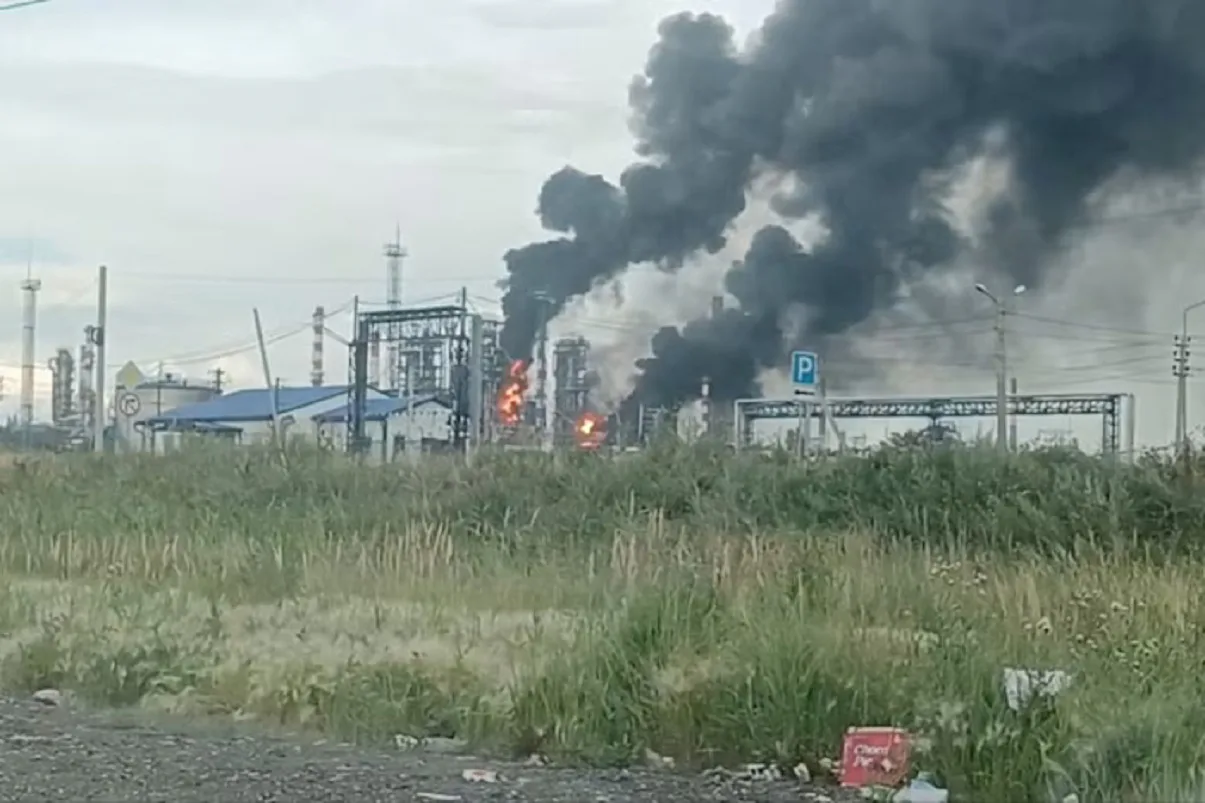
Ukrainian drones have disabled up to 42.7% of Russia's calculated oil refining capacity — according to data provided by the General Staff of the Armed Forces of Ukraine as of early July 2026. Financial Times estimates the decline in refining in June at 28% from the five-year average and 35% below nominal capacity: 4.1 million barrels per day instead of the usual 5.6 million.
Systematic campaign, not a series of incidents
Since the beginning of 2026, strikes against Russian oil refining facilities have been carried out at least 194 times. Eight refineries sustained damage in just the last month. Notably: all 11 of the country's largest refineries have been hit, including the Omsk refinery — Russia's largest gasoline producer, located 2,500 km from the front lines.
The strike on the Omsk refinery of Gazprom Neft is notable technically. According to Reuters, a drone ignited the primary refining unit CDU-10, which provided 38% of the enterprise's capacity. Simultaneously, CDU-11 shut down due to damage to adjacent infrastructure. The refinery was immediately withdrawn from trading on the St. Petersburg Commodity Exchange.
"Direct damage to oil and gas infrastructure from drone attacks exceeded 100 billion rubles, and accounting for lost production and secondary effects — over one trillion rubles"
Yevhenii Borovikov, deputy general director of the insurance broker Mains (quoted by National Security Journal)
The Kremlin responds administratively — and this is a symptom
Moscow banned diesel fuel exports and simultaneously began importing it — on the domestic market, production has fallen to approximately the level of its own consumption. The government zeroed tariffs on imported petroleum products for another year and introduced railway discounts for suppliers. According to Kyiv Post, Russia has already imported at least 60,000 metric tons of gasoline by sea from India.
In parallel, refineries were permitted to produce lower environmental class fuel for the domestic market — essentially a return to standards the country officially abandoned. Putin publicly acknowledged fuel shortages in certain regions on June 28 — the very fact of such an admission is atypical for Kremlin communications.
The front-line dimension
Baker Institute analysts note a characteristic gap: crude oil exports remain stable, while petroleum product exports are falling. This means Russia is redirecting crude oil to external markets to preserve currency inflows — but the domestic deficit of refined products is growing. Fuel shortages are already affecting the logistics of front-line units: according to former UAV operator Dmytro Putiatyi, fuel problems are being recorded directly in the enemy's battle formations.
- Fuel production in June — 25% lower than a year ago
- Current output — approximately 20% less than domestic demand
- Over 60 storage tanks destroyed or critically damaged (58% — petroleum products, 42% — crude oil)
- Total losses in the oil refining industry since August 2025 — $13.5 billion
Vladislav Vlasyuk, sanctions commissioner at the Office of the President, reported that Russia's dependence on imported petroleum products is already being discussed as a pressure point in preparations for the EU's 22nd sanctions package.
If the EU closes imports of Indian and other "re-export" gasoline to Russia — which is precisely what Vlasyuk says is being discussed — the question is not whether a shortage will arise, but how quickly it transforms from a civilian problem into a military one.