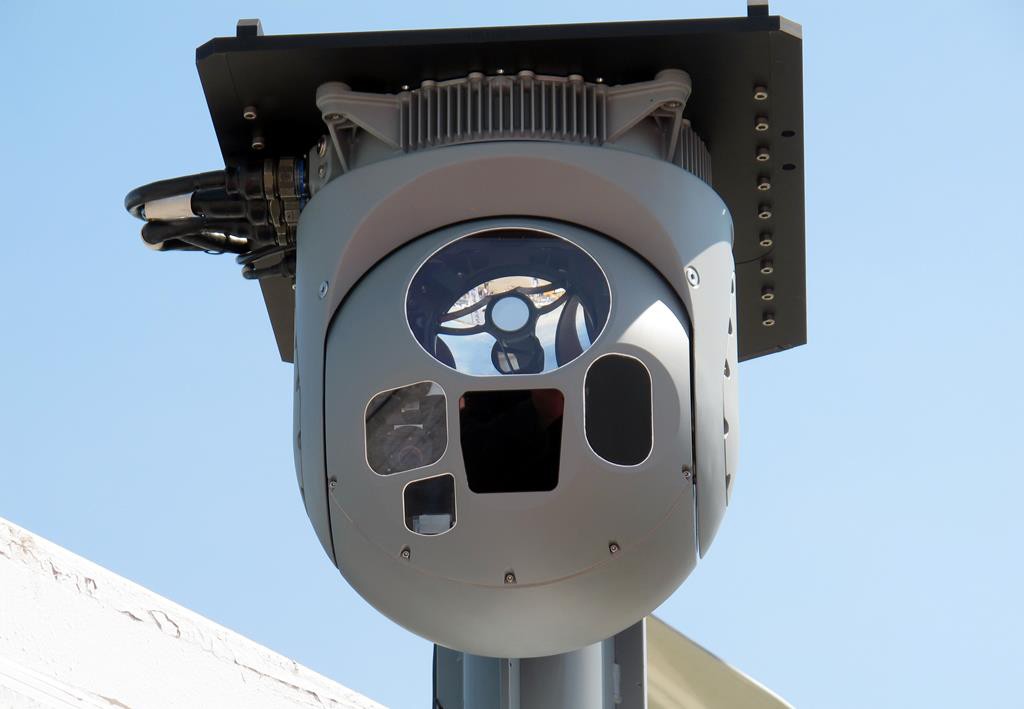
Even an experienced fighter cannot continuously stare at a monitor. This very gap between a hostile drone appearing in the frame and the moment a person realizes it has become the starting point for an entire class of new Ukrainian developments — automatic sensor detection systems for the front line.
What is being developed and why
These systems aim to solve a specific problem: military personnel are forced to spend a significant portion of their shift on passive situation monitoring and manual transmission of data about enemy movement. Automating these functions is not about convenience, but about survival: the reaction time to an FPV drone or infantry approach is measured in seconds.
One example of this approach is the I-SEE system, developed by a Ukrainian company. It operates completely offline on standard consumer equipment with GPU, detects targets as small as four pixels at distances up to 2.5 km depending on optics, and automatically notifies military personnel through messengers with photos and coordinates in milliseconds after threat identification.
The system tracks up to 100 simultaneous targets at speeds from 30 to 60 frames per second. The key advantage of offline mode: electronic warfare systems cannot reliably detect FPV drones on fiber-optic control or relay drones because they do not emit radio signals during an attack. The optical approach fills precisely this blind spot.
«A closed monolith at the front is always lagging behind reality»
— I-SEE engineers, on the reasons for transitioning to an open development ecosystem
Brave1 as a support structure
Development is being conducted, in particular, within the grant program of the Brave1 defense cluster. In August 2025, the Supervisory Board of the Innovation Development Fund approved an updated Brave1 grant program, which covers, among other things, autonomous sensor systems. Priority areas include remotely controlled autonomous sensors and electronic reconnaissance tools with the function of automatic detection and classification of various types of targets — UAVs, ground control stations, enemy electronic warfare and radar systems.
Brave1 not only provides funding but also assists with expertise, testing, NATO standards codification, and technology implementation in the armed forces. Grants reach up to 8 million UAH for startup development and significantly more for scaling to specific tactical and technical characteristics.
Technical context: where humans yield to algorithms
The demand for automated detection is not a Ukrainian specificity, but Ukraine is developing it in combat conditions that set parameters more precisely than any test site. Delegating target recognition to AI-based automatic recognition systems reduces the impact of human limitations and allows fixing targets at distances up to 2 km. Automating object identification reduces the burden on personnel who experience the effects of fatigue, stress, and varying levels of training.
In parallel, the Defense Tech Innovations forum from Brave1 demonstrates related solutions: programs that automatically analyze aerial photographs from reconnaissance UAVs and show the location of enemy equipment and objects, reducing time spent on routine work and accelerating decision-making.
- Detection of fiber-optic FPVs — a key challenge because electronic warfare systems cannot detect such drones
- False positives (birds, debris, glints) — the main technical problem being solved through training models on real combat data
- Offline operation — a mandatory requirement for the front line where internet is unstable or unavailable
- Open ecosystem — transition from monolithic systems to integration with various cameras, weapons, and messengers
If systems pass large-scale field testing and confirm declared characteristics in conditions saturated with electronic warfare on the front, the next question is not technical but organizational: whether logistics will keep pace with the development speed that the developers themselves are setting.







