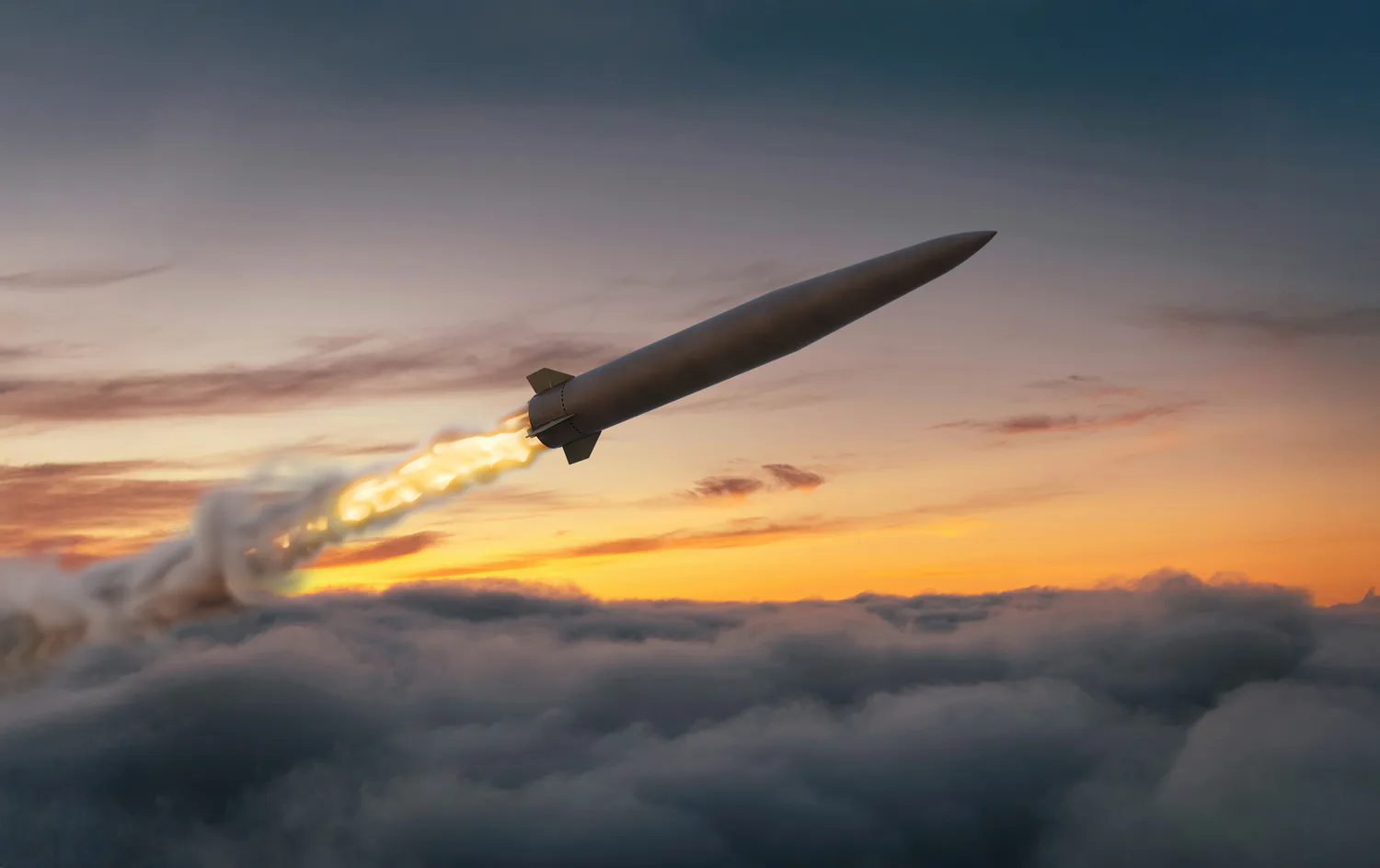
A ballistic missile is not just a long-range weapon. It is a technological barrier that even developed nations have struggled to overcome over decades. Ukraine is attempting to traverse this path in a compressed timeframe, under the pressure of war, rather than as part of a planned defense program.
What is already in the Ukrainian arsenal
In July, the Ministry of Defense confirmed the testing of the Sapsan operational-tactical missile system developed by the Southern Design Bureau. In parallel, the company Fire Point is pursuing its own program — the FP-7 missiles (declared range up to 200 km) and FP-9 (up to 855 km).
The FP-7 is similar in parameters to American ATACMS and is designed to strike ammunition depots and concentrations of equipment beyond the line of contact. According to Fire Point, the missile has undergone approximately 15 test launches and is in the certification phase with the Ministry of Defense. The FP-9, in turn, is capable of reaching Moscow by its range.
Intercontinental class — a privilege of nuclear powers
The intercontinental ballistic missile (ICBM) category includes missiles with a range exceeding 5,500 km. Technologically and financially, this class is accessible only to a limited circle of countries, and almost all of them are official or unofficial nuclear powers.
- United States — "Minuteman III" (up to 13,000 km, ground-based launch) and "Trident II" (up to 12,000 km, submarines), with a combined arsenal of both types estimated at approximately 600 missiles.
- Russia — approximately 500 ICBMs, mostly "Yars" (up to 12,000 km), as well as sea-based "Bulava" and "Sineva." "Oreshnik" is classified by range as a medium-range missile rather than an intercontinental one.
- China — the "Dongfeng" series, among which DF-31 and DF-41 belong to the intercontinental class with a range of up to 15,000 km.
- France — ICBMs only on a sea-based platform, the M51 missile with a range of up to 10,000 km.
- Israel and India — do not officially confirm the possession of ICBMs, but according to unofficial estimates, the Jericho III exceeds 6,000 km, and the Indian Agni-V ranges from 5 to 8,000 km.
- North Korea — the most secretive information; it is assumed to possess at least one intercontinental-class missile in the Hwasong family.
Shorter-range missiles: a wider but not much wider circle of nations
The classification here is different: tactical ballistic missiles — up to 300 km, short-range — 300–1,000 km, medium-range — 1,000–5,500 km.
China has examples in virtually all these categories and has even supplied technologies to other countries — the Yıldırım and Bora complexes in Turkey were developed based on Chinese designs. Today, Turkey already manufactures its own systems, including the Tayfun Block-2 with a declared range of up to 800 km.
The United States employs ATACMS (300 km, with modifications up to 450 km) and PrSM (up to 500 km). Russia uses "Iskander-M" (up to 500 km) against Ukraine alongside longer-range complexes "Yars" and "Bulava."
Indigenous production of ballistic missiles with a range of up to 5,500 km is also possessed by Iran, India, North Korea, and Pakistan.
What this means for Ukraine
For the Ukrainian armed forces, ballistic missiles are primarily a tool for striking targets inaccessible to other weapons: ammunition depots, command posts, production facilities deep within enemy territory. The question of prestige is secondary here — the main issue is whether the program can be brought from testing to serial production during wartime, when there are no decades available as in other club members' countries.