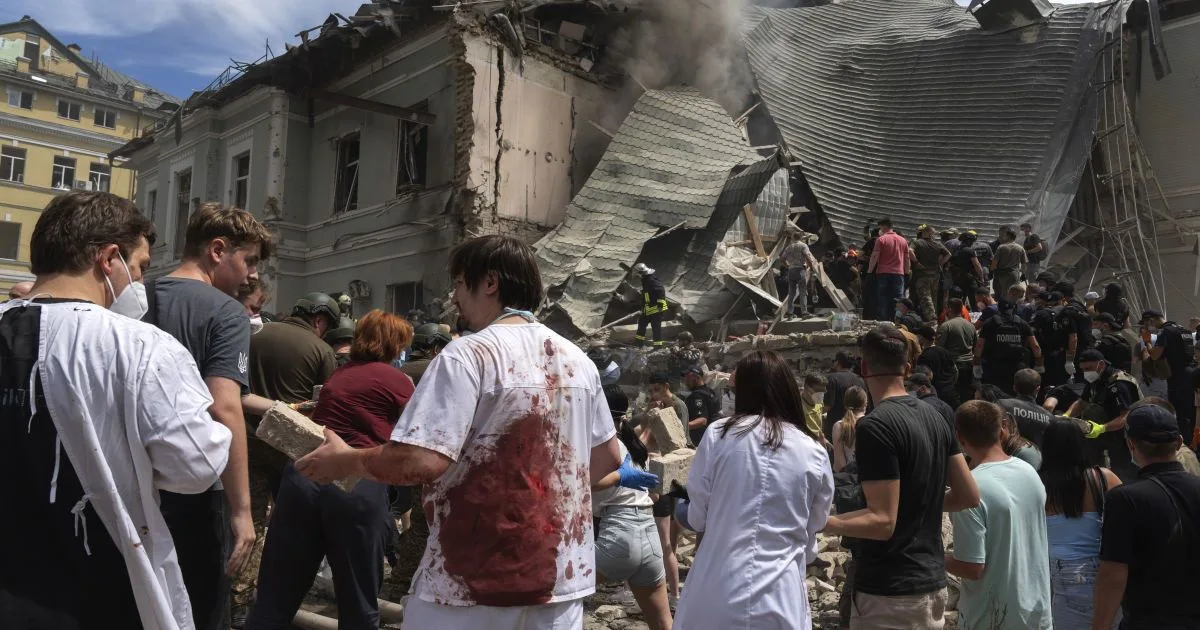
In 2024, the WHO recorded 487 attacks on healthcare facilities in Ukraine — 12% more than the previous year. The total number of confirmed strikes since the beginning of the full-scale invasion exceeded 2,500. Approximately 80% of them targeted hospitals, clinics and other inpatient care facilities. Against this backdrop, the question "what should staff do if we are hit" is no longer theoretical.
Simulation, not instruction
On the initiative of UNICEF, a training program for medical personnel was launched in Ukraine, which differs from standard civil protection in one key element: in the scenario, the hospital is not simply a building near a strike zone, but a direct target of the attack. Participants practice their actions at the moment the alarm signal is announced, during the incident itself, and in the first minutes after it — when staff are simultaneously potential victims and the only resource for patients.
Training has already been completed by medical facilities in Chernihiv region, Odesa, Zaporizhzhia and Kyiv. UNICEF is simultaneously implementing a related direction: in 2024, the organization together with partners opened 12 educational and resource centers in seven regions — Volyn, Lviv, Zakarpattia, Chernihiv, Kyiv, Odesa and Dnipropetrovsk regions.
What is being practiced
- Shelter-in-place: when evacuation is more dangerous than leaving the patient in the ward — and how to determine this based on the type of signal and distance to shelter.
- Triage under structural damage conditions: prioritization when new casualties arrive simultaneously with existing patients who require continuous treatment.
- Chain of command: who makes decisions if the chief physician is unreachable, and how to avoid decision-making paralysis during the chaos of the first minutes.
- Communication with patients and relatives: clear instructions instead of reassurance to prevent spontaneous evacuation that creates additional risks.
Context for patients
For people undergoing inpatient treatment or planning scheduled procedures, the training has practical value. Knowing that staff have practiced a specific scenario — not merely been theoretically acquainted with instructions — changes the nature of interaction during an incident. A patient who understands the logic of medical staff decisions ("why am I not being taken to shelter but asked to stay") is less likely to act contrary to protocol.
"Ukraine's healthcare system remains under enormous pressure. In 2024, 487 attacks on medical facilities were recorded — an increase of 12%, and the total number has exceeded 2,500 since the beginning of the full-scale invasion".
WHO, Annual Report on Emergencies in Ukraine, 2024
Program limitations
The training does not solve a structural problem: a significant portion of Ukrainian hospitals still do not have proper shelters or have them only for part of the staff. Construction of protective structures is ongoing in parallel — UNICEF rehabilitated shelters in 17 hospitals and perinatal centers in Chernihiv, Dnipropetrovsk, Odesa, Zaporizhzhia, Zhytomyr regions and Kyiv. But a shelter without a practiced protocol is infrastructure without an algorithm for its use.
The program currently covers a limited number of facilities. How quickly the model scales to hospitals in frontline regions — Kherson, Kharkiv, Donetsk, where the risk of direct hits is highest — will depend on whether the initiative receives systematic state funding rather than relying solely on international donors.







