When a civilian man first puts on a uniform, he has several days to accept the new reality — or break under its pressure. The Armed Forces of Ukraine are now systematically trying to close this window.
What changed from January 2026
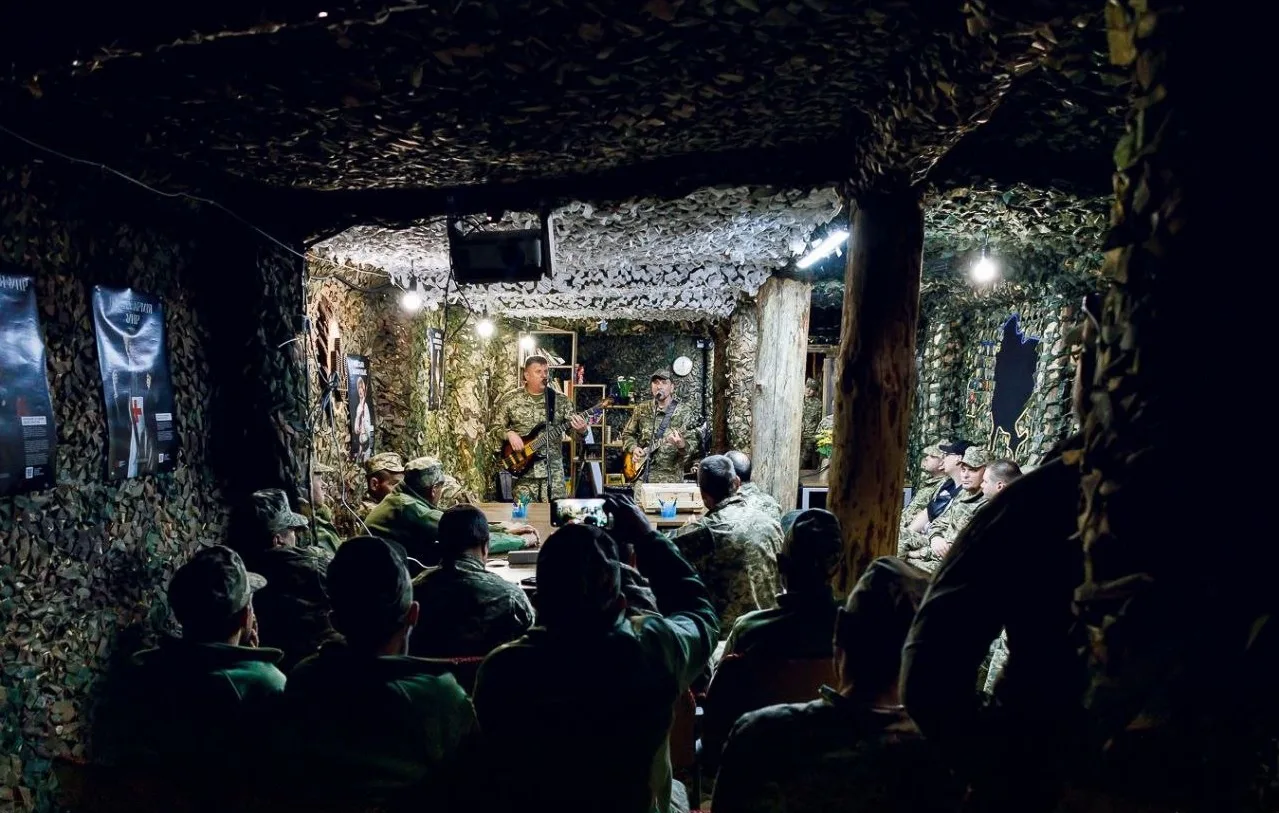
In implementation of a decision by Commander-in-Chief Oleksandr Syrskyi, mobile groups for moral support began operating on a permanent basis in training centers. Their work is provided by the Main Directorate of Psychological Support for Armed Forces Personnel, involving military orchestras, officers' clubs, public organizations, and the "Cultural Forces" project.
But the cultural component is only the surface layer. In parallel with recruits, lawyers, psychologists, and historians are working. Adaptation occurs before basic general military training begins — that is, before a person receives a weapon.
How this program emerged
The experiment started in April 2025 at one of the training centers of the Operational Command "West." The Office of the Military Ombudsman, the human rights center "Pryntsyp," and the NGO Frontline Reforms participated in its development. After the pilot, Syrskyi approved the program and extended it to all centers.
Earlier, in February 2025, the Ministry of Defense updated the basic training program: a "zero day" appeared — a separate adaptation block before training begins. The total training volume remained unchanged — 372 training hours over 1.5 months.
"Personnel who are unprepared and unadapted cannot effectively complete tasks"
Colonel Yevhen Mezhevikon, Deputy Chief of the Main Directorate of Doctrines and Training of the General Staff of the Armed Forces of Ukraine
What specifically a recruit receives
- The "Recruit Adaptation" course in the Army+ app — law, financial literacy, army structure
- Psychological training for stress resilience
- Legal explanations of rights before the first order
- Lectures on Ukrainian history and international humanitarian law
- Cultural events by creative collectives — as emotional relief rather than entertainment
Why the army needs concerts
The question is not rhetorical. Research on combat stress shows that the first days after mobilization are a critical window for forming loyalty to the military institution. A person who receives chaos and silence instead of structure and explanations at this moment is more likely to seek a way out — legal or physical. Mobile groups fill precisely this gap: not through combat training, but by acknowledging that the transition from civilian to military life is a psychological event, not merely an administrative one.
The adaptation norm in military units after training is 10 days. The General Staff openly admits that this is insufficient, and the pilot project provided for extending this period.
The program has begun to work systematically. But its effectiveness is measured not by the number of concerts, but by statistics that the General Staff has not yet published: if in a year the rate of unauthorized departures from units in the first months of service decreases — the model will have worked. If not — the cultural forces will turn out to be decoration for a structural problem.







