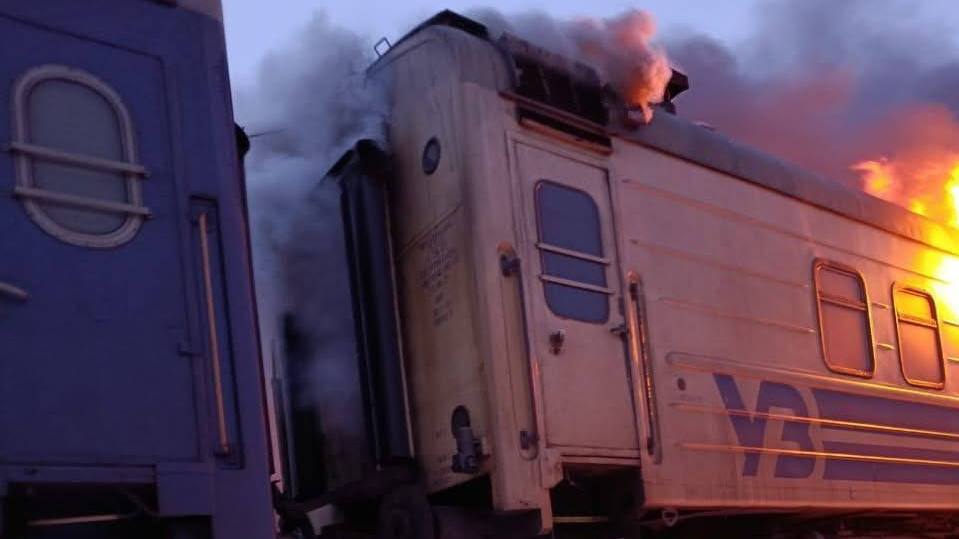
When Ukrzaliznytsia says that "this summer will be harder than last year," behind these words stand specific figures, not corporate pessimism.
What has actually been lost
46 passenger cars have been destroyed by Russian strikes since the start of the full-scale invasion. To this number, UZ adds another 200 cars and an entire Intercity+ train waiting in line for repairs after shelling and drone attacks. Separately — 1,050 cars that are pending decommissioning due to age and poor condition. In total: over 1,300 units that either are not running or will soon not be running.
The result — 4 people wanting a ticket for every available seat already now, during the off-season. UZ forecasts a ratio of 6 to 1 in summer. On certain routes, the figures are even more acute: from Lviv to Kyiv, almost 10,000 people are seeking seats daily.
"This means that this summer season will be even harder for us than the previous one, as demand is growing while the number of cars is declining."
— Ukrzaliznytsia Press Service
New cars — but not this summer
In July 2025, UZ signed a contract with Kryukov Wagon Building Plant for 100 new passenger cars. KWBP has already begun assembling 95 series and 5 new generation cars in T gauge. There is one problem: according to the contract terms, delivery will take up to 2.5 years from the moment of prepayment — and this accounts for certification. Meaning these cars are unlikely to close the deficit by summer 2026 either.
What actually helps buy a ticket now
UZ provides specific practical advice — and in the absence of seats, these transform from service recommendations into the only viable way to get on a train:
- Purchase 20 days in advance — that is when sales open for most routes.
- Auto-purchase — a feature that tracks seats that become available after cancellations. Since the beginning of 2025, 150,000 passengers have used it, purchasing approximately one million tickets.
- Transfers via commuter trains — UZ particularly emphasizes that some commuter trains are already equipped with air conditioning, and tickets for them are much more affordable.
- International connections — an updated list has been published on the uz-vezemo portal for those planning to leave Ukraine or enter the country.
Where the systemic problem lies
UZ is building new cars and increasing repairs — this is a fact. But there is a gap of years, not months, between the destruction of rolling stock under fire and the pace of its restoration. 100 new cars from KWBP represent approximately 7% of the lost and decommissioned fleet, and even they will not appear before 2027.
If Russia continues to deliberately strike railway infrastructure and the pace of state funding for new purchases does not increase — what ratio of demand to available seats will UZ reach by summer 2027, when these 100 cars finally hit the routes?







