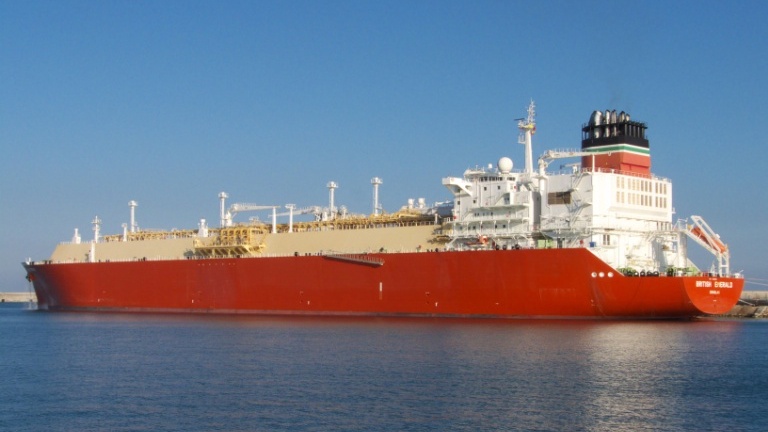
A 19-year-old LNG tanker Arctic Express, built in 2007 and recently operated by a Greek company, docked at a sanctioned floating storage facility in Murmansk Oblast — for the first time loading fuel from the blacklist. According to Bloomberg, the vessel changed its flag to Russian in May and loaded gas at the Saam floating storage facility, which holds LNG from the Arctic LNG 2 project; both facilities — both Saam and Arctic LNG 2 — are under US sanctions.
The scheme: how it works
The logistics structure used by Novatek consists of several layers. LNG is produced at the Utrenneye terminal, loaded onto Arc-7 icebreaking vessels and transported to the Saam floating storage facility near Murmansk. There, cargo is transferred to conventional tankers, which then deliver the gas to end buyers.
Shadow vessels, according to observers, operate under the protection of Russia's Northern Sea Route Administration — a state body that manages shipping on this route, but none of the sanctioned tankers appear in public route registries.
The transfer of Arctic Express occurred in a manner standard for shadow fleets: around May 13, the vessel changed ownership to SMP Techmanagement LLC, registered in St. Petersburg. The Equasis database lists SMP Techmanagement as the vessel's commercial manager, while the registered owner is Lule One Services.
The fleet expands — despite sanctions on every new vessel
Arctic Express is neither the first nor the last. The arrival of four tankers — Orion, Merkuriy, Kosmos and Luch — became one of the clearest signals that Novatek is accelerating the formation of a parallel export fleet outside Western control. All of them have already been subjected to British sanctions.
"Russia is trying to increase the number of vessels to transport sanctioned LNG at a time when global gas supplies are limited and prices are rising"
— Marine Insight, citing vessel tracking data
A fundamental problem for the West: sanctions are imposed after a vessel has already conducted an operation. After sanctioned tankers resumed loading Arctic LNG 2 in June 2025 and satellite imagery documented attempts to conceal activities — the wide availability of such imagery has fundamentally changed the ability to detect energy contraband, making concealment maneuvers practically futile. However, detection and listing are different matters.
Novatek denies involvement — documents say otherwise
Novatek officially denies any involvement in the shadow fleet. However, US sanctions documents and Novatek's own investor report containing office addresses and ownership structures link the company to this scheme.
In January 2025, satellite imagery captured the first known instance of a simultaneous dual "vessel-to-vessel" operation near Saam: the Arc-7 icebreaker Christophe de Margerie was delivering Arctic LNG 2 gas to storage while another tanker was already loading that gas for further shipment. The scheme is taking on a conveyor-belt character.
Arctic Express's age is an additional symptom of shortage. Although Russia ordered new icebreaking vessels, they were not delivered due to sanctions, and Russia was unable to build them independently. Therefore, older tankers are being used, transitioning from Greek or other operators to St. Petersburg-based structures.
If the US and EU do not introduce a mechanism of secondary sanctions with real enforcement against Arctic LNG 2 buyers — particularly Chinese terminals that have already received these cargoes — the Arctic Express scheme will be not an exception but the norm: the fleet will grow faster than sanctions lists.







