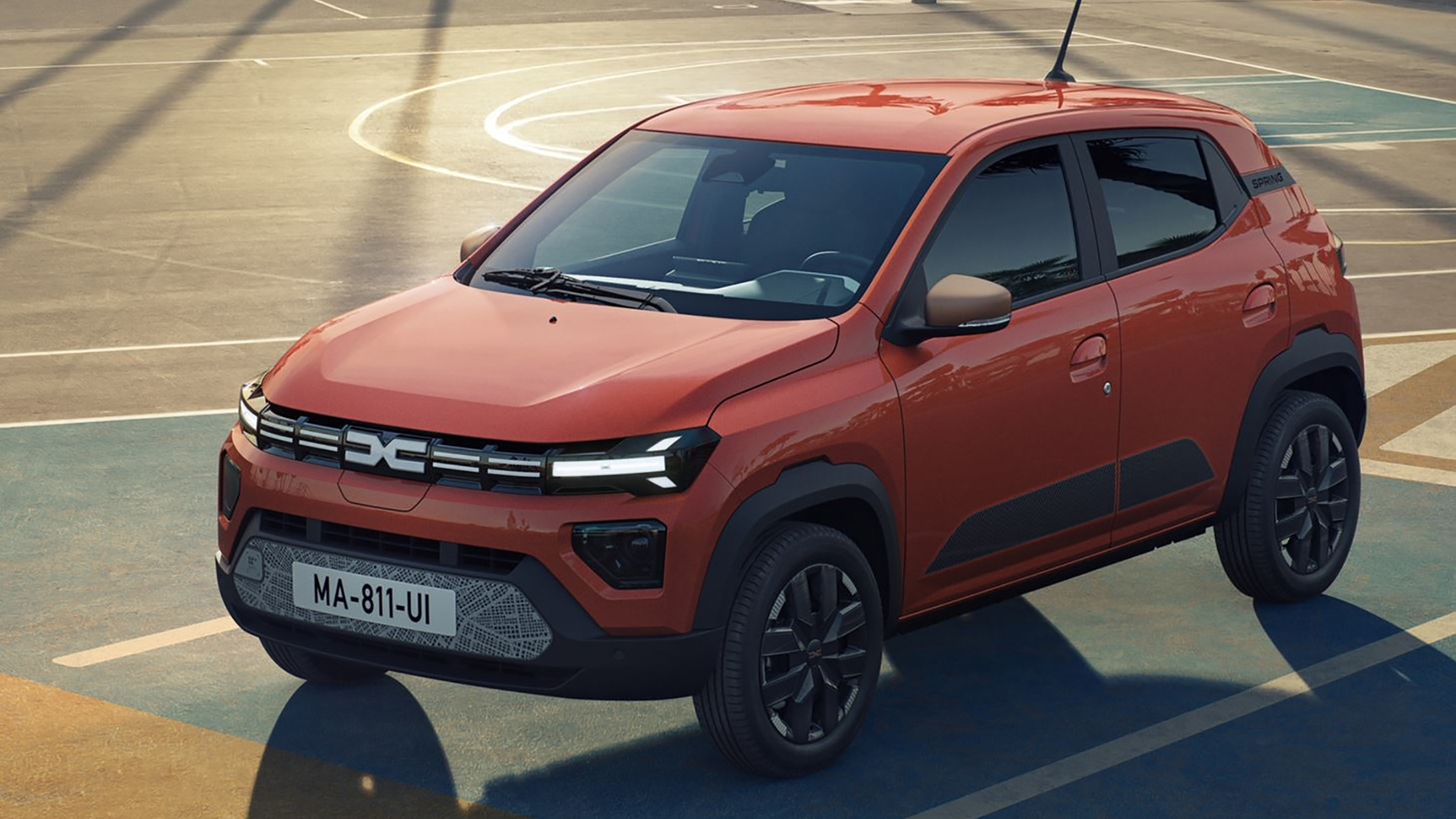
A French middle-income family looking to buy their first electric car now faces a simple barrier: the state subsidizes the purchase, but not for vehicles made in China. That's why Dacia — Renault's budget brand — is moving production of its electric hatchback Spring from a Slovenian factory in Novo Mesto, rather than from China, as it had done previously.
Why the old Spring wasn't selling, despite low prices
Since 2021, Dacia has sold 210,000 Spring electric cars, but hasn't been able to capitalize on the recent boom in electric vehicle demand in France — its largest market. The reason isn't the car itself, but where it was made: France's subsidy program for low-income buyers doesn't extend to Chinese-made electric vehicles. The continent's cheapest electric car found itself sidelined just when demand for such vehicles started surging.
"Starting in April, we've observed significant growth in the share of electric vehicles across all segments. Demand has clearly risen significantly... and this constrains us, since we currently have only one electric model," said Frank Marotт, Dacia's vice president for sales and operations.
What the move to Novo Mesto changes
The new Spring will be produced on the same platform as the Renault Twingo and the related Nissan model, at Renault's factory in Novo Mesto, Slovenia. The car has grown 18 cm longer than its predecessor, received a more rugged design — designed for a broader range of buyers — and a starting price of €17,900. The key point: it will now qualify for French subsidies and won't be subject to EU tariffs on electric vehicles from China.
For the buyer, this means a difference of several thousand euros in real cost — that's how much a subsidy plus avoided tariffs could amount to. For Dacia, it's a chance to get back in the game in a market where France's electric car share of new registrations hit a record 35% and 38% in July and August respectively, driven in part by rising fuel prices due to the conflict with Iran. Meanwhile, Dacia's own sales in France in those months fell, and the Spring ranked only 55th among the country's best-selling cars by the end of August — behind the Tesla Model Y, Renault 5, and Twingo.
European industry against Chinese prices
This Dacia decision is not an isolated case, but part of a broader confrontation. Across Europe, manufacturers face weak demand, high production costs, slower transition to electric vehicles, competition from Chinese brands, and trade barriers from the US. In the first half of June, Stellantis, Volkswagen, and Renault united to call for simplified rules and incentives for products labeled "Made in Europe" and opposition to Chinese electric vehicle manufacturers. Moving the Spring to Slovenia is a practical example of how this lobbying pressure translates into concrete production decisions.
Dacia long bet on internal combustion engine cars to maintain its status as one of Europe's most affordable brands, but now is launching more hybrids and plans to introduce four electric vehicles by 2030. The new Spring, available in four colors and two trim levels, will be the first of these. Deliveries will begin in early 2027.
What to watch
- On September 1, 2025, Renault appointed former Mercedes-Benz vice president Katrin Adt as Dacia's chief executive officer.
- On December 9, 2025, Ford and Renault announced a strategic partnership in Europe to produce affordable electric vehicles.
- In 2025, Renault sales grew by 3.2% — to 2.34 million vehicles, despite falling commercial vehicle sales in Europe.
If relocated production truly allows the Spring to receive subsidies and avoid tariffs, the brand's value proposition for the budget-conscious French buyer will be substantially better right from the start of sales in 2027. The question is whether Dacia can ramp up production at a single Slovenian factory faster than Chinese competitors find ways to circumvent EU tariffs through local assembly.