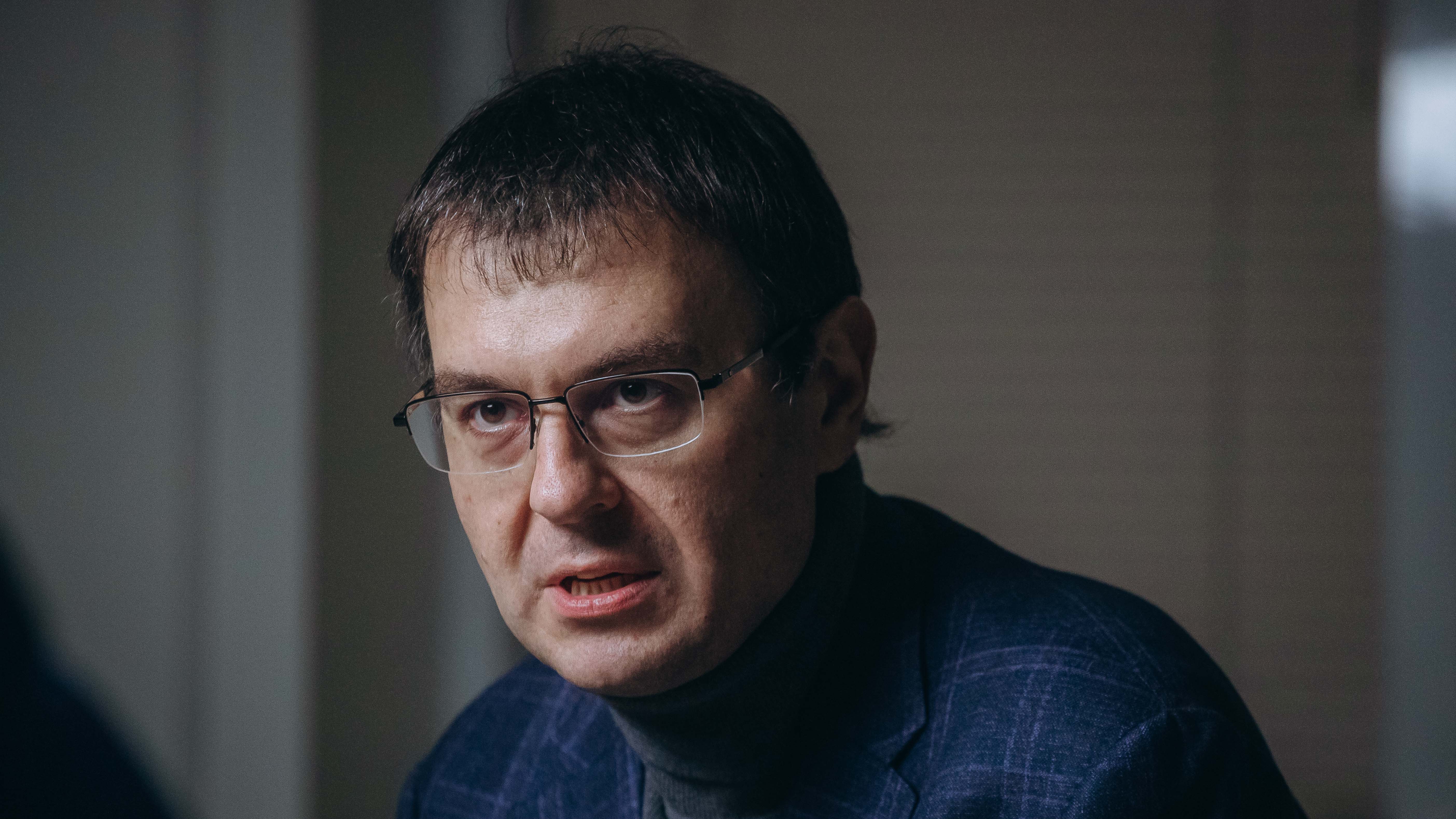
Danilo Hetmantsev presented uncomfortable statistics: as of December 1, 2025, the Diia.City registry had 3,159 active residents. Over four months, their number increased by 949, but the head of the Verkhovna Rada's Finance Committee noted the main issue — the regime has not captured even half of the IT industry. The rest of the market continues "fragmentation through individual entrepreneurs (FOP)".
What's wrong with the numbers
Over 11 months of 2025, residents paid 27.7 billion hryvnias to the budget — a substantial sum. But in parallel, the share of those who chose capital gains tax (PnVK — 9% instead of the standard 18%) decreased by 13 percentage points and fell to 33.7%. This means that even those who entered the regime increasingly often choose the general corporate income tax within it — rather than the model that the regime promoted as its key advantage.
"Unfortunately, despite unique conditions, the regime has not absorbed even half of the industry, which continues to use fragmentation schemes through FOPs".
Danilo Hetmantsev, Telegram channel
The Cabinet of Ministers twice expanded the list of permitted activities, allowing not only IT companies but also related businesses into Diia.City. Despite this — the result is lower than expected.
The logic of a deal that one side is not fulfilling
Hetmantsev frames this as unfulfilled obligations. Diia.City was from the start built as an exchange: the state provides a preferential regime — the industry legalizes itself and pays white wages. The regime even included a mechanism for abandoning FOPs: residents with income exceeding 40 million hryvnias who chose PnVK were to spend no more than 20% of total expenses on FOPs from 2025 onwards. Some companies — including EPAM and SoftServe — actually transferred people to gig contracts. Most of the market did not do this.
What Hetmantsev calls "evasion," the IT community interprets differently: FOP is not a scheme but a convenient form for distributed teams with foreign clients, especially during wartime. Hetmantsev himself acknowledges: export-oriented companies do not pay VAT — but the problem, according to his logic, is that they don't enter the registry at all.
What could change
In an interview with Speka, Hetmantsev warned of a possible review of the regime's conditions. Earlier, he spoke more directly: Diia.City could become a permanent tax regime — but only if the industry abandons FOP practices. In other words, the choice, according to his logic, is this: either IT changes its model itself, or the state changes the rules.
The national revenue strategy through 2030 has already recorded doubts about the appropriateness of Diia.City — and although cancellation is not planned in the near term, the very fact of such formulations appearing in a strategic document is a signal.
In parallel, Hetmantsev proposed creating Defence City — an analogous regime for defense companies. If this idea is implemented and Diia.City remains "half-empty," the state will have a precedent: a preferential regime can be built for a specific industry — and reviewed if the industry fails to meet the conditions.
If the IT market continues to increase the number of residents at the same rate (plus ~950 in four months), the registry could reach 5–6 thousand companies by the end of 2026 — but the question is not about quantity: will the industry agree to abandon the FOP model permanently, while the state has not raised the stakes for those who remain outside the regime?







