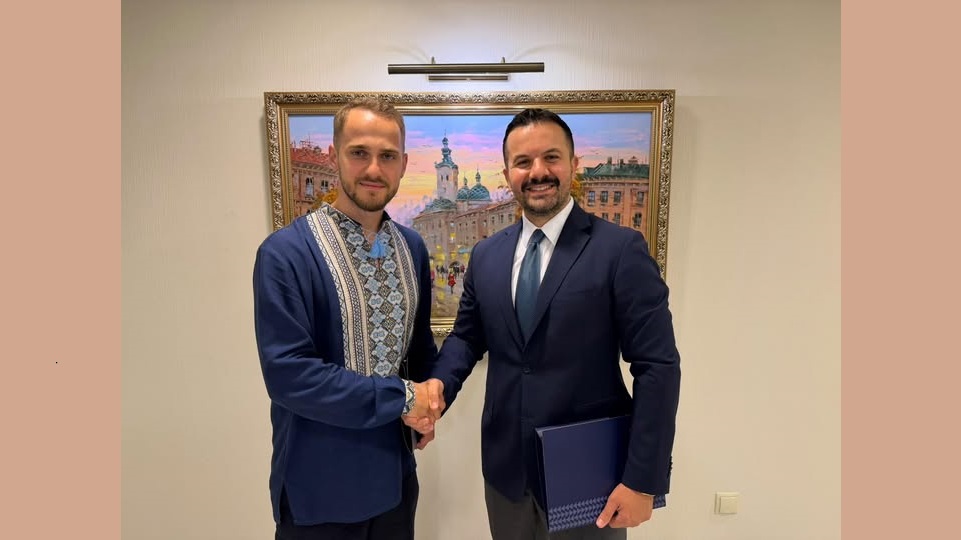
The Regional Development Agency of Kyiv Region signed a memorandum with Aydem Holding — one of Turkey's largest energy groups, which owns hydro, wind, solar, geothermal, and thermal power plants. On paper, this concerns a renewable generation project with a capacity of up to 100 MW. In reality, for now it is only about the intent to discuss it.
What was actually signed
A Memorandum of Understanding (MoU) is not an investment agreement, not a land lease contract, and not a grid connection contract. It is a document about the parties' willingness to move forward: to agree on the framework for interaction, exchange information, and jointly seek solutions. Legally, it does not create obligations to finance or build even a single megawatt of capacity.
The agency's director Nazariy Volyansky formulated the purpose of the document as follows:
"Our goal is to make Kyiv Region one of the most attractive regions for international investors, where large-scale investment projects are implemented quickly, transparently, and efficiently".
This is a declaration of intent by regional authorities, not a guarantee from the investor. Aydem has not yet announced specific amounts, timelines, or technology — solar, wind, or hybrid power plant.
The mechanism intended to turn paper into a power station
The Regional Development Agency describes its role as "turnkey" support: finding a land plot, communicating with communities, coordinating with authorities, and providing support together with the state institution UkraineInvest. This is more concrete than just a memorandum, but each of these points is a separate process with its own risks.
- Land. The plot must be agreed upon with the territorial community, which has the right to refuse or set conditions — from compensation to changes in land designation.
- Grid. For 100 MW, free grid connection capacity is needed, and in Ukraine the shortage of grid capacity and queues for connection have held back "green" generation for years more than the lack of investors.
- Money. The memorandum contains no financial model — neither the amount of investment from Aydem nor participation of state or international financial institutions.
- Security. Any project of this scale during wartime requires a separate decision on war risk insurance — without it, international financing typically does not materialize.
Two parties — two logics
For Kyiv Region, this is an element of regional competition for foreign capital: a signed memorandum is a public signal that the region can be worked with, and a reason for subsequent negotiations with other investors. For Aydem, it is more of a reconnaissance — an assessment of risks and opportunities before investing real money in a market at war.
Neither party publicly names the investment amount or the power station launch deadline — and this is not accidental but typical caution at the stage when the main filters have not yet been passed: land, grid, and financing.
What will show whether this is a real project
The history of Ukrainian memoranda with foreign energy companies in recent years shows: signing is the easiest part of the journey. More difficult is bringing the project to the stage when there is a specific land plot, a signed grid connection agreement, and a closed financial package.
If within the next 6–12 months information appears about a specific plot, investment amount, and financing scheme — the memorandum becomes a real project. If the information background is limited to new statements about "cooperation" without figures — it will remain a framework agreement, of which Kyiv Region has already signed more than one.