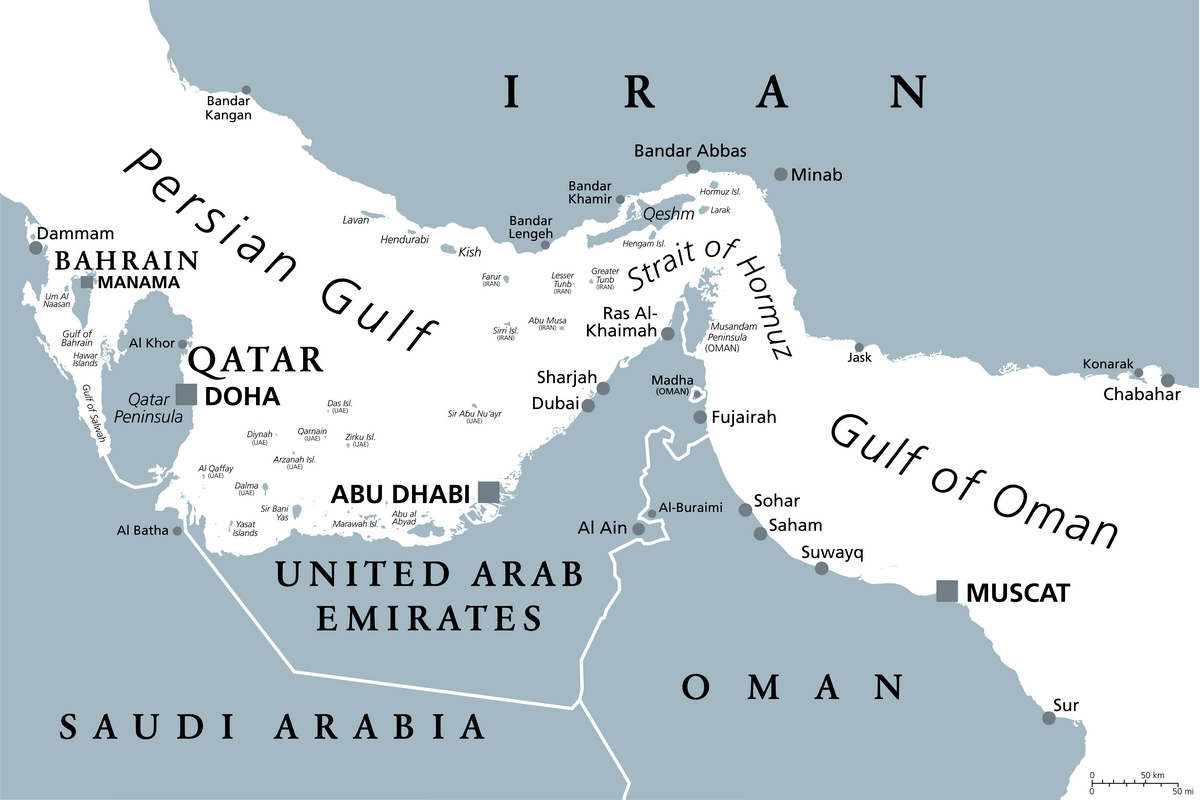
When Iran closed the Strait of Hormuz on March 4, 2026, Brent broke through the $120 per barrel mark, and QatarEnergy declared force majeure on all exports. Since then, the price has retreated — but not because the crisis has passed, but because the market has deployed several temporary cushions simultaneously.
Three cushions deflating
Morgan Stanley analysts describe the situation as "a race against time." Even after accounting for all compensating factors, the market still faces a deficit of approximately 10–12 million barrels per day.
The first cushion is strategic reserves. The IEA decided to release 400 million barrels from emergency stockpiles; the American SPR contained 415.4 million barrels as of February 18, with maximum pumping capacity of 4.4 million barrels per day — but oil reaches the market only 13 days after a presidential order. In other words, even the world's largest reserve fund cannot instantly flood the market.
The second cushion is increased American exports and reduced Chinese imports, which physically redistributed flows. The third is the fact that the market entered the crisis with a "safety margin" following months of surplus.
Oil inventories, according to Morgan Stanley and the IEA, declined on average by 4.8 million barrels per day between March 1 and April 25 — the fastest decline for any quarter in the history of the global market. Each day of delay through the strait "consumes" part of this buffer.
A scale unseen since the 1950s
Normally about 35 tankers pass through Hormuz daily; currently that figure is close to zero to two. According to Morgan Stanley's estimate, the event disrupted approximately 20% of global oil supplies — twice as much as the 1950s Suez Crisis.
The IEA characterized the situation as "the largest supply disruption in the history of the global oil market." Even after the US and Iran announced a ceasefire on April 8, traffic through the strait remained significantly below pre-war levels.
Who pays first
"The closure of the Strait of Hormuz added approximately $40 per barrel — and this cannot be explained by fundamental supply factors."
Oil expert Nabil al-Marsoumi for Al Jazeera
China, India, Japan, and South Korea receive 75% of oil and 59% of LNG from the region. Production from Kuwait, Iraq, Saudi Arabia, and the UAE fell combined by at least 10 million barrels per day as of March 12.
Japan began releasing 80 million barrels on March 16 — equivalent to 15 days of domestic consumption. This is a symptom, not a solution: strategic reserves are designed for months, not years.
Where is the limit
Morgan Stanley is direct: if the strait remains effectively closed until the end of June or July, all three cushions will be exhausted simultaneously — and the market will be left without buffers. Oil analysts warn that prolonged disruption of shipping through Hormuz could exceed what any interventions are capable of compensating for.
If tanker traffic through the strait does not recover to at least 30–40% of pre-war levels by the end of May, the question is no longer whether Brent will rise above $120 — but whether the world has a mechanism that can stop it there.







