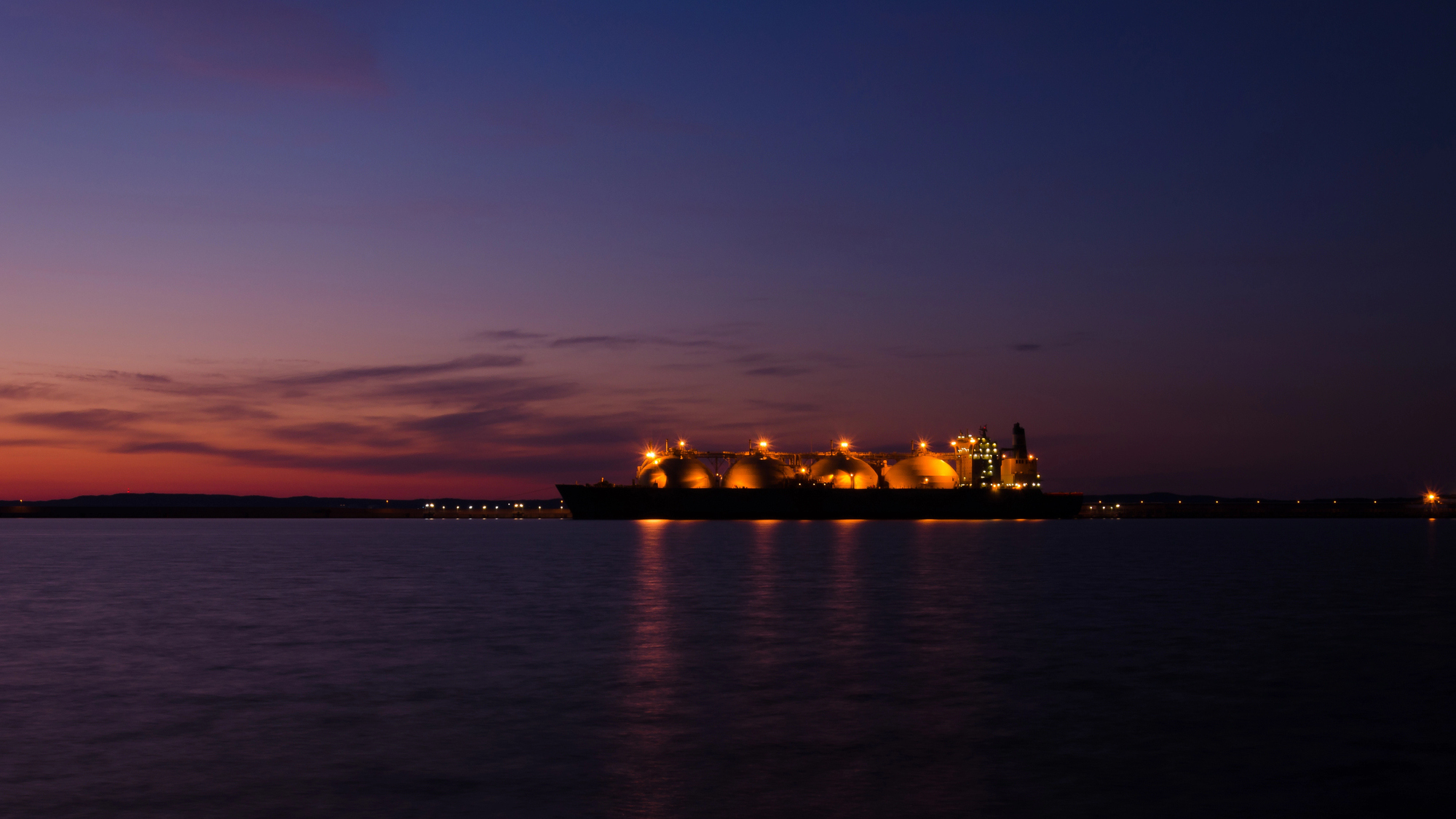
When India refused to buy Russian LNG from the sanctioned "Portovaya" plant in May, the official explanation came down to sanctions. But a Reuters industry source clarified more precisely: the cargo turned out to be economically unviable even without considering sanctions risks. This is not an exception — it is a structural problem of the entire pivot to the East.
Arithmetic that doesn't add up
Russia supplies approximately 14.94 million tons of LNG to the EU annually from the Yamal project — generating €7.2 billion in revenue in 2025 alone, according to Kpler and Eurostat data. Moscow publicly threatens to halt these supplies and redirect them to Asia. But according to Wood Mackenzie's calculations, Russia only has 2.4 million tons available for annual redistribution: the remaining 70% is bound by long-term contracts.
Tom Marzec-Mensser, director of gas and LNG at Wood Mackenzie, estimates the maximum volume Russia can redirect to Asia this year at 1.7 million tons — approximately 1.7% of total LNG imports to the EU in 2025. The rest has nowhere else to go physically.
Arctic route: a four-month window
Russia cannot even deliver these volumes whenever it wants. The Northern Sea Route — the shortest path from Yamal to Asia — is navigable only from July through late November. Outside this window, the route requires specialized ARC7-class icebreaking tankers, of which there are critically few.
If all Yamal supplies were redirected to Asia, the fleet would make approximately 120–130 voyages per year — less than half of current levels.
The Maritime Executive / CHNL
A longer route means fewer voyages per year with the same fleet. Western sanctions against Russian shipbuilding have effectively blocked the completion of new tankers, so Moscow cannot expand its fleet.
China buys — but with a 30–40% discount
So far, China is the only real buyer of sanctioned Russian LNG. It absorbs the entire volume from the blocked Arctic LNG-2 project, but does so at a 30–40% discount to the benchmark. This means: even when cargo finds a buyer, Russia receives substantially less than European prices.
India — potentially a second major market — is not yet willing to take the risk. One reason distinguishing LNG from oil: gas supplies are difficult to conceal. Unlike oil tankers, which transship cargo on the open sea, LNG vessels are tracked by satellites nearly in real time. The sanctions shadow falls directly on the buyer.
2027: a deadline with no solution in sight
The EU plans to completely abandon Russian gas by 2027. This means Russia loses €7+ billion in annual revenue from Yamal LNG — and must replace it with a market where logistics cost twice as much, buyers demand discounts, and infrastructure is not designed for such volumes.
The Yamal projects were built for European demand and European logistics. Redirecting them to the East is not a commercial decision, but an engineering and financial problem that sanctions only deepen.
The question is not whether Russia can find buyers in Asian markets — but whether it has enough icebreaking fleet capacity and price margins for these sales to even cover operating costs. If Moscow does not sign long-term Asian contracts with fixed prices by summer 2026, the "pivot to the East" in the gas sector risks remaining merely a declaration.







