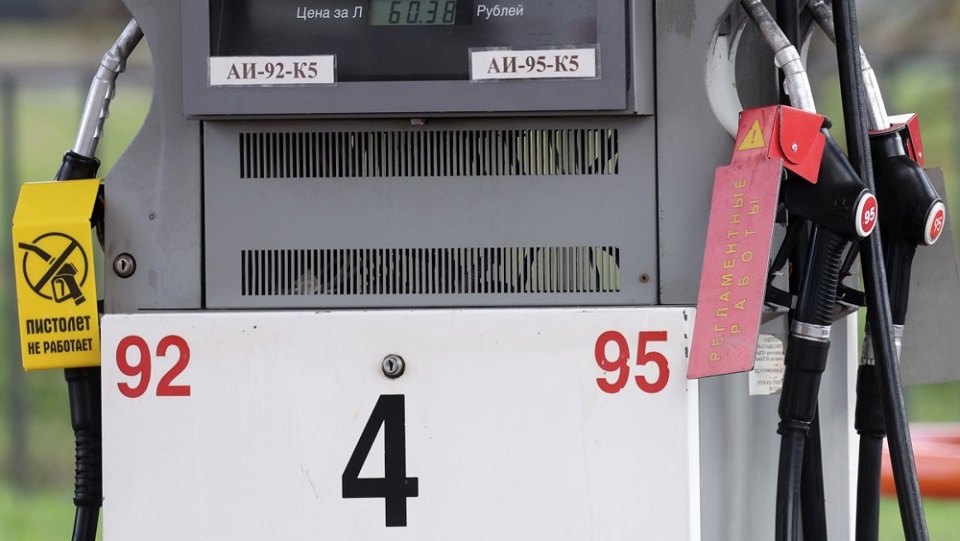
The Russian government on Thursday, July 30, extended the current ban on gasoline and diesel exports for another six months — from August 1, 2026, to January 31, 2027. The decision was published on the cabinet's website.
Starting September 1, restrictions will be partially eased: manufacturers will be allowed to export diesel and marine fuel and gas oil directly, without intermediaries. However, the market will remain under strict control, and fuel exports outside these exceptions will remain prohibited.
What Changed After Strikes on Perm and Ryazan
The decision to extend the embargo was made immediately after Ukrainian drones struck the Permnefteoргsyntez oil refinery again — a Lukoil asset that ranks among Russia's ten largest refineries. According to Reuters, after the attack, the refinery shut down one of its crude oil primary processing units. The Perm refinery was one of the few major plants still operating without restrictions — now it is also on the list of damaged facilities.
In parallel, drones attacked the Ryazan refinery once again.
The Scale of the Problem: Not Individual Plants, But the Entire Industry
According to Financial Times, of Russia's 29 major oil refineries, seven are completely shut down — in Kirishi, Tuapse, Novokuibyshevsk, Samara, Syzran, Astrakhan, and Slavyansk-on-Kuban. Several other facilities — in Ryazan, Kstovo, Volgograd, Moscow, Saratov, and Nizhnekamsk — are operating at half capacity or less.
Extending the ban for six months rather than a month or quarter is effectively an admission: rapid recovery of refining capacity will not happen. The systemic decline in fuel production has ceased to be a temporary glitch and has become a structural problem for the industry.
What's Next
On July 26, Zelenskyy updated the list of priority targets for long-range strikes against Russia. According to him, Ukraine will receive drones with a range of up to 4,000 km this year, and next year — drones with ranges of 5,000 to 10,000 km.
If refineries continue to be damaged at the same pace, and drone range increases according to announced plans, the next embargo extension in spring may concern not six months, but an indefinite period.







