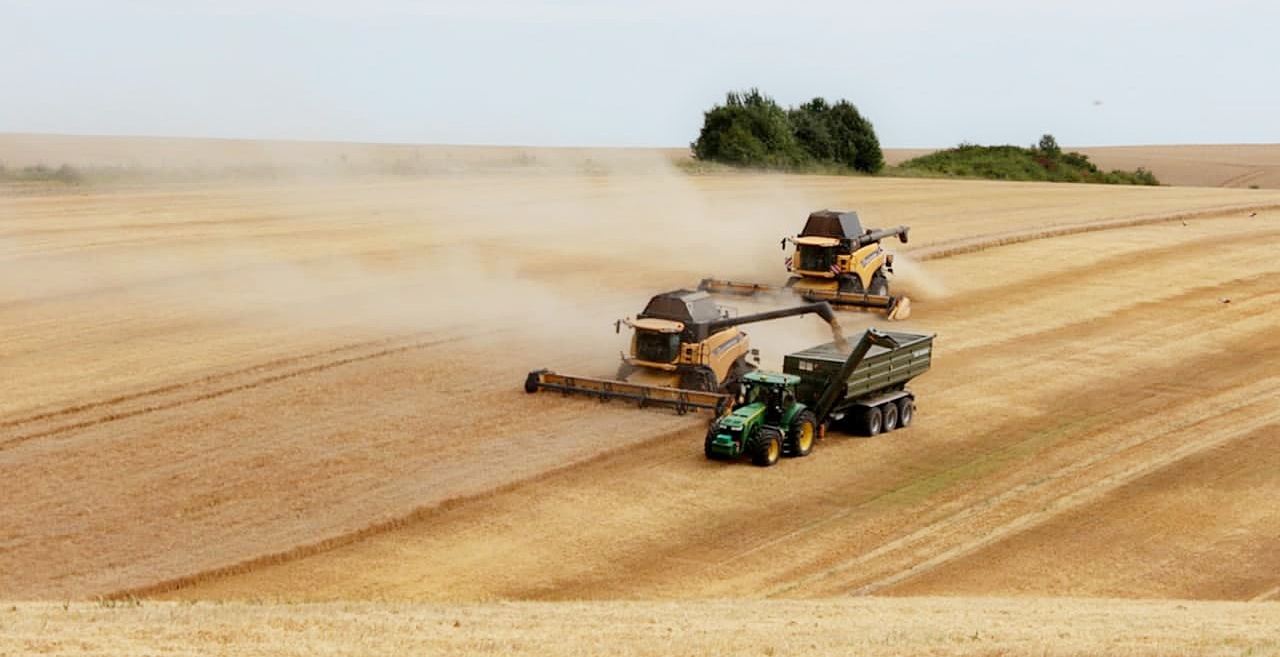
The Ukrainian Grain Association improved its forecast for the harvest of grain and oilseed crops for 2026 to 84.6 million tons — one million more than the previous estimate. That's a good figure. The problem is something else: how much of it will be possible to sell abroad.
According to the association's calculations, potential exports in the 2026/2027 season could reach almost 52 million tons — that's 11 million more than what was exported last season. But the word "potentially" is key here. The scenario will only be realized if the deep-water ports of Greater Odesa operate at full capacity.
Currently, the situation is the opposite. Since July 21, no vessels have entered Ukrainian seaports. The authorities are discussing the restoration of "solidarity corridors" — those same land and river routes that operated before the opening of the sea corridor.
Why Odesa Decides Everything
Three ports — Pivdennyi, Odesa, and Chornomorsk — handle 70% of Ukrainian agricultural products and most of the mining and metallurgical complex's output. Together, this corridor brings the economy between 900 million and 1.4 billion dollars per month.
The agricultural sector provides up to 60% of the country's foreign exchange earnings, the mining and metallurgical complex provides another 15%. Without the sea corridor, both sectors cannot physically operate at full capacity: railways and road transport cannot replace the throughput capacity of deep-water ports for such volumes of grain and ore.
Precedent from 2022
Ukraine already went through a port shutdown — at that time, they did not operate for five months. The consequence: the country's GDP contracted by 6% for the year, and the stoppage of export flows became one of the factors in the hryvnia's devaluation.
The current pause is shorter, but the mechanism is the same: the longer vessels do not enter the ports, the more grain accumulates at elevators, the more sharply purchase prices for farmers fall, and the greater the pressure on the balance of payments.
What Has Already Been Lost This Season
According to the UGA's assessment, the 2025 harvest totaled 80 million tons of grain and oilseeds, of which only 41.1 million tons were exported — less than in the previous season (46.7 million tons) and significantly less than in the 2023/2024 season (57.5 million tons).
The reasons for the decline are complex: lower production of grain and oilseeds, quotas on wheat imports to the EU, and logistical obstacles due to constant shelling. Carry-over stocks for the new season total almost 13 million tons — this is a cushion, but not a solution to the problem.
The 2026 harvest is already here. The question that will determine whether it becomes an asset or dead cargo in elevators is: how much time will it take to restore full vessel traffic through Greater Odesa — and will this corridor withstand the new pressure if the shelling does not stop.







