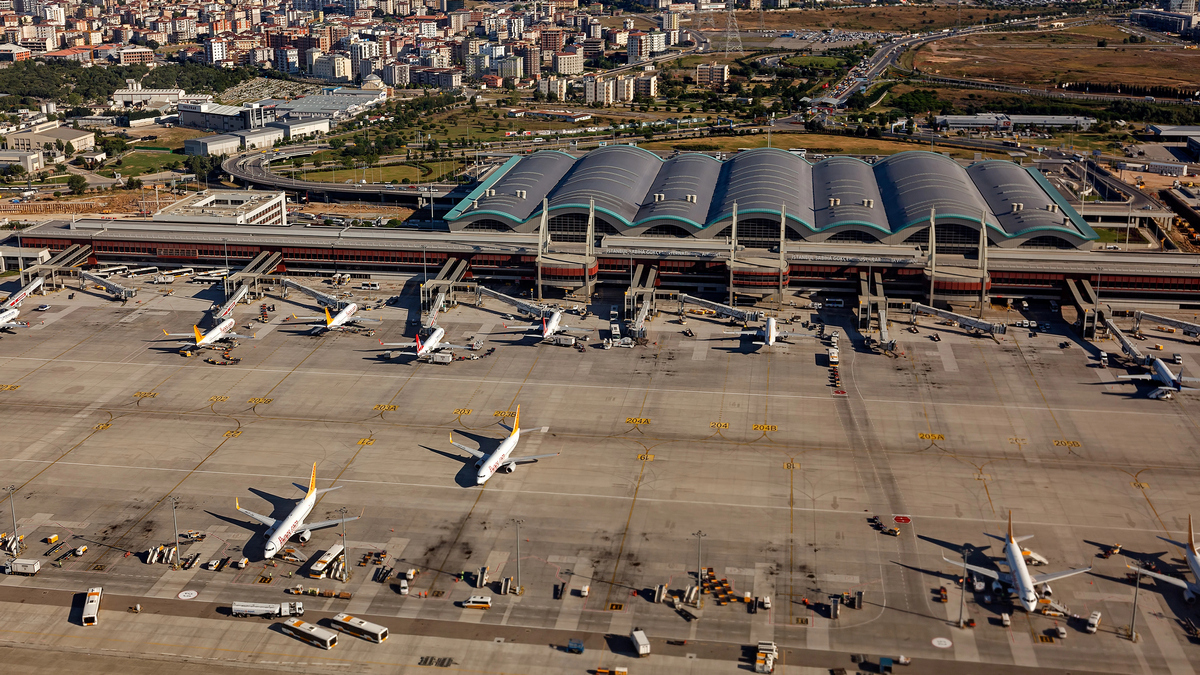
On July 17, EU Climate Commissioner Wopke Hoekstra announced that starting from 2029, the EU Emissions Trading System (EU ETS) will expand to cover all international flights landing in Europe from departure points within a 5,000 km radius from the geographic center of the EU. This rule will apply to flights to Istanbul, Dubai, Doha, and other major transit hubs in the Middle East and Turkey. Flights from the USA and China remain outside the scope of the new rules, as they exceed the 5,000-kilometer radius.
Why now and why these routes
Aviation remains the only major sector of the EU economy where emissions continue to grow rather than decline. Since 2012, the ETS has covered only domestic flights within the European Economic Area, leaving the majority of aviation emissions outside the carbon pricing system. Hoekstra articulated the problem directly: Gulf airlines receive state subsidies that their European competitors do not have, and the ETS has so far failed to level the playing field.
"Aviation is the only major sector where emissions are growing rather than falling. At the same time, the EU faces a level playing field problem: the ETS covers only the EEA, while a number of countries, particularly in the Persian Gulf, subsidize their airlines in ways that we do not."
Wopke Hoekstra, EU Climate Commissioner, Euronews, July 17, 2026
The commissioner separately highlighted private jets, noting that all departures and arrivals of private aviation will also be subject to the new rules, regardless of route distance.
What airlines say—and what the data shows
The industry association Airlines for Europe (A4E), representing Lufthansa, Ryanair, Air France-KLM, and others, called the initiative a "repetition of a historical mistake." A4E Managing Director Urania Georgoutsakou demanded that all funds collected from the ETS be reinvested in aviation decarbonization rather than ending up in the general EU budget. The association insists that a regional quota system does not solve the global problem and undermines the competitiveness of European carriers.
However, independent research by consulting firm CE Delft, commissioned by Carbon Market Watch, paints a different picture. Expanding the ETS will have a minimal impact on ticket prices, primarily because airlines, according to researchers' calculations, will absorb up to 85% of the additional quota costs without passing them on to passengers. The carbon component represents an insignificant share of the total ticket price—with fuel price volatility having a far greater impact.
- Expanding the ETS to all departures from the EEA could generate an additional €9 billion per year by 2030.
- If arrivals are also included, revenue doubles to €19 billion per year.
- Currently, aviation avoids fuel tax and VAT levies totaling approximately €21.3 billion annually—more than the entire expected ETS revenue.
- The effective carbon price that airlines actually paid in 2025 was only €22 per ton of CO₂—significantly below the average ETS market price.
Winners and losers
For passengers, the changes will be least noticeable: a family flight to Turkey or the UAE will not become significantly more expensive. However, Emirates, Turkish Airlines, and Qatar Airways, which have built business models around mass transit through their hubs, face structural cost increases for flights to Europe. This is precisely what Brussels sought to achieve—but what Ankara, Dubai, and Doha will perceive as protectionism rather than climate policy.
The proposal is still undergoing the legislative process in the EU. Flights from the USA and China remain outside the ETS—a geopolitically logical but climatically inconsistent decision that environmental organizations have already criticized.
The key question is not whether tickets to Dubai will become more expensive. The question is whether the EU will reinvest the collected billions in the green aviation fuel transition—or disperse them throughout the general budget. If, by 2028, the European Commission does not establish a clear mechanism for the targeted use of aviation revenues from the ETS, the industry's argument about a "mistake" will gain real economic foundation.