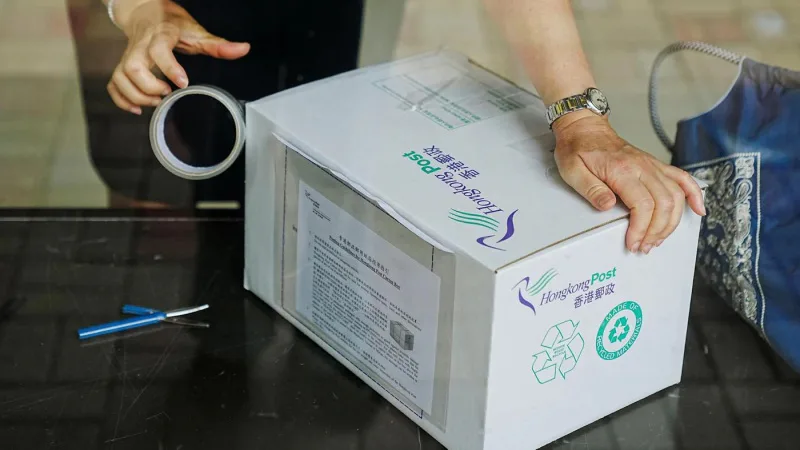
The EU receives 12 million small parcels daily — mostly from China. In 2024, there were 4.6 billion of them, twice as many as a year earlier. Almost all of them previously passed through customs without any fees thanks to the so-called de minimis rule: goods under 150 euros — duty-free. On December 12, 2025, EU finance ministers voted to abolish this rule.
What exactly is changing and when
From July 1, 2026, each parcel with goods worth less than 150 euros arriving at the EU from a seller outside the bloc will receive a fixed fee of €3 — for each customs commodity category (HS code). If one box contains a t-shirt, headphones, and a phone case — three different codes, three fees. According to the EU Council, the duty will apply to 93% of all e-commerce flow through the IOSS system.
This is a temporary measure: according to an agreement from November 2025, the EU plans to completely eliminate the exemption by 2028 and introduce duty "from the first euro" through a new digital customs platform. Separately, the EU Council clarifies, there is also discussion of an additional parcel processing fee of €2 — this is currently under negotiation as part of a broader customs reform.
Why now
The EU customs authority physically could not keep up with the flow: according to Courthouse News, only 0.0082% of goods were inspected — approximately 82 units per million. According to European Commission estimates, up to 65% of small parcels are deliberately undervalued to avoid fees. Platforms also split orders into separate shipments so each fits within the limit.
"This temporary measure responds to the fact: parcels now enter the EU without duty, creating unfair competition for EU sellers, risks to consumer health, massive fraud, and environmental problems."
EU Council, press release from December 12, 2025
Parallel to the customs aspect is the security issue: according to the European Economic and Social Committee, millions of goods that do not meet the EU's safety, labor, and environmental standards arrive at the EU daily — cosmetics, toys, electronics.
What this means for buyers
According to Euronews calculations, a typical Shein order worth €20 could cost over €30 after adding the new fee and VAT. A basket of five cheap items from different categories could collect €15 in new customs fees alone. Market analysts suggest two scenarios: some buyers will return to European stores, while others will start placing rarer but larger orders.
However, Ed Sander, an expert on the Chinese e-commerce platform Tech Buzz China, skeptically assesses the effect for the platforms themselves: "I see all the happy comments online, but this won't slow down Temu," Marketplace Universe quotes him. According to him, Temu is already adapting its business model, including through warehouses inside the EU, which allows avoiding the new fee for some goods.
Context: The US already did this
The EU is not acting alone. According to DSCP Smart Fulfillment, the US eliminated its own de minimis threshold of $800 back in August 2025. The two largest consumer markets in the world closed this loophole within less than a year. For Chinese platforms that built logistics around direct small shipments, this is a structural change, not a cosmetic one.
The real question will open after July 1, 2026: if Temu and Shein massively relocate inventory to warehouses inside the EU — they will bypass the duty while keeping their price advantage. Then €3 will turn out to be not protection for European retailers, but simply a new source of income for platforms that adapt faster.