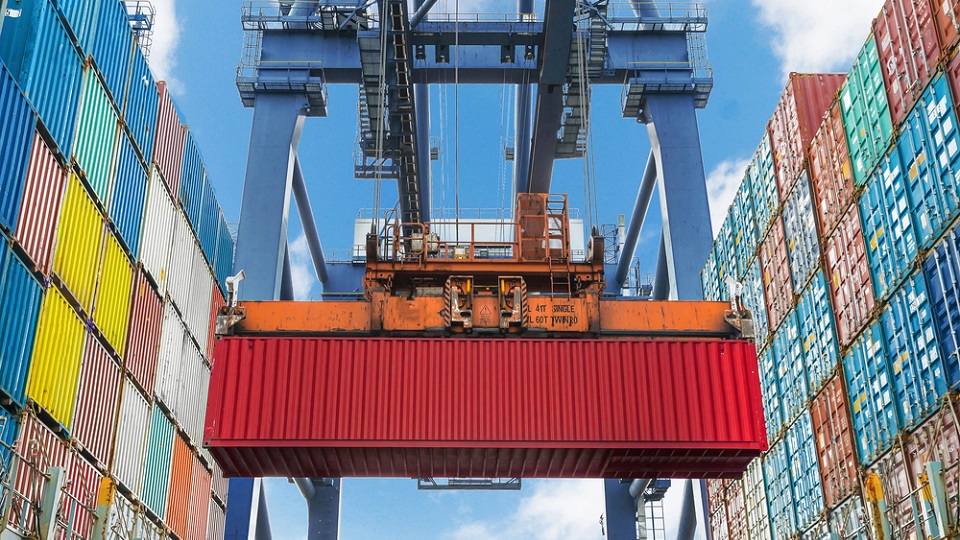
On June 4, the Cabinet of Ministers approved Ukraine's Export Strategy until 2030. The figure of the main target — $85 billion in annual exports of goods and services — sounds ambitious against the backdrop of the current $48 billion. But the real news is not in the number.
What's inside the strategy
The document sets three dimensions of success: increasing production with higher added value, creating a favorable environment for exporters, and strengthening state support institutions. A separate emphasis is on reducing the share of raw materials in the export structure from the current 87.3% to 59%. That is, almost a third of what Ukraine exports should stop being just grain or ore and become a finished product.
According to Taras Kachka, vice prime minister for European integration, the basic principle of the strategy became the "Made in Ukraine" policy — the state should perform service functions for business rather than simply declare support.
Among the specific tools are the development of an Export Credit Agency, expansion of the network of trade missions abroad, and multimodal corridors to the EU. The strategy was developed together with business, industry associations, and international partners, including UNDP.
Third strategy in eight years
This is not the first such attempt. In 2017, the government approved the "Roadmap for Strategic Trade Development 2017–2021". The result — a declarative document that, as the Ukrainian Union of Industrialists and Entrepreneurs noted back in 2019, "did not solve important issues for business," and the Export Credit Agency never fully launched. The next strategy — for the agricultural sector until 2026 — according to analysts, was inherited by the Honcharuk government "in half-finished form" and also did not produce systemic results.
"Nominally adopted in 2017, the Export Strategy is a declarative document that has not been solving important business issues all this time"
— Ukrainian Union of Industrialists and Entrepreneurs, 2019
The new strategy was developed with this experience in mind: it is supplemented with an operational plan of measures, and the goals themselves are tied to measurable indicators. But an operational plan is not yet a law with sanctions for non-compliance.
Where the real challenge lies
Growth from $48 billion to $85 billion implies an increase of 77% over five years amid active war, destroyed infrastructure, and workforce outflow. The share of exports in GDP over the past decade has already declined from 49% in 2014 to 25% in 2023 — that is, the movement is heading in the opposite direction from the goal.
A practical chance for the strategy is the European integration track: unification of technical regulations with the EU and development of multimodal logistics give business real new markets. The risk is the same as always: a document without a mandatory enforcement mechanism depends on the political will of each subsequent government.
If the Export Credit Agency finally launches fully and the first multimodal corridors to the EU are opened by the end of 2026 — the strategy will have a chance not to repeat the fate of its predecessors.