Briefly: what was adopted
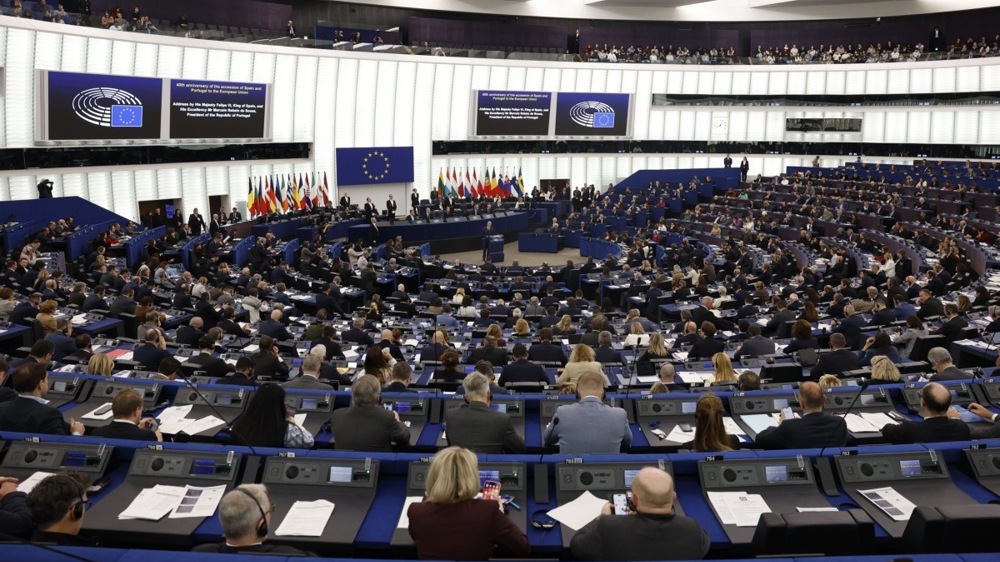
The European Parliament supported the use of the enhanced cooperation procedure to provide Ukraine with a €90 billion loan. Votes were distributed as follows: 499 — in favor, 135 — against, 24 — abstained. The decision was published by the European Parliament’s press service.
“Since the Czech Republic, Hungary and Slovakia refused to support the loan, the agreement [on the loan to Ukraine] was concluded under the enhanced cooperation procedure, a mechanism that allows willing EU member states to cooperate in specific areas. Under the treaties, the enhanced cooperation procedure requires the consent of the European Parliament.”
— Press service of the European Parliament
Why this happened
The European Council decision of 18 December envisaged support for a loan for 2026–2027 as a preferential loan — an option considered as an alternative to using frozen Russian assets for reparations if other mechanisms did not work. After the Czech Republic, Hungary and Slovakia did not give their unanimous approval, countries willing to support the initiative used the enhanced cooperation instrument, which allows bypassing the blockade.
What the enhanced cooperation procedure is and why it matters
The enhanced cooperation procedure is a legal mechanism within the EU that allows a group of interested member states to advance common initiatives without full unanimity of the entire Union. Applying such a procedure requires the consent of the European Parliament — which was obtained today. For Ukraine, this means a practical route to financing even when full political unity in the EU is temporarily absent.
Financial logic
The amount — €90 billion — is planned for 2026–2027. The EU also assumes the costs of servicing the borrowings: approximately €3 billion per year in interest, which the Union will pay to make the loan terms concessional for Ukraine. On 14 January the European Commission submitted legislative proposals clarifying the mechanics of ongoing support for those years.
Consequences for Ukraine and the EU
For Ukraine, the decision is an important signal: partners are ready to provide large-scale financing even when part of the EU abstains. This adds predictability to budget planning and defense programmes for the coming years. At the same time, the mechanism exposes political divisions within the EU and creates a precedent where a group of countries advances key decisions without overall unanimity.
What next
Now the decisive phase will be technical implementation: the European Commission and the participating states must agree on the payment schedule, controls over the use of funds and guarantees of transparency. The political risk is that prolonged or new disagreements in the EU will affect the pace and volume of disbursements, so it is important to monitor specific agreements and allocation conditions.
Conclusion. This decision reduces uncertainty for Ukraine while also serving as a reminder: guarantees do not replace rigorous oversight and a clear mechanism. Whether European partners will turn political solidarity into stable financing depends on the next legal and technical steps.