When a Ukrainian exchanges hryvnia for dollars to pay for imported medicines or book a ticket abroad, he rarely thinks about the US Army. But this very connection — between the Pentagon's military might and the purchasing power of the green paper in the pockets of billions of people — was publicly articulated this week by the head of America's largest bank.
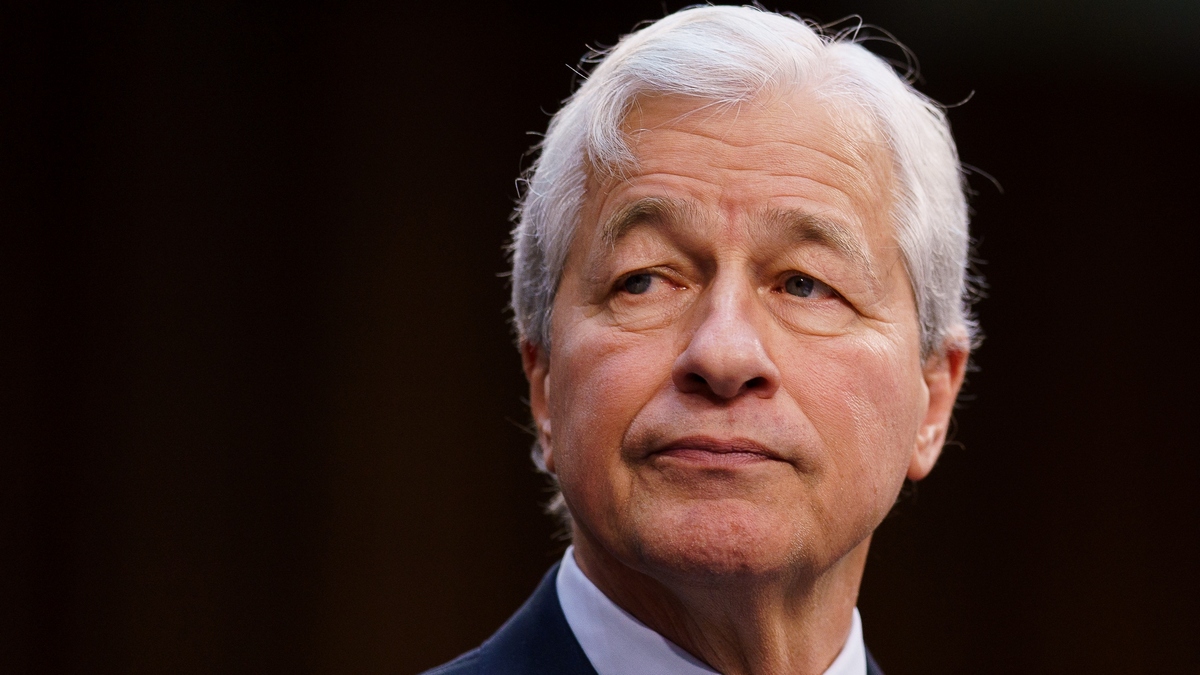
Jamie Dimon, CEO of JPMorgan Chase, stated on PBS in the program "Firing Line with Margaret Hoover" that "if in 25 years we do not have the strongest military and the strongest economy, we will also not have a reserve currency." According to him, "the world will be fragmented, and this will be very dangerous for us."
Why did a banker talk about the military rather than the Fed's rates
Dimon did not limit himself to a general thesis. He pointed to the war in Iran as evidence of yet another vulnerability — America's ability to sustain a prolonged war, stating that this war has revealed a lack of production capacity to protect the US in the event of a real long-term conflict. Earlier, in October, JPMorgan launched a 10-year initiative worth $1.5 trillion aimed at sectors critical to US economic security — from critical minerals and manufacturing to energy, defense, artificial intelligence, and quantum computing.
Separately, Dimon touched on the issue of debt: he warned that rapid growth in US national debt, which has reached the mark where public debt exceeds 100% of GDP, could provoke a bond market crisis as investors demand higher yields to compensate for excessive federal budget spending. His forecast is open — "yes, as things stand now, there will be some bond crisis, and then we will have to deal with it."
What economists say: the military is not the foundation but the decoration
Experts surveyed by Fortune clarify Dimon's logic. Daniel McDowell from Syracuse University explained that American military and economic might is "inextricably linked with the dollar," but economic strength is the foundation of dollar dominance, while the military is only "the cherry on top."
He described the mechanism of influence as follows: if allies believe the US is vulnerable to attack and unable to defend itself, they will begin to worry about their dollar assets, since a strong army signals to foreign investors the security of their assets.
Eswar Prasad from the Brookings Institution goes further and reminds us of current reality: despite all the risks, the status of reserve currency has historically been secured by leading states that maintain the rule of law and open capital flows — and if the US loses its leadership due to debt, deficits, or management mistakes, the dollar's status will follow suit, making the world more fragmented and dangerous.
The figures do not confirm panic yet
The facts are more complex than the headlines. The dollar's share in global reserves is indeed declining: it stands at about 57% of global currency reserves compared to almost 70% at the beginning of the century. Concerns about de-dollarization intensified after 2022 — the freezing of Russia's central bank assets following the full-scale invasion of Ukraine fueled fears that the US's use of financial sanctions could accelerate the move away from the dollar. However, Federal Reserve research has not found a noticeable shift away from dollar reserves after 2022.
Even recent currency fluctuations turned out to be technical rather than strategic: in the second quarter of 2025, the dollar's share fell to 56.32%, but 92% of this decline was explained by currency fluctuations rather than changes in central bank portfolios. Taking into account exchange rate effects, central banks actually maintained their dollar positions virtually unchanged — at 57.67%.
This does not mean that investor concerns are unfounded. Private capital reacts faster than central banks: according to UBS, the world's wealthiest families have begun reducing their dollar dependence, and approximately two-thirds of surveyed family offices expect weakened confidence in it as a reserve currency over the next year.
What does this mean for an ordinary person
For a Ukrainian, this is not an abstraction. The dollar is the currency in which the state attracts part of foreign aid and services its debt, the currency to which energy and import prices are tied, and the currency in which millions of migrant workers send money to their families. If confidence in the dollar weakens, it will hit the cost of borrowing for everyone, including Ukraine, and the exchange rate of the hryvnia, which still follows dollar dynamics.
For Americans, the stakes are no less concrete: a devaluation of the dollar will undermine purchasing power, meaning those same dollars will not buy as many goods and services as they do now.
The question is not whether the dollar has a competitor today — it clearly does not. The question is whether the American economy will withstand a combination of growing debt, costlier war, and weaker military readiness over those 25 years that Dimon gave to his own forecast. If the bond crisis he warns of does occur earlier — de-dollarization will cease to be a topic for family offices and will become a topic for everyone who holds savings in dollars or a currency tied to it.