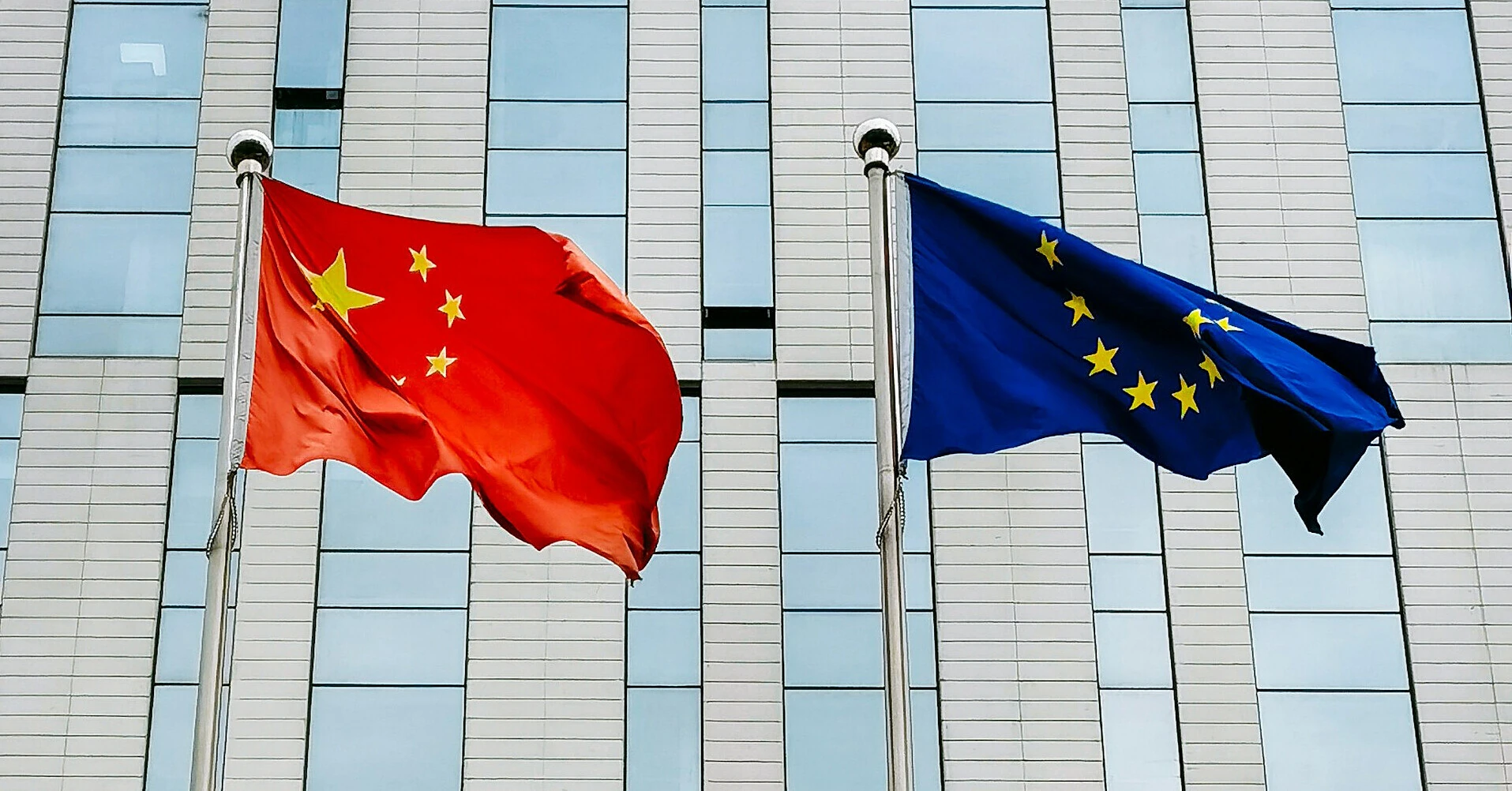
When Volkswagen reports record losses and BYD reports record sales in Europe, it is not a coincidence. It is a structure.
What happened in June
According to Chinese customs data cited by Bloomberg, in June 2026, China's trade surplus with the European Union reached $32.9 billion — a new monthly record. On an annual basis, the figure grew by 27%. For the full year 2025, the EU's cumulative deficit with China amounted to €360.6 billion — equivalent to €1 billion per day and 15% higher than a year earlier.
The disparity between bloc countries is striking: China's surplus with Germany more than doubled over the year, while with France it shrank by 81%. The reason for the French exception is that Paris was the first in the EU to introduce targeted measures against Chinese imports, and Beijing responded by reorienting supplies.
Why a 35% tariff did not help
The EU imposed tariffs of up to 35.3% on Chinese electric vehicles, but according to Al Jazeera, in May 2026 Chinese brands — BYD, Geely, Chery — exceeded 10% of all automobile sales in the bloc for the first time. According to analytics firm Tridens, in the first half of 2026 alone, BYD increased foreign sales by 70.7%, while the domestic market in China collapsed by nearly 40%. Weak domestic demand is the main driver of export pressure.
Why the yuan is also a weapon
Alicia García-Herrero, economist at Brussels-based think tank Bruegel, explains the mechanism: China avoids strengthening the yuan by not repatriating foreign exchange earnings to the mainland — the money stays in Hong Kong and is not converted to RMB. According to the IMF estimate cited by ECB President Christine Lagarde, the yuan is undervalued by approximately 15–16%. German Chancellor Friedrich Merz cites the figure of 30% and demands the issue be discussed in the G7.
«This is simply not a sustainable model».
Ursula von der Leyen, President of the European Commission, after an EU summit, June 2026
What the bloc is planning to do
French President Emmanuel Macron has publicly called for a «European analogue of Section 301» — the American tool that allows imposing tariffs in response to unfair trade practices. According to Fortune, Paris's position was supported by Germany, Poland, the Netherlands, and Belgium. Trade Commissioner Maroš Šefčovič is negotiating with Chinese Commerce Minister Wang Wentao on anti-dumping measures, but no concrete commitments have emerged after the latest round of talks in Brussels.
- What is at risk in the EU: solar panels, rare earth metals, chemicals, industrial robots, automobiles — in all these sectors, Chinese companies already dominate EU imports.
- What China wants instead: access to EU capital markets and removal of restrictions on infrastructure investments — precisely what Brussels refuses for security reasons.
García-Herrero from Bruegel emphasizes that even if the yuan strengthened to a «fair» level, three-quarters of Europe's loss of competitiveness is a result of the inflation gap that accumulated after Russia's full-scale invasion of Ukraine began in 2022. In other words, a tariff response treats the symptom, not the cause.
If the European Commission does not introduce sectoral protective mechanisms with automatic triggers — similar to American ones — by the end of 2026, the question is not whether the deficit will continue to grow, but which EU industries will disappear first.