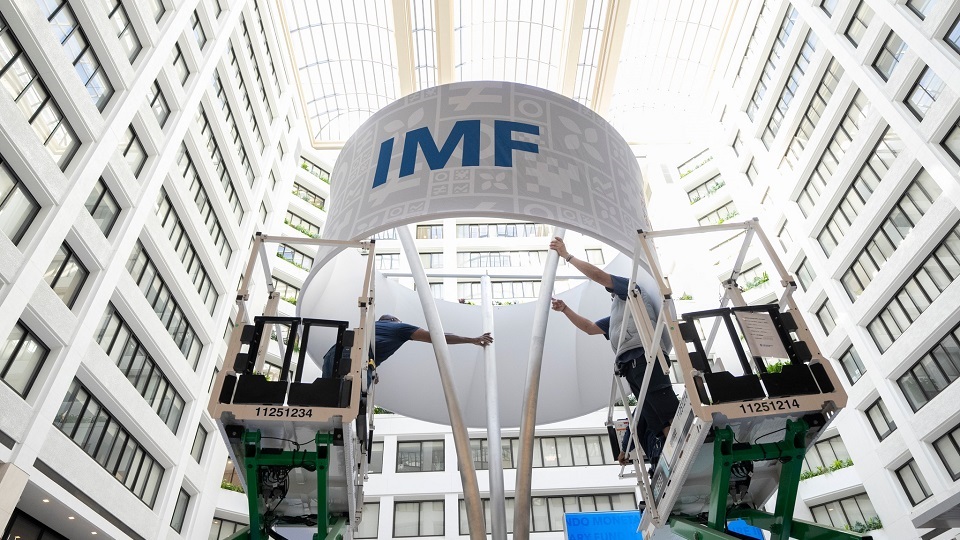
The IMF Board of Directors approved the second tranche under the Extended Fund Facility program — $690 million, bringing the total disbursed amount to $2.2 billion out of the agreed $8.1 billion. Formally — a success. But the details of the review tell a more complicated story.
What went wrong — and why the money was transferred anyway
Ukraine met all quantitative criteria of the program by the end of March. However, two structural benchmarks were implemented with delays, and the target for net international reserves by the end of June was not achieved — partly due to the impact of the conflict in the Middle East on markets.
The money was transferred anyway. The IMF agreed to financing despite the fact that reform momentum slowed — and openly warned of a retreat from reforms. Why? The disbursement opens doors to broader international financing and supports Ukraine's commitments to creditors. But there is another factor: as Ekonomichna Pravda explains, the IMF is willing to forgive underperformance in order to continue financial support to Ukraine — because this is demanded by its main "shareholders": the G7 countries and the EU.
Hidden bargaining over VAT for individual entrepreneurs
The most notable missed benchmark — VAT for large individual entrepreneurs (FOP). The introduction of this tax was a program condition, but Ukraine managed to secure a postponement. The IMF took an unprecedented step and agreed to delay the VAT condition for a year, while transferring other conditions to the status of "structural benchmark".
Unlike prior actions, "benchmarks" can be changed or the implementation deadline can be extended. Moreover, the threshold for applying VAT was increased from 1 million to 4 million hryvnias in annual turnover — but in response, the IMF set stricter deadlines for the entire tax package.
Having sensed that the IMF was willing to make concessions even in meeting key benchmarks, the authorities discovered the vulnerability of the system of relations with the fund. This is not just diplomatic maneuvering — it is a precedent.
What is at stake next
IMF directors expressed concern about the retreat from critical structural reforms and emphasized the exceptionally high uncertainty due to the ongoing war.
The latest agreements with the IMF did not cancel the VAT condition for individual entrepreneurs — only postponed its implementation. At the beginning of 2027, it will again become a structural benchmark or even a prior action for the next tranche of $686 million.
A failure in negotiations with the IMF could also block budget financing from the EU. Without continuation of the Fund's program, Ukraine risks not receiving part of the EU's budget financing in the amount of €16.7 billion in 2026.
"Each concession by the IMF strengthens future obligations. Requirements do not disappear, but are postponed and intensified, which is why the space for negotiation gradually narrows."
RBK-Ukraina
The reform package that Ukraine must deal with in the next cycle includes VAT for individual entrepreneurs from 2027, tax on all parcels regardless of value, taxation of digital platforms, and continuation of military levy into the post-war period.
If by the May 2026 review the Council does not vote on parcel taxation — will there be enough political will in the IMF to suspend the program, on which €16.7 billion from the EU depends, or will the fund again choose the "soft" option and thus cement the precedent of managed non-compliance with conditions?