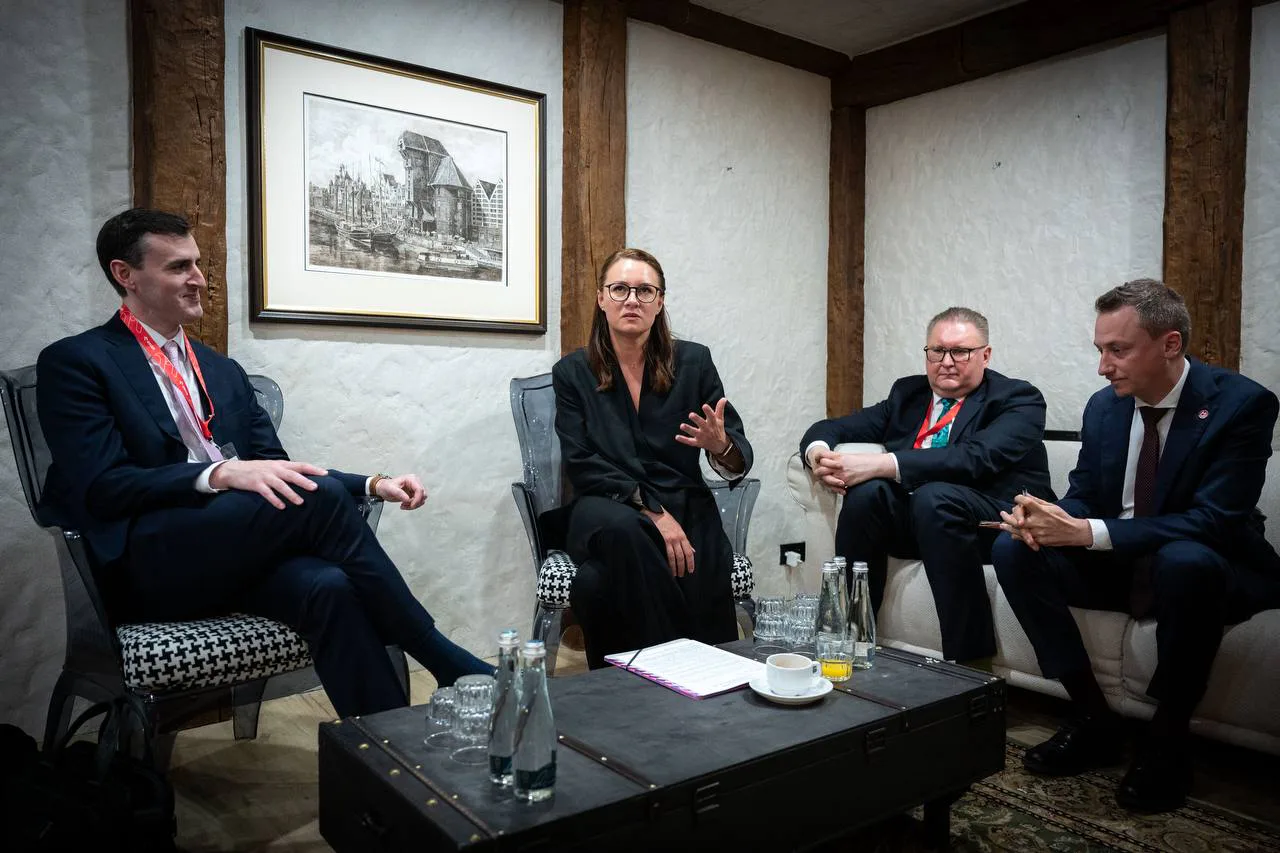
Prime Minister Yuliia Svyrydenko announced that the IMF Board of Directors will review the first review of the four-year EFF program by mid-July. If approved, Ukraine will receive $690 million — bringing the total disbursements under the program to $2.2 billion out of $8.1 billion envisioned.
What actually happened in the negotiations
According to the IMF's official statement, quantitative performance criteria as of end-March were fully met. But structural reforms are a different story. Two structural benchmarks for the first quarter were implemented with delays, and one was not completed. This became the main subject of negotiations between the mission led by Gavin Gresch and the Ukrainian side.
"Staff-level agreement was reached after agreeing on corrective measures to address deviations, additional policy commitments, and a revised reform timeline."
— Ministry of Finance of Ukraine
In simpler terms: the IMF did not block the tranche, but rewrote the conditions — with new deadlines and additional commitments instead of fixing the missed targets.
What Ukraine promised this time
According to the IMF statement, new commitments cover three areas:
- Tax system: eliminating VAT exemptions for international parcels, reforming the simplified taxation system, combating tax schemes.
- De-shadowing the economy: sharing databases between the State Migration Service and the Tax Service — the same benchmark that remains "in progress" from previous reviews.
- Anti-corruption: strengthening electronic asset declarations and reforming corporate governance of state enterprises and banks.
Separately, the IMF emphasizes hryvnia exchange rate flexibility: the Fund positively assesses the gradual easing of the currency peg, which protects reserves and absorbs external shocks.
Context: the first IMF program in history for a country at war
The EFF for Ukraine is the first IMF program issued to a country during active hostilities. In 2023, the Fund specifically changed its own rules, introducing a lending category under conditions of "extraordinarily high uncertainty." The GDP growth forecast for 2025 remains 2–3%, but by 2026, the IMF expects a slowdown to 1–1.6% — due to lower gas extraction and weaker agricultural exports.
While the program is "fully financed" thanks to external support, this means dependence on its continuity rather than on domestic revenues.
If the Board of Directors approves the tranche in July, Ukraine will receive another signal of confidence for markets and creditors. But the real question is not this tranche, but the next one: will Kyiv meet the revised reform timeline by the autumn review, or will it have to negotiate new "corrective measures" again?