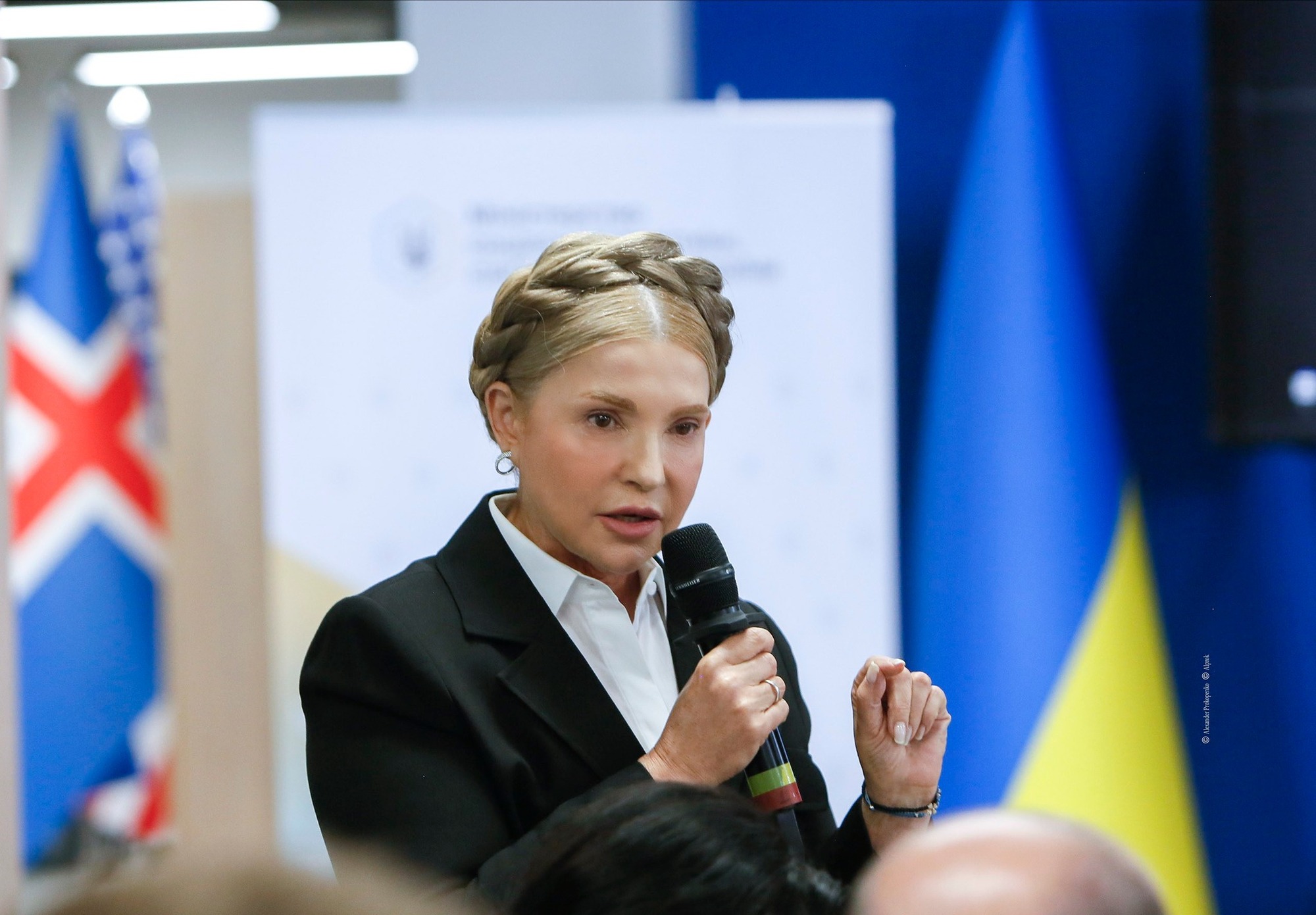
The National Anti-Corruption Bureau and the Specialized Anti-Corruption Prosecutor's Office have officially completed the pre-trial investigation in the case of a parliamentary faction leader in the Verkhovna Rada. Formally, the name of the suspect does not appear in the notice, but sources from the "Schemes" project and procedural chronology directly point to the leader of "Fatherland" Yulia Tymoshenko.
What the investigation established
According to NABU's version, in December 2025 — against the backdrop of an already public scandal involving bribes to MPs — the suspect did not stop, but rather initiated negotiations about a systematic payment mechanism. The idea, according to the case materials, was not in one-time agreements, but in monthly advance payments to deputies from outside her faction in exchange for controlled voting: "for," "against," abstaining, or absence.
"The suspect initiated negotiations with certain members of parliament regarding the introduction of a systematic mechanism for providing unlawful benefits in exchange for loyal behavior during voting."
— Official NABU statement, January 14, 2026
To confirm this, NABU released audio recordings where the suspect's voice discusses a specific amount — a "ten" — as a monthly payment to a deputy. Topics that appear in the recordings include voting on dismissals of officials, blocking appointments, and supporting the inclusion of draft laws on the agenda.
Who helped expose the scheme
Sources at NABU confirmed to the "24 Channel" publication that individuals who voluntarily cooperated with the bureau played a key role in documenting the agreements. That is, one of the deputies whom the suspect approached agreed to a controlled conversation — a standard operational practice that provides the court with direct evidence of an offer, rather than merely indirect testimony.
Where the case stands now
The completion of the pre-trial investigation means that detectives, at the prosecutor's direction, have opened case materials for the defense to review. After that, the SAP will either submit an indictment to the High Anti-Corruption Court or close the proceedings — there is no third option procedurally.
In parallel, disputes over preventive measures continue. The Appeals Panel of the HACC has already reviewed the decision twice: first it upheld a bail of over 33 million hryvnia, then partially lifted the arrest on the property of Tymoshenko's husband — three cars and two garages — but left the freezing of her own accounts in place.
- Suspicion: offer of unlawful benefits to members of parliament
- Mechanism: monthly advance payments for controlled voting
- Evidence: audio recordings, voluntary cooperating witnesses
- Preventive measure: bail; no travel ban
- Current status: defense review of case materials
Tymoshenko consistently denies all accusations and calls the case political pressure, referring to NABU and the SAP as "bodies of political persecution." According to her, she is preparing a complaint to the European Court of Human Rights.
The key question now is the quality of the evidence at trial: if the audio recordings were obtained as part of sanctioned operational measures and the defense cannot cast doubt on their authenticity, the case gains real judicial prospects. If not, the appellate marathon at the HACC is just beginning.