Every time weapons thunder in the Persian Gulf, Moscow counts the money. The conflict between the US and Iran is no exception: the price of Brent crude crossed the $90 per barrel mark on the very first trading day after the escalation. According to analysts' calculations, thanks to this jump alone, Russia receives up to $150 million in additional daily budget revenues.
Three kilometers on which the world depends
The Strait of Hormuz is a sea corridor only 3 km wide in each direction between Iran and Oman. Approximately 20-21 million barrels of oil per day pass through it — roughly one in every five barrels consumed globally. When the Islamic Revolutionary Guard Corps announced a threat to destroy vessels without Tehran's permission, Japanese shipping giants Nippon Yusen, Mitsui O.S.K. Lines, and Kawasaki Kisen Kaisha ordered their tankers to anchor outside the strait. The tanker Kavomaleas stopped in Omani Iranian waters after Iranian naval forces struck vessels.
Markets reacted immediately: Brent futures jumped more than 4% in a single trading session — the fastest growth rate since April.
"Physically, the strait is not blocked — tankers aren't going through because of insurer restrictions. But speculators are trying to escalate the situation by painting scary pictures."
Mykhailo Honchar, president of the Globalism Center "Strategy-XXI", expert in international energy relations
What's happening with prices in Ukraine
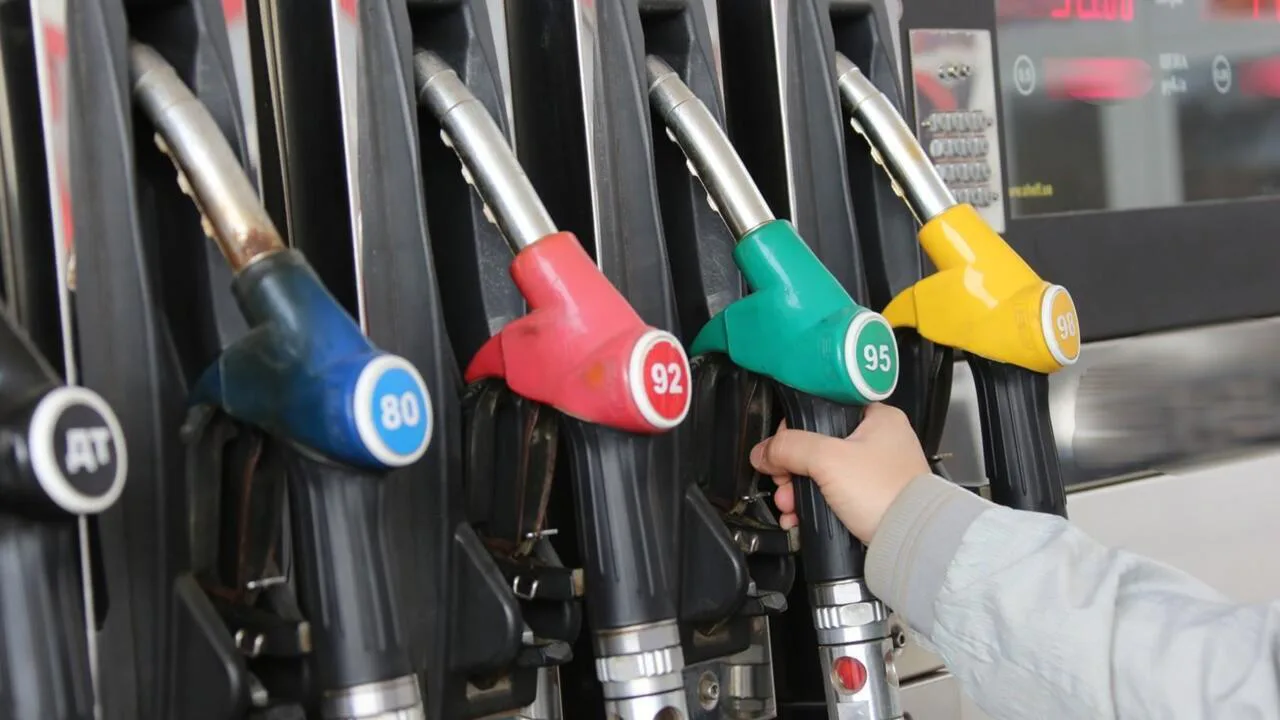
Sergiy Kuyun, director of the "A-95" Consulting Group, noted that the global oil market began growing as early as July 7, but gas station networks in Ukraine held prices steady for two weeks thanks to accumulated trader stocks. Now those stocks are exhausted — and "price tags are being rewritten en masse."
According to Kuyun's assessment, diesel could rise to 86 hrn per liter, with overall price increases of at least 6-7 hryvnia. Fuel expert Dmytro Loushkin from Prime Group of Companies goes further:
"Oil is now around 90-95 dollars per barrel, and gasoline will cross 90 hryvnia. When oil was at 110-115 dollars, it didn't cross that threshold. But now it will."
Dmytro Loushkin, fuel expert, founder of Prime Group
Additional pressure comes from a shortage of petroleum products in Europe: Russia has halted diesel exports and has itself entered the global market as a buyer of gasoline, reducing supply.
Why Moscow is rubbing its hands together
Russia is the world's third-largest oil producer and exporter. According to Reuters data, Russia's oil and gas revenues in May already grew 32.4% year-over-year, reaching 678.9 billion rubles ($9.26 billion). An added bonus: after the effective closure of the Strait of Hormuz, India is considering returning to purchases of Russian oil — 9.5 million barrels are already waiting near Indian ports.
In summary, the Middle East escalation serves the Kremlin with three functions simultaneously: increases oil revenues, expands the circle of buyers, and distracts the West from the Ukrainian front.
What's next
Kuyun warns that July and August are traditionally peak months for global fuel demand, and global petroleum product stocks have not yet recovered from previous crises. If tensions in the Strait of Hormuz persist for more than four weeks, analysts forecast another round of price increases — both on global markets and at Ukrainian gas stations.
The key question is not whether the escalation will stop — but whether the West will have time to enshrine in new sanctions packages a mechanism that cuts Russia off from windfall oil profits during moments of Middle East crises, while the window of opportunity remains open.