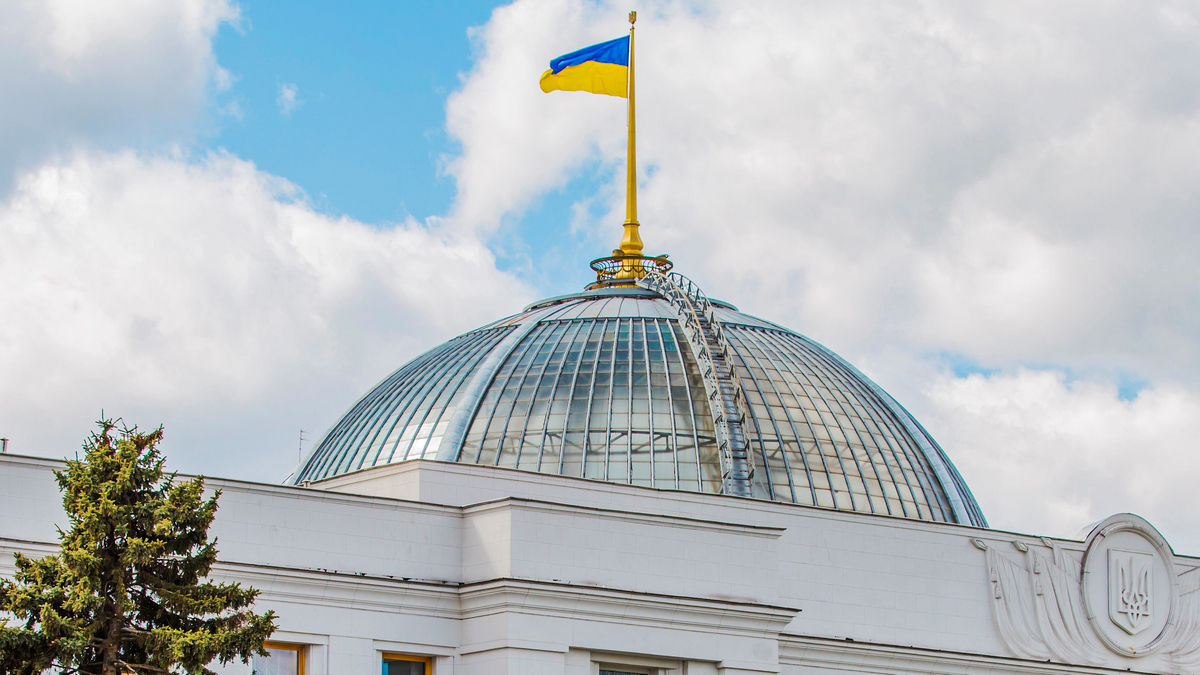
In April 2026, the Verkhovna Rada passed a law that automatically cancels the increased military tax after three years following the end of martial law — the rate will revert from 5% to pre-war levels of 1.5%. The problem: this means a sharp decline in budget revenues precisely when the most expensive phase of reconstruction begins.
What is fixed in the memorandum
The updated Memorandum on Economic and Financial Policy signed with the IMF contains a new provision: Ukraine is considering introducing a "reconstruction tax" with a rate of 5% — as a direct successor to the military tax. The parameters are to be "clearly defined in transitional legislation after the end of the war."
People's Deputy Yaroslav Zheleznyak ("Holos") noted after the document's publication that the memorandum does not contain fundamentally new requirements: most structural milestones were already provided for in the previous cooperation program with the Fund, and now are mostly clarified or have extended deadlines.
Where the idea came from
The deputy minister of community and territorial development Alona Shkrum first publicly mentioned the possible "reconstruction tax" in late 2025 — in an interview with Forbes Ukraine. She cited Japan's experience and the concept of a separate Reconstruction Fund, one source of which could be a special levy after the end of hostilities.
"There will be no reconstruction tax and there cannot be one. This is an axiom."
Alona Shkrum — on Facebook, a few days after that interview
So the idea was first voiced, then publicly rejected — and now it has appeared in an official memorandum with the IMF. Not as a decision, but already as a documented intention.
Why the same rate is not a coincidence
The government's logic is transparent: the 5-percent military tax is already built into taxpayers' habits and budget calculations. A sharp abandonment of it after the war creates a gap that cannot be filled — international aid at that time, according to estimates, will predominantly come in the form of loans that need to be repaid. According to data from the updated World Bank and government assessment, the total cost of reconstruction is $524 billion over the next decade.
- Military tax now: 5% for individuals, separate rate for sole proprietors on the unified tax
- After the war without new legislation: automatic return to 1.5%
- Memorandum option: new levy at the same rate of 5%, but named "reconstruction tax" and with a new legal framework
The memorandum contains no specific parameters — who pays, from what base, with what exemptions. The document only notes that such an option is being considered.
It is notable that the IMF is not demanding this tax as a "milestone" — that is, a mandatory condition for a tranche. The Fund merely supported including the idea in the memorandum. Real pressure is coming from elsewhere: without stable budget revenues, the budget will not pass the next program reviews.
If a ceasefire or peace treaty is signed before parliament passes "transitional legislation" with the parameters of the new levy — will the Rada manage to close the legal vacuum before the provision on return to 1.5% automatically takes effect?