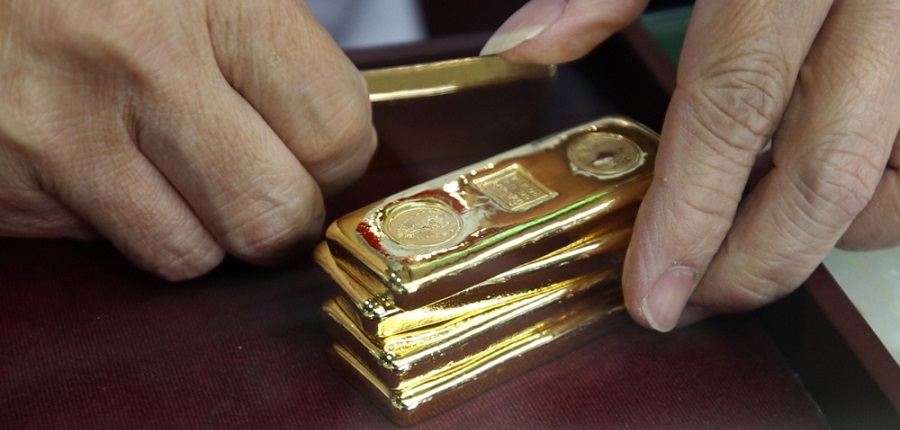
In the first quarter of 2026, the Bank of Russia sold 21.8 tons of gold — more than during the entire 2025. By the end of April, the total reduction since the beginning of the year reached 27.9 tons. According to Trading Economics, reserves fell to 2,304.75 tons — the lowest level since March 2022.
This is the first sale of physical gold from the Central Bank's reserves in nearly 25 years. Previously, the scheme was different: the Ministry of Finance sold gold to the Central Bank, and the metal remained within the country. Now it is going to market.
Why now
Russia's budget deficit for the first quarter of 2026 reached 4.6 trillion rubles (~$61 billion). Oil and gas revenues fell — partly due to low oil prices, partly due to sanctions pressure from the Trump administration. Military spending officially exceeded social spending for the first time.
"Gold sales may continue against the backdrop of a sharp increase in government spending that exceeds budget targets"
Analysts of the Central Bank of Russia, cited by Reuters
Notably, gold trading on the Moscow Exchange in March 2026 increased 3.5 times compared to the same month last year — to 42.6 tons. In ruble equivalent, volumes increased fivefold — to 534.4 billion rubles.
Scale of losses since the start of the war
The picture becomes clearer when looking at years rather than months. Russia's National Welfare Fund held 405.7 tons of gold before the full-scale invasion. According to United24 Media citing open data from the National Welfare Fund, by November 2025 the fund had divested approximately 232.6 tons — nearly 57% of its pre-war reserves. The fund's aggregate liquid assets (gold + yuan) shrank from $113.5 billion to $51.6 billion.
- Before the invasion, the National Welfare Fund: ~$113.5 billion in liquid assets
- November 2025: ~$51.6 billion — a decline by half
- As a share of GDP: unspent reserves decreased fourfold
Meanwhile, the nominal value of gold in rubles increased by 20.8% during 2025, and in dollars — by 53.2%. In other words, Russia is selling an appreciating asset. There are simply no alternatives: dollars are frozen, euros are inaccessible, yuan is limited in convertibility.
How much is left
At the current pace — approximately 7 tons per month according to Metals Focus — the 2,304-ton reserve will last about 27 years. But this is a flawed calculation: the pace of sales is increasing. In January-February 2026, they were selling about 7 tons per month, in March — already 6.22 tons officially, without accounting for transactions through the National Welfare Fund.
According to analysts at Ukraine's Main Intelligence Directorate, the transition to selling reserves began in November 2025, when the Central Bank first began selling gold to domestic buyers — banks, state-owned companies, and investment structures. This means that official statistics may not reflect the full scale of the outflow.
If Russia's budget deficit in 2026 exceeds $100 billion — and the current trajectory is heading that way — the pace of gold sales will accelerate to the point that in two or three years the question will no longer be "how much is left," but whether the Kremlin can maintain the ruble without a gold buffer at all.