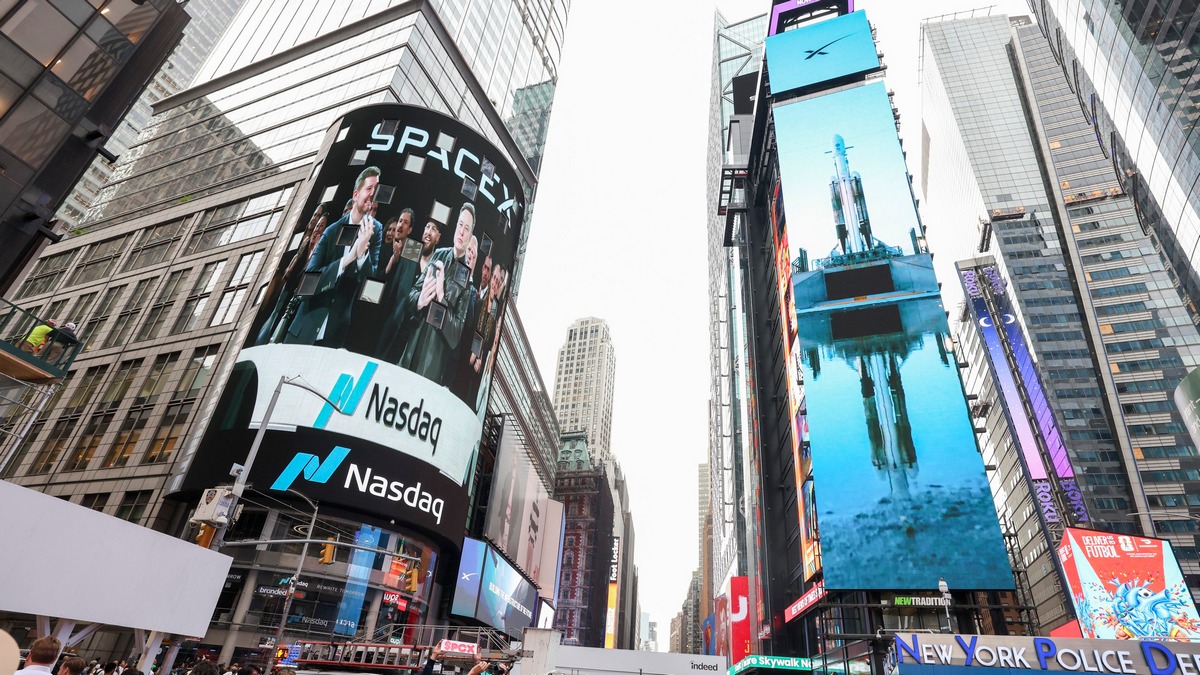
On July 7, SpaceX shares will enter the Nasdaq 100 index — 15 trading days after the IPO on June 12. For comparison: under the old rules, a company with a 4% float would have had no chance of entering any major index.
New rule — tailored to a specific situation
Nasdaq introduced a "Fast Entry" mechanism — accelerated inclusion for large IPOs with low float. At the same time, the exchange introduced a weighting multiplier for companies with a small number of shares in free circulation: the smaller the float — the higher the weight in the index. According to Morningstar's calculations, with a 30% float, SpaceX will receive approximately 2.6% weight in the Nasdaq 100, whereas with a standard 60% float — only 1.8%.
Critics point out the obvious: the timing of the rule changes coincided with preparations for the largest IPO in U.S. history. S&P Dow Jones, unlike Nasdaq, retained requirements for profitability and a 12-month quarantine — so SpaceX will not enter the S&P 500 anytime soon.
Mechanical demand of $4.3 billion
Inclusion in the index is more than just status. ETF funds tracking the Nasdaq 100 are obligated to buy shares of the new participant. According to J.P. Morgan's estimates, this generates approximately $4.3 billion in passive inflows — regardless of what analysts think about SpaceX's fair price.
"With a small initial float, backed by nearly every investment bank on the planet, and an unprecedented path to Nasdaq 100 just 15 trading days after the IPO, SpaceX's share price is likely to withstand separation — and may even skyrocket, at least for a while."
Morningstar
At the same time, Morningstar analysts consider SpaceX significantly overvalued: their fair value estimate for the company is $780 billion, while the IPO target is $1.75 trillion. The difference is nearly twofold.
What the numbers show
- Starlink generates 69% of SpaceX's revenue and is the only profitable division
- The space business showed an operating loss of $619 million in the latest quarter
- The AI division xAI incurred losses of $2.5 billion — Morningstar calls it a "material threat to value destruction"
- Musk committed not to sell his over 40% stake for a year after the IPO
SpaceX accounts for slightly more than half of all rocket launches worldwide and 83% of the mass placed in orbit — nearly tenfold more than China's CNSA in second place. But market dominance in launches and company profitability are two different things.
After SpaceX, public markets are awaiting OpenAI and Anthropic — both with potential valuations exceeding $1 trillion. If index providers change the rules again in favor of mega-IPOs, the question is no longer whether it will happen — but rather who will next force a rewrite of the rules, and whether passive investors can withstand another forced buyout of overvalued shares.