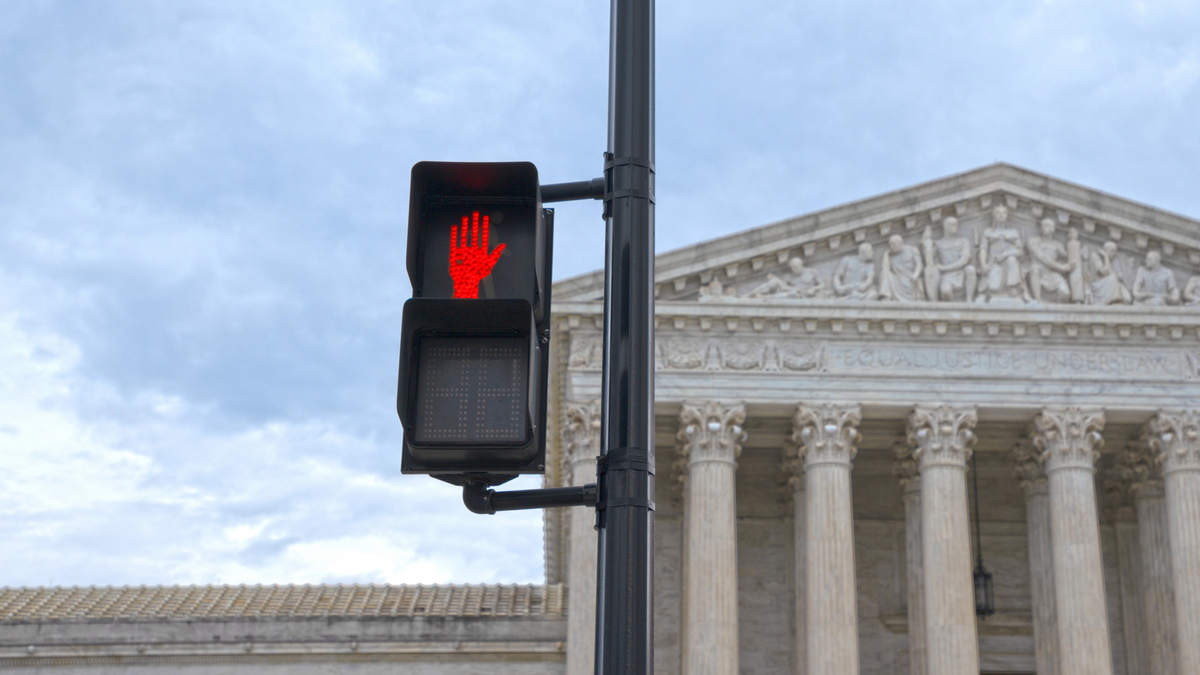
Lisa Cook will continue to shape U.S. monetary policy. On June 29, the Supreme Court voted 5-4 to reject the Trump administration's request to overturn a court injunction preventing her dismissal. The decision was signed by Chief Justice John Roberts — alongside conservative Brett Kavanaugh and three liberal justices.
What's really happening: not fraud — control over interest rates
The official pretext for dismissal is an accusation of mortgage fraud. In August 2025, Trump announced on Truth Social that he had "sufficient grounds" to remove Cook due to "deceptive and potentially criminal actions in a financial matter." The basis was three mortgages that Cook obtained before her appointment to the Federal Reserve.
The specifics of the accusation: Bill Pulte, a Trump-appointed official at the agency regulating mortgage giants Fannie Mae and Freddie Mac, claimed that Cook simultaneously designated as her "primary residence" a condominium in Atlanta (a $540,000 mortgage in a Four Seasons hotel) and a house in Ann Arbor, Michigan (a $203,000 loan). This would have given her more favorable lending terms than for a second home or investment property. Pulte referred the matter for criminal investigation to the Department of Justice, which opened an investigation.
However, documents obtained by Associated Press showed that in the appraisal for the same Atlanta apartment, Cook herself called it a "vacation home." Her attorney Abbe Lowell categorically rejected the accusations in September 2025.
"This was never about mortgage documents signed years before my appointment. It was an attempt to remove me under a fabricated pretext — because I refused to bow to political pressure and continued to set rates based solely on the interests of Americans."
Lisa Cook, statement following Supreme Court decision
According to several economists and Cook herself, the real motive is disagreement with the monetary policy course. Trump spent months publicly pressuring the Federal Reserve to lower interest rates. Cook voted with the majority of her colleagues to keep rates unchanged at all five meetings in the first half of 2025 — until the moment of her "dismissal."
Why the Federal Reserve is a special zone
The Federal Reserve Act allows the president to remove a Board member only "for cause." Board members are appointed to 14-year terms — specifically to insulate monetary policy from election cycles. Cook was appointed by President Biden; her term ends in 2038.
Roberts noted in his decision that the interpretation proposed by the government would "effectively transform the 'for cause' protection into at-will employment" — which contradicts both the law and long-standing tradition of central bank independence. The court also found a procedural violation: Cook was not given an explanation of the evidence or an opportunity to respond before her dismissal.
The same day, in a parallel decision also authored by Roberts, the court allowed Trump to fire FTC Commissioner Rebecca Slaughter — expanding presidential authority over independent agencies. The Supreme Court thus drew a clear line: the Federal Reserve stands apart.
Scale of the precedent
- Cook is the first in 111 years Board member whom a president attempted to remove.
- The legal defense cost approximately $1.2 million in attorney fees — most covered by two nonprofit foundations.
- Former Federal Reserve Chair Jerome Powell called this case "perhaps the most important in the history of the Federal Reserve."
- Four conservative justices — Thomas, Alito, Gorsuch, Barrett — voted in favor of dismissal. Thomas wrote in his dissent that "public office is not property."
The Supreme Court's decision is procedural: it upholds the lower court's injunction while Cook's main lawsuit continues. The court did not answer the fundamental question: whether the president can dismiss a Federal Reserve Board member at all and under what conditions. This question will be decided in the main proceedings.
If lower courts ultimately rule that the accusation of mortgage fraud constitutes sufficient "cause," Trump will gain a legal precedent to restructure the Federal Reserve Board before the end of his term. This directly determines who controls the cost of credit for millions of Americans.