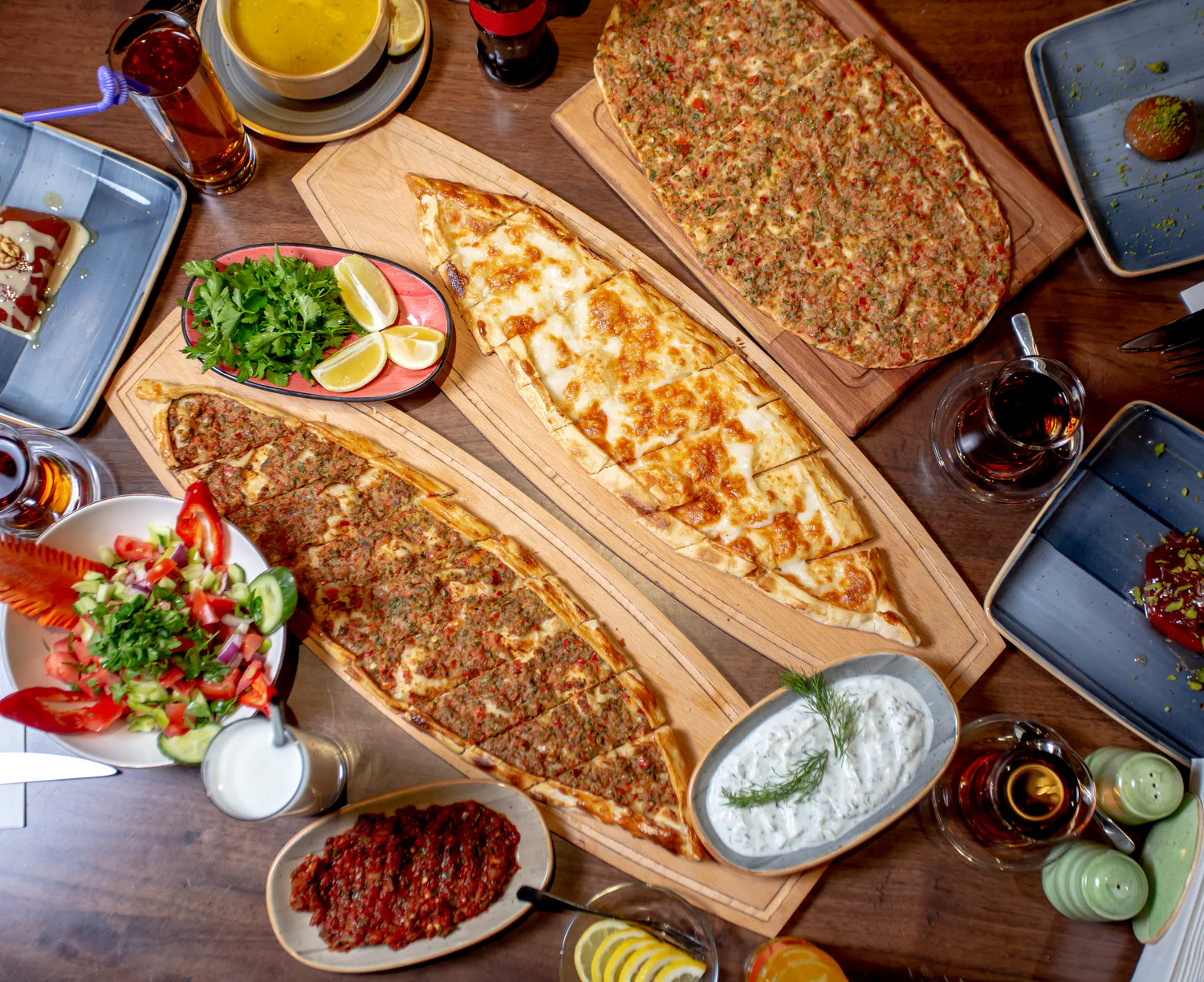
When baklava is served in an Istanbul café, the waiter is unlikely to mention that the word "kebab" has Persian origins, that Kurds claim the recipe for dolma as their own, and that Turkey itself as a culinary identity has existed for less than a hundred years. Ottoman cuisine and Turkish cuisine are not the same thing. But it is precisely this misunderstanding that makes it interesting.
From Mongolian steppes to the sultan's palace
The ancestors of modern Turks were nomadic tribes from Mongolia and Central Asia who moved westward starting around 600 CE. They brought with them nomadic traditions: horse meat, lamb, fermented dairy products. Chinese influence is felt in noodles and dumplings — manti, Persian influence — in rice, nuts and stewed dishes.
During the Ottoman Empire, cuisine split into two streams: palace and folk. The palace is Topkapi, where thousands of cooks worked and where dishes were instruments of diplomacy. Folk cuisines are regional: the Aegean coast with fish and olive oil, Anatolia with grains, the Southeast with hot kebabs and spicy fillings.
"The origins of this culinary heritage cannot be established precisely: it is merely conjecture — whether it reaches back to Greek antiquity, Byzantine tradition, or Turkic and Arab peoples."
Bert Fragner, researcher of Ottoman culinary culture
Three dishes — three disputes
- Kebab. A word of Persian origin. The practice of roasting meat on skewers was perfected by Kurds, Persians, Arabs — and Turks. Today, Turkey alone has over 30 regional varieties.
- Dolma. Stuffed grape leaves or vegetables — a dish equally claimed as "theirs" in Turkey, Greece, Armenia, Azerbaijan, and Iraq. The word itself is Turkic, meaning "filled," but the recipes existed long before the Ottoman Empire.
- Baklava. The most disputed. Greece, Lebanon, Iran, and Kurdish culinary traditions claim authorship. Turkey claims the most famous version. In UNESCO, baklava still has no single "owner."
How 1980s tourism created "Turkish cuisine"
Until the 1980s, Turkish culinary identity as a concept barely existed in the academic sense. It was the tourism boom that forced the state to hold two major culinary symposiums — and essentially construct a narrative: continuous tradition from Central Asia through the Seljuks to the Ottomans and on to the Republic. This is not falsification, but neither is it neutral history — it is a brand.
At the same time, Turkey's actual contribution is undeniable: it was Istanbul's palace cooks who systematized recipes, spread techniques throughout the Mediterranean, and passed them on to the Balkans, the Levant, and the Caucasus. Bulgarian, Greek, and Bosnian cuisines still carry Ottoman DNA in their dishes.
What to eat — and what not to order first
If we set aside disputes about origins, Turkish food has a practical regional logic:
- West (Aegean, Marmara): olive oil, fish, fewer spices, more vegetables — closest to the Mediterranean diet.
- South and Southeast: heavy kebabs, spicy fillings, lamb — a cuisine where the influence of Syria and Iraq is felt.
- Black Sea coast: anchovies and corn — a separate world, barely resembling Istanbul restaurants.
- Central Anatolia: wheat, bulgur, stewed meat — cuisine closest to nomadic origins.
Chorba — a thick soup made with lentils or lamb — unites all regions. It is the one dish that no one contests.
If Turkey continues to actively push for GI protection (geographical indications) for kebab and baklava in the EU — as it already does with Turkish coffee — the question "whose dish is this" will cease to be academic and become legal. Are Greece, Armenia, and Lebanon ready for this round?