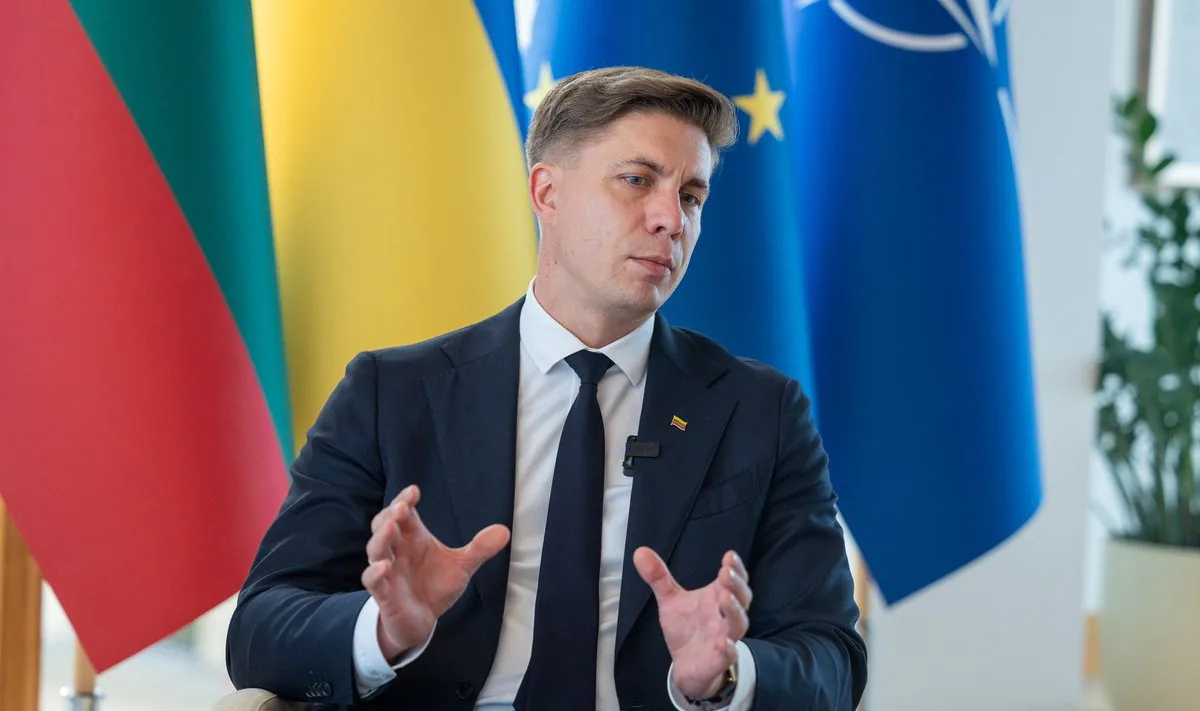
Lithuania's school curriculum from 2022 — that is, already after the full-scale invasion — contained more Russian authors than the previous version, and no place for Ukrainian literature. Prime Minister Mindaugas Sinkevičius is now proposing to fix this: remove Mikhail Lomonosov, who glorified Russia's imperial wars, and include Taras Shevchenko.
The question is not literary, but political
Sinkevičius emphasized that Lithuanian children should not learn patriotism and citizenship from texts associated with Russian imperial ideology. This formulation directly names the problem: it is not about the artistic value of Lomonosov, but about what message is transmitted to teenagers through his works.
According to the Prime Minister, the inclusion of Shevchenko would help Lithuanian youth better understand the distinctiveness of the Ukrainian people and the literary texts that shaped it.
Why the 2022 curriculum was criticized in the first place
After the adoption of updated programs, critics immediately pointed out the bias: there were more Russian authors than before, and Ukrainian literature was still not added. The Ministry of Education responded at the time that the study of Russian texts was not mandatory and teachers could freely choose other authors — in other words, they did not formally acknowledge the problem, shifting responsibility to teachers.
Sinkevičius's proposal changes the logic: instead of "teachers can avoid it" — direct exclusion from the list and replacement with a specific Ukrainian author.
The context that makes the proposal non-abstract
Recently, Lithuania's embassy in Kyiv was damaged by a Russian strike, and Vilnius summoned Russia's representative over the incident. Lithuania is also preparing to strengthen restrictions for citizens of Russia and Belarus. The initiative regarding the school curriculum falls into the same line of decisions — to reconsider what exactly the country presents as a cultural authority when the war is literally happening nearby.
The question now is for the Ministry of Education: will the Prime Minister's proposal become a formal decision, or will it remain a recommendation that can once again be circumvented by invoking teachers' freedom of choice.