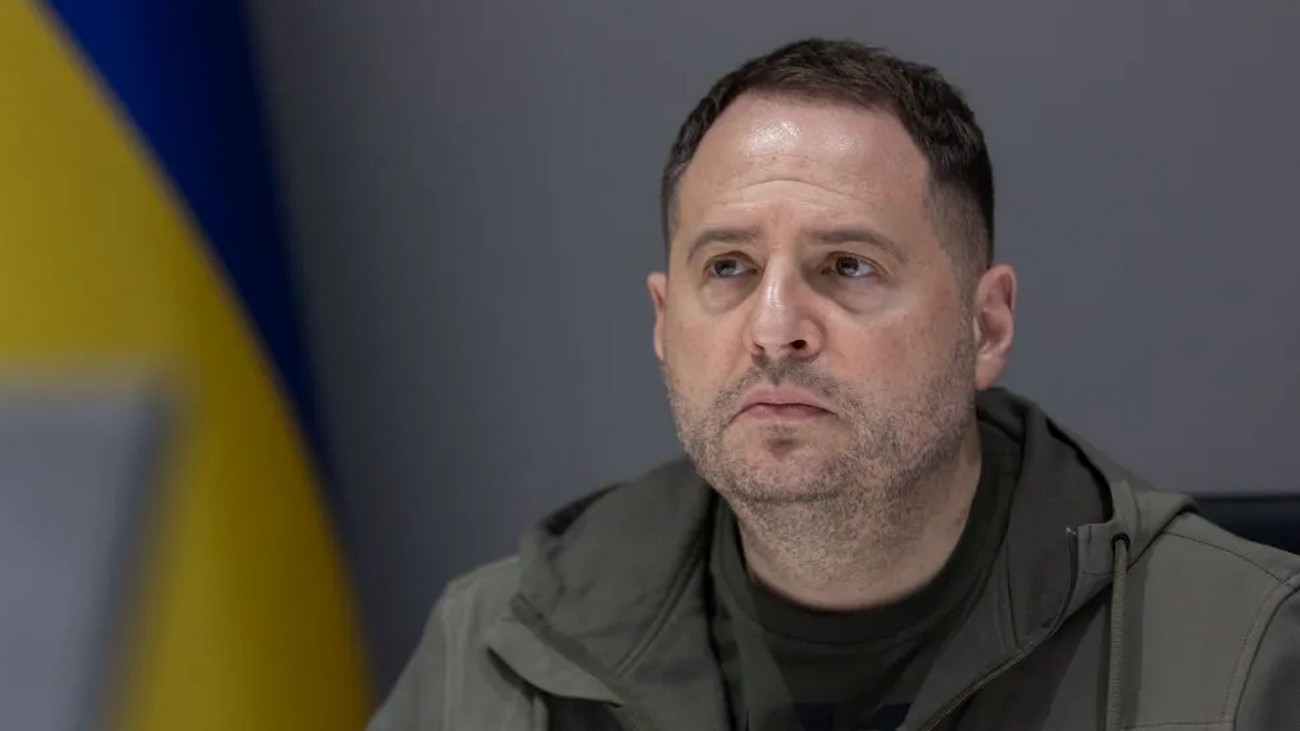
On the morning of May 18, the Supreme Anti-Corruption Court confirmed that bail for Andriy Yermak, the former head of the Office of the President, had been paid in full. Soon after, he was released from Kyiv's pre-trial detention facility — on the fifth day after his arrest in the courtroom. However, his release came with conditions that make his existence transparent to the investigation.
What happened in court
On May 14, the SACC selected a preventive measure for Yermak — detention for 60 days with an alternative of bail of 140 million hryvnia. The SAP Prosecutor's Office had requested 180 million — the court reduced the amount. Immediately after the decision was announced, Yermak was taken into custody right in the courtroom. He told journalists: "I don't have that much money. I wasn't prepared for this. I hope friends and acquaintances will be able to help."
The money was collected over four days. The bail was deposited into a special SACC deposit account at the State Treasury — and an unexpected complication arose. According to Yermak's lawyer Igor Fomin, the full amount was collected by Friday evening, May 15. However, the banking system had difficulty accepting the payments — financial monitoring flagged unusual transactions. The SACC only checks account status on business days, so Yermak spent Saturday and Sunday in detention.
"The comedy of the situation lies in the fact that Yermak personally appointed the head of FinMon. The very same Pronin. I don't know if this whole story is in line with feng shui, but it's definitely karmic."
Yaroslav Zheleznyak, People's Deputy from the Holos party
Who collected 140 million
Among those who contributed funds are public figures from the close circle of the ex-official:
- Serhii Rebrov, former coach of Ukraine's national football team — 30 million hryvnia. Rebrov left his position in April 2026.
- Roza Tapanova, director of the Babyn Yar memorial — 8 million hryvnia.
- Serhii Svyryba, lawyer and Yermak's former classmate — 6.5 million hryvnia.
- The remainder was contributed by a wide pool of individuals; according to People's Deputy Zheleznyak, the "task to collect money" was allegedly "assigned by the president personally" — the Office made no comment on this.
The "Dynasty" case: what is alleged
NABU and SAP suspect Yermak of violating Part 3, Article 209 of the Criminal Code of Ukraine — legalization of property obtained through criminal means, committed by an organized group on an especially large scale. The penalty is 8 to 12 years imprisonment with confiscation of property.
According to the investigation's version, during 2021–2025, the suspects "laundered" 460 million hryvnia through the construction of the "Dynasty" cottage village in Kozyn village in the Kyiv region — four private residences on 8 hectares plus a common spa zone. Residence No. 2 ("R2") is attributed by the investigation to Yermak, No. 3 to businessman Timur Mindiych, and No. 4 to former Vice Prime Minister Oleksii Chernyshovа.
The "Dynasty" case is part of the broader "Midas" operation, which NABU launched in November 2025. According to law enforcement, the suspects allegedly demanded 10–15% kickbacks from Energoatom contractors, threatening them with "blacklists" and mobilization of employees. The materials contain pseudonyms: "Carlson" (Chernyshovа), "Sigismund" (ex-minister Halushchenko), "Rocket," "Tenor."
Conditions of release
Upon leaving detention, Yermak received a strict list of procedural obligations: not to leave Kyiv, surrender diplomatic passports to the Foreign Ministry, wear an electronic bracelet, appear on demand from detectives and prosecutors, and not communicate with Chernyshovа and Mindiych. The defense is preparing an appeal, calling the case "absolutely empty."
Why this matters
Yermak is the highest-ranking ex-official from Zelenskyy's circle to receive suspicion from NABU. Before him, suspicions were received by deputy heads of the Office Smirnov and Tatarov, ex-Vice Prime Minister Chernyshovа, ex-ministers Halushchenko, and Mindiych — co-founder of Kvartal 95 and the president's long-time friend. Zelenskyy dismissed Yermak in April — this was publicly explained as a "reset" of the Office so that "internal forces would not be directed at anything other than defending Ukraine." The president gave no direct comment on the substance of the case.
If the court ultimately delivers a guilty verdict — it will become a precedent for convicting a person who effectively managed the state apparatus alongside the president for seven years. If it acquits or the case falls apart at the review stage — the question of whether the anti-corruption system became a tool in internal power struggles will remain unanswered. The open question is simple: will NABU and SAP withstand pressure until the case is transferred to court — or will key evidence again prove to be "procedurally vulnerable"?





