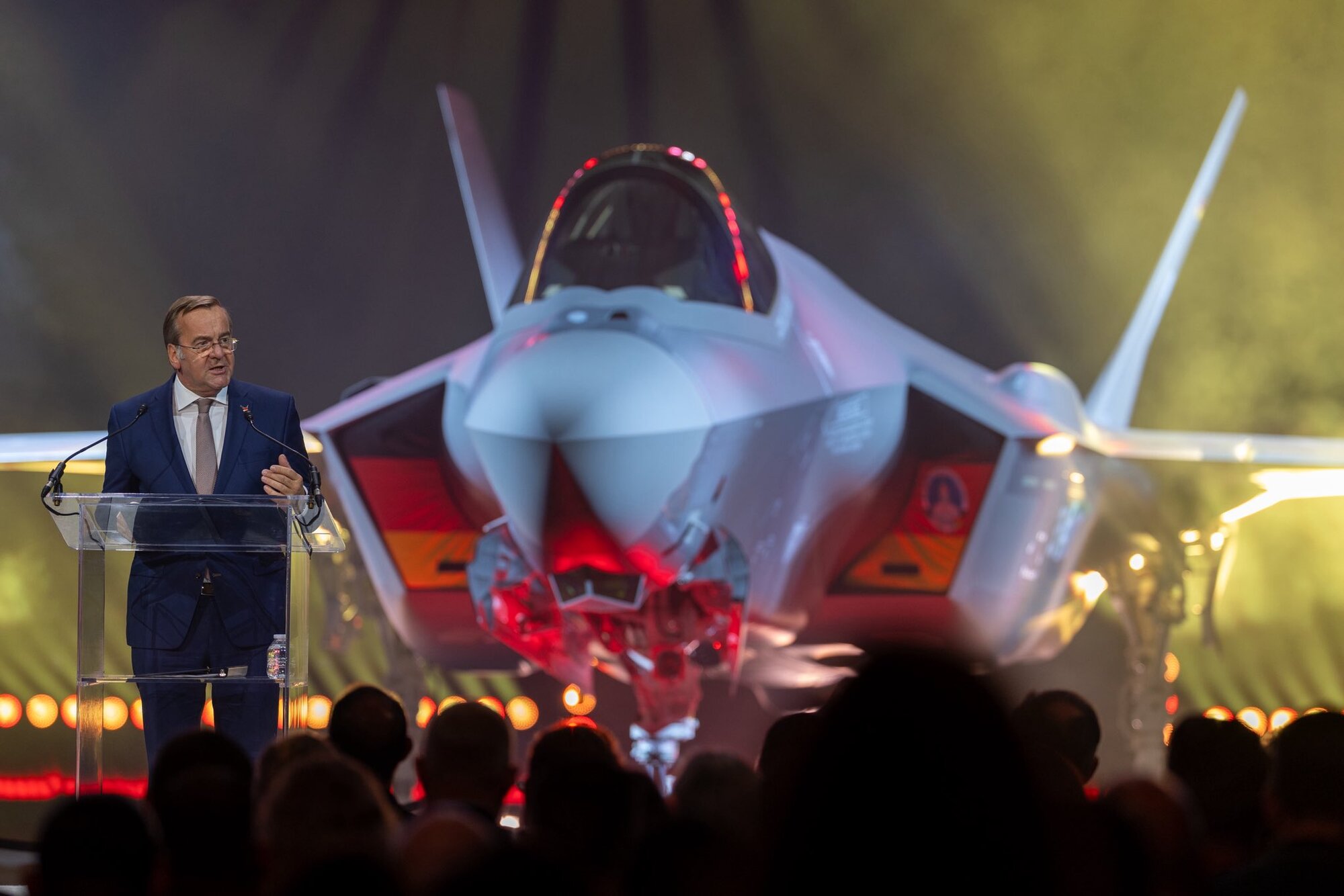
Germany's first F-35A is already standing at the Lockheed Martin factory in Texas, but the real intrigue lies not in the aircraft itself, but in the timelines. Defense Minister Boris Pistorius promised that Büchel Air Base in the Eifel region will be ready to receive these aircraft as early as next year – while similar infrastructure overhauls typically take several years.
This is not a rhetorical detail. It involves certification of runways, weapons management systems, training technicians, and logistics for spare parts supply – everything that determines whether the aircraft is actually combat-ready or just sits in a hangar as a demonstration of intent.
"Russia continues to test our borders, so this is an urgent matter that has now taken on a new dimension," Pistorius said when accepting the fighter.
The context for this urgency is a series of incidents within Germany itself: a drone near Hanover being investigated for a possible connection to an attack on Leipzig airport, 21 improvised explosive devices near power lines in Saxony, and over 165 suspicious incidents since the beginning of the year according to Süddeutsche Zeitung. Sabotage is occurring not at the Russian border, but deep within Germany, and this changes the logic of defensive planning.
The aircraft as an indicator of political will
The F-35A is not merely a replacement for obsolete Tornados that Germany has been using since the 1980s. It is a nuclear weapons carrier under NATO's nuclear sharing agreement, which is why the choice of this aircraft was politically sensitive just a few years ago. Now the speed of rearmament has become a separate signal – for Moscow as well as Washington.
Pistorius directly linked the aircraft delivery to a broader agreement: in parallel, Berlin is seeking licenses from the United States to produce Patriot PAC-3 air defense missiles and Tomahawk cruise missiles directly in Europe. Bloomberg reported this on September 15, and Pistorius plans to continue discussing this issue with Pentagon chief Pete Hegseth.
In other words, this is not about a single procurement, but about Germany's attempt to gain technological independence in the production of critical weapons – in case political support from the United States becomes less predictable.
What one year of readiness will reveal
The promised one-year timeline for preparing Büchel is a practical test of Germany's real capability to rapidly increase its defense potential, not just rhetoric about a "new era" for the Air Force. If the base is ready on time, it will set a precedent for other NATO countries that are also rearming amid Russian provocations.
If timelines slip – and bureaucratic rearmament processes in Europe have a long history of delays – it will demonstrate a gap between political statements and the actual speed of the continent's military machine, which has been accustomed to peacetime for decades.







