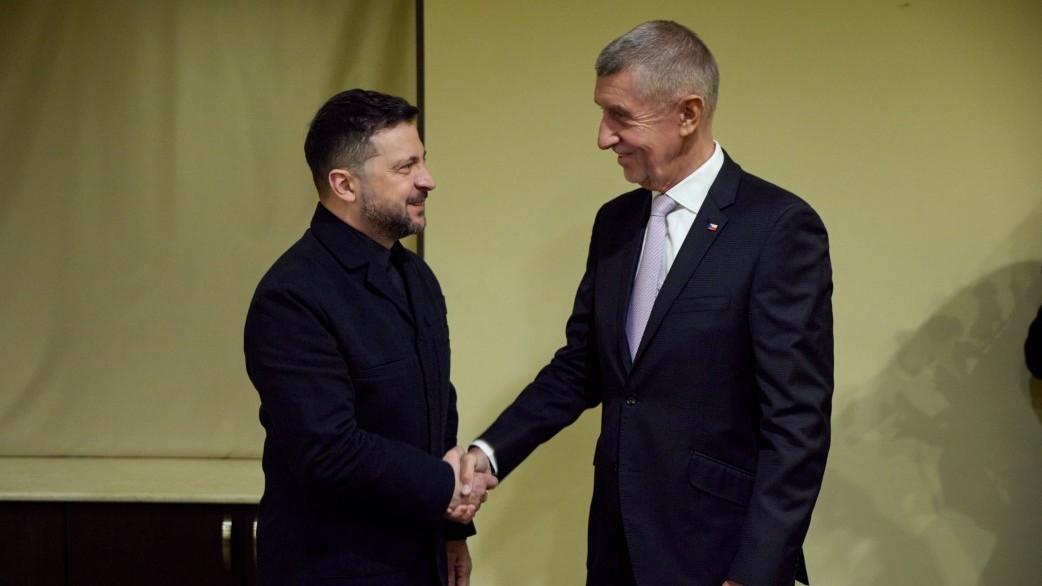
At the summit of the European Political Community in Yerevan on May 3-4, Czech Prime Minister Andrej Babiš met with President Zelenskyy for the first time since his appointment. Among the topics he raised were not only peace and ammunition. Babiš asked whether Ukraine would allow the transportation of Azerbaijani oil and gas through its pipeline network. Zelenskyy's response was "yes."
"When we had a meeting in Yerevan, I asked President Zelenskyy whether he would allow the transportation of Azerbaijani oil and gas through Ukrainian territory. He answered that it is possible."
Andrej Babiš, comment to the Azerbaijani state agency Report
Why this is not just a polite conversation
Czechia is the only one of three EU countries that previously received oil through the "Friendship" pipeline to publicly announce its exit from Russian supplies before 2025. In March 2025, Czech company Orlen Unipetrol officially abandoned Russian crude oil and switched to Azerbaijani supplies. According to Caliber.Az, Azerbaijan became the main oil supplier to Czechia in 2025, and its share continues to grow.
The problem is the route. Oil from Baku currently travels mainly through the Trans-Alpine Pipeline (TAL) from the port of Trieste — but the capacity of this route is limited, and expansion requires time and investment. Transit through Ukraine via the "Friendship" pipeline is technically the simplest option, because the infrastructure already exists.
Kyiv's position: principled agreement exists, details are absent
Zelenskyy publicly discussed readiness for Azerbaijani transit as early as January 2025 — shortly after Ukraine stopped transit of Russian gas on January 1. At that time he said directly: "We can sign a contract quickly" — but only if Europe gives a signal. An official signal has not yet been given.
The conversation in Yerevan is so far at the level of intentions, not agreements. No memorandum or technical protocol following the meeting has been released. Ukraine maintains transit infrastructure that, after stopping Russian gas transit, is partially idle in fact — and income from Azerbaijani raw materials could partially compensate for these losses.
Babiš: soft pivot or pragmatism?
The context of the negotiator's identity is not secondary. Babiš came to power in December 2024 with election promises not to spend Czech money on weapons for Ukraine. After his inauguration, he softened his position: the Czech ammunition initiative continues, but only if it is financed by partners, not Prague. According to Financial Times, the number of donor countries in this initiative has halved — from 18 to 9.
- Babiš does not support sending Czech soldiers on a peacekeeping mission
- Babiš supports Ukraine's EU membership
- Babiš actively seeks Czechia's energy independence from Russia
The meeting with Zelenskyy in Yerevan is the first personal conversation between the two leaders. The fact that Babiš immediately raised the issue of oil transit shows that a pragmatic energy agenda is more important to him than demonstrative solidarity.
Hungary and Slovakia — a silent variable
The "Friendship" pipeline is a shared artery for Czechia, Slovakia, and Hungary. Any new contract for Azerbaijani oil transit through Ukraine would technically affect all three consumers. Meanwhile, both Orbán and Fico publicly advocate maintaining Russian oil through the same route. If Kyiv and Prague agree on Azerbaijani transit without Budapest and Bratislava — this would effectively mean a reformatting of the entire pipeline logistics to a new geopolitical reality for which Hungary and Slovakia are not prepared.
If Czechia and Azerbaijan sign a specific contractual mechanism with Ukraine — and not just exchange principled "yeses" — this will force Hungary and Slovakia either to join the new supply scheme or explain to voters why they continue to pay Russia where a neighbor already does not.





