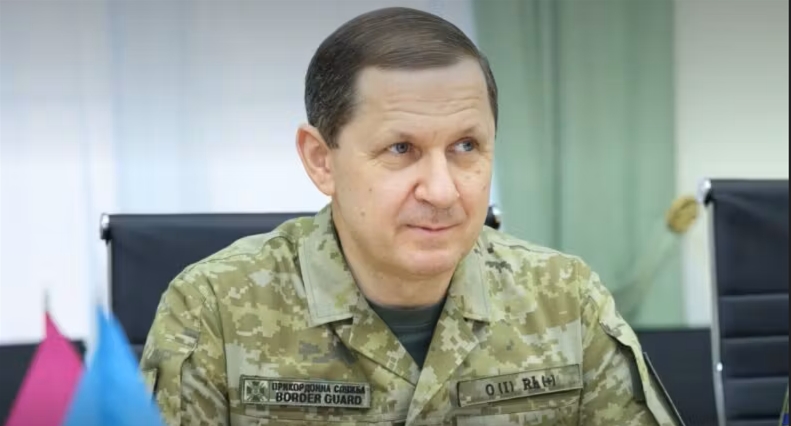
Major General Vadym Chenchyk, who has served as deputy head of the State Border Guard Service since 2019, is now acting as its director. President Volodymyr Zelenskyy signed the decree. The wording is brief and dry — "temporarily perform duties" — but behind it lies the third leadership change in this position in just over a month.
Chronicle of One Chair
To understand the scale of personnel turbulence, it is worth reviewing the sequence of events.
- January 4, 2026: Zelenskyy dismissed Serhiy Deineka from his position as head of the SBGS.
- The duties of leading the border service were entrusted to Major General Valery Vavrynyuk.
- January 22: NABU announced suspicion against Deineka of receiving bribes for facilitating cigarette smuggling to the EU.
- January 30: VAKS set a bail of 10 million hryvnia for him.
- Now, less than a month after his appointment, Vavrynyuk as acting head is replaced by Chenchyk.
The agency, which simultaneously guards the state border and participates in combat operations on certain sections of the front, has been without a permanent leader for over a month — and the reason for this has not been publicly explained.
Why Now
Formally, the decree is a routine personnel decision within a system where the head of the SBGS is appointed by the president. However, the speed with which one acting director replaces another suggests that the process of finding a permanent leader is either stalling or being deliberately delayed. The corruption case against Deineka remains unresolved: bail has been posted, the investigation is ongoing, and any final personnel decision regarding the SBGS will inevitably be viewed through the lens of this case.
In such a context, appointing a career deputy rather than a new external manager appears to be an attempt to avoid additional risks and questions — Chenchyk is known within the structure for over five years, was responsible for international cooperation, and his biography contains no public scandals.
Who Benefits
For the presidential team, such a configuration provides control over a key security agency without needing to publicly defend a new appointee during the active phase of corruption investigation into his predecessor. The temporary status of the director is also a way to postpone a difficult political decision: permanent appointment would require explaining the selection criteria and withstanding comparisons with the circumstances of Deineka's dismissal.
For Chenchyk himself, the temporary mandate is both a test and a risk: managing an agency in a state of limbo, lacking the authority of a permanent head, making strategic decisions about personnel and combat sectors of the front, while remaining a temporary element of the system.
What This Means for Control of the SBGS
The main question that remains open is whether this latest replacement will be a step toward transparent appointment of a permanent leader or another pause in an indefinitely long series of "acting heads." For an agency responsible for border protection in wartime and which has already survived a corruption scandal at the highest level, the lack of stable leadership is not a technical detail but a question of the entire system's viability.
Will a competition for a permanent head of the State Border Guard Service be announced in the near future, or will Chenchyk continue leading the agency with "temporary" status for an indefinite period?