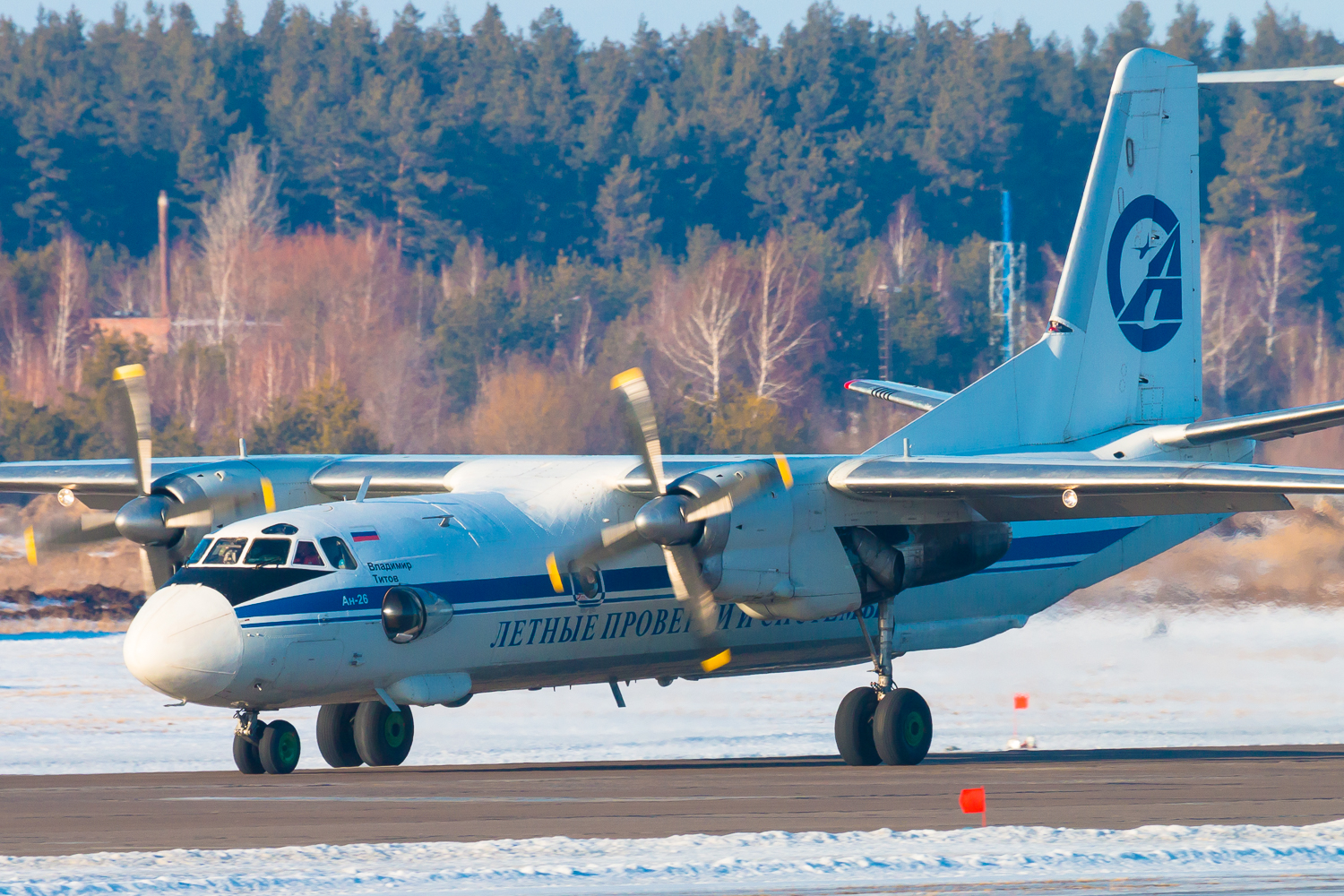
On March 31st, around 6:00 p.m. Moscow time, a military transport An-26 aircraft disappeared from radar screens during a routine flight over Crimea. Wreckage was found within hours in a mountainous forest near the village of Kuibyshevo in the Bakhchisaray district. All 29 people on board perished.
Among the passengers was Lieutenant General Alexander Otroshchenko, commander of the mixed aviation corps of the Northern Fleet since 2024. His death was confirmed by Murmansk Region Governor Andrey Chibis at a regional government meeting on April 6th—six days after the crash and only after Russian BBC Service reported it citing sources in the Northern Fleet.
A Career Written into the Timeline of Aggression
Otroshchenko was born in 1962 in Stavropol and graduated with honors in 1985 from the Stavropol Higher Military Aviation Pilot School. His subsequent career included commanding the naval aviation of the Black Sea Fleet from 2010 to 2013, participation in the annexation of Crimea in 2014, and operations in Syria supporting Assad's regime. He was an honored pilot of Russia and, according to BBC, one of those who directly ensured air cover for the occupation in 2014.
An irony difficult to overlook: the general who began his career advancement with the annexation of Crimea perished over the same Crimea—aboard a Soviet-era aircraft that crashed into a cliff during a "routine flight."
What is Officially Known About the Crash
The Russian Defense Ministry stated there was no "impact damage" to the fuselage—officially ruling out the possibility of being shot down. The preliminary cause is technical malfunction. The Investigative Committee opened a criminal case under Article 351 of the Russian Criminal Code—violation of flight rules or preparation for them.
"Among them was the commander of the fleet's aviation Alexander Ivanovich Otroshchenko, whom we saw literally just a couple of days before this"
Andrey Chibis, Governor of Murmansk Region, at an operational meeting on April 6th
The Murmansk Region government honored the memory of those who died with a moment of silence. No official information about other passengers was released.
The Fourteenth—or the Twentieth?
BBC called Otroshchenko the 14th Russian general to die since the start of the full-scale invasion. The Moscow Times, which maintains its own count, gives the figure as 20—the difference is explained by counting criteria: who to count as a general by position versus by rank, and whether to include those who died in non-combat circumstances.
- December 2025: near Moscow, the car of Lieutenant General Fanil Sarvarov from the General Staff was blown up—Sky News interpreted this as a possible signal from Ukraine about its ability to strike command personnel.
- October 2025: the son of General Arkady Marzoev, commander of the 18th General Army, died in the Zaporizhzhia direction.
- Now—the commander of the aviation corps of the Northern Fleet, who crashed into a cliff over the occupied peninsula.
The An-26 is a Soviet transport aircraft withdrawn from production back in 1986. The fact that the highest-ranking aviation commander of the Northern Fleet was flying in such an aircraft raises a separate question about logistics and the state of the Russian military transport aviation fleet after three years of war.
The investigation is officially underway. If the Russian Investigative Committee concludes that technical malfunction was the primary cause—this would mean either systemic degradation of the aircraft fleet or an admission of crew error. Neither option is advantageous for Moscow on the eve of another round of ceasefire negotiations.





