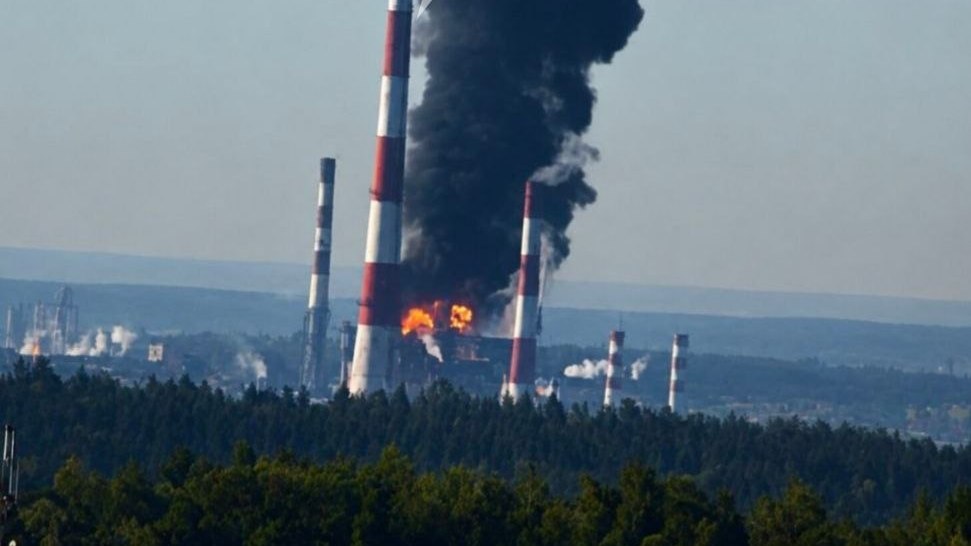
During the night of July 1-2, units of the Ukrainian Defense Forces struck the Lukoil-Nizhegorodnefte orsynthesis (NORSI) oil refinery in Kstovo in the Nizhny Novgorod region. The General Staff of the Armed Forces of Ukraine confirmed the hit and a fire on the territory of the enterprise. This is the third attack on the facility in just May-July.
A refinery that cannot keep up with repairs
NORSI is not an ordinary facility. According to Ekonomichna Pravda, the refinery is capable of processing approximately 15-17 million tons of oil per year and producing about 5 million tons of gasoline and over 5 million tons of diesel fuel. This makes it one of Russia's five largest refineries and one of the fuel suppliers for the army.
May 18 — the first strike, a fire. May 20 — a repeat attack: Reuters reported that the primary processing unit AVT-6 was shut down, which provides 53% of the enterprise's capacity — 25.7 thousand tons per day. Now — July 2, and flames again.
"The shutdown of the CDU-6 unit at NORSI will lead to a sharp decrease in production at the oil refinery, adding even more uncertainty to Russia's energy sector and fuel supply."
Reuters after the May 20 strike
Fuel crisis — no longer a forecast
Strikes on NORSI are part of a broader picture. According to Energy Intelligence analysts, in May alone, drones successfully hit Russian refineries 16 times, with eight of the country's ten largest plants coming under fire. According to UNIAN's calculations, Russia has lost almost a third of its oil refining capacity.
According to UNN, in June alone, the Defense Forces delivered more than 20 long-range strikes on facilities within Russian territory, including seven refineries and two oil depots. In early June, oil refining volumes in Russia fell below 4 million barrels per day.
In parallel that same night, a railway bridge in the Luhansk region was hit — another link in the logistics chain supplying the army.
Three strikes on one target: strategy or shortage of targets?
Repeated strikes on NORSI raise a practical question: either the plant cannot be permanently put out of operation, or Ukraine deliberately prevents it from recovering — striking again each time repair crews complete the most urgent work. The second scenario is more effective: instead of one devastating strike — chronic production disruption that cannot be fixed by insurance or equipment imports under sanctions.
If data appears after the July strike showing another primary processing unit shutdown — this will confirm precisely such a tactic. If the plant operates at full capacity within a week — the attrition strategy will be called into question.







