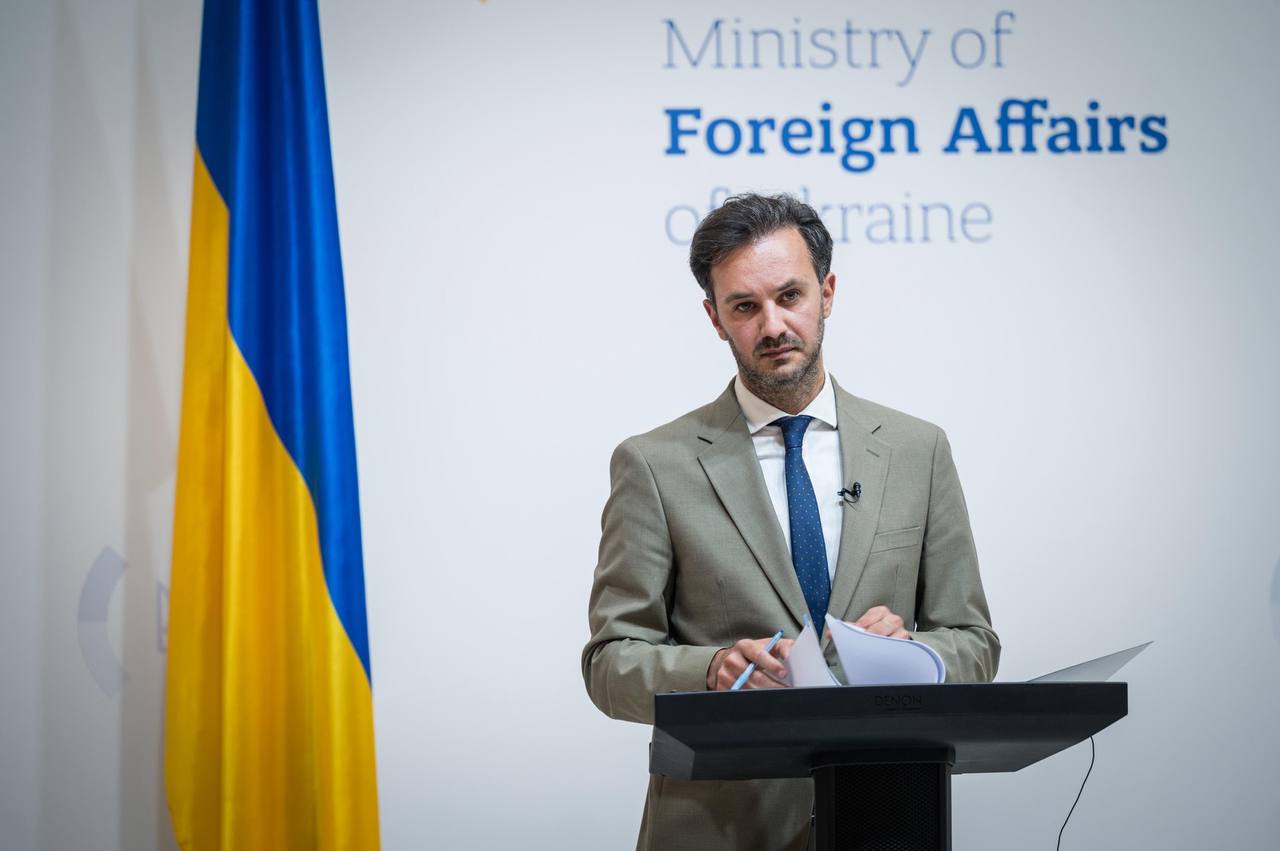
Georgy Tykhyy, spokesperson for the Ministry of Foreign Affairs, told the public broadcaster that something rarely spoken directly by a Ukrainian diplomat: the USA has limited attention to foreign policy issues — and Kyiv factors this into its work. The explanation is simple: Washington is entering an election cycle ahead of midterm Congressional elections on November 3, 2026.
Three factors simultaneously
The attention of the American administration is scattered across several directions at once. First, the war in the Middle East — trilateral talks between Ukraine, the USA, and Russia effectively fell apart after the start of the American military operation against Iran. Since then, this format has not convened again, with meetings held only on a bilateral basis.
Second, internal election logic. The midterm Congressional elections have existential significance for Trump: losing the majority in both chambers opens the path to impeachment and paralyzes presidential initiatives. As analysts at the publication "Ukrainian News" note, in 2026, Washington will view the war in Ukraine largely through the prism of this internal election calendar.
Third, the structure of the administration itself. U.S. foreign policy is increasingly shaped not by the State Department, but by a narrow ideological circle around Trump — loyalists, media figures, and major donors interested primarily in the internal agenda.
"The moment has not yet come"
"Simply, the moment has not yet come when Russia's motivation changed and conditions were created to reach an agreement."
Dmytro Kuleba, former foreign minister, on negotiations in Abu Dhabi
Kuleba, speaking about the meeting in the UAE, where questions of energy and prisoner exchanges were raised, clearly separated the process from the result: negotiations are ongoing, but they are not bringing closer to a ceasefire. Putin, according to him, looks at the results of each strike and sees no incentive to stop. Trump, meanwhile, praises him publicly.
In the Office of the President, this is formulated even more specifically: as long as the war in the Middle East continues — negotiations on Ukraine will remain on pause. Mykhailo Podolyak adds that Iran's support for Russia is gradually changing attitudes toward Moscow in Arab countries — and this, paradoxically, strengthens Kyiv's international agency.
What Kyiv is doing instead
Tykhyy, acknowledging the limits of American attention, does not speak of a crisis — he describes a tactic of adaptation. Ukrainian diplomacy is currently focusing on:
- bilateral contacts instead of trilateral meetings where the USA acts as moderator;
- the Geneva track — according to Tykhyy, particularly sensitive points of the peace plan will be brought to the level of presidents Zelenskyy and Trump;
- strengthening positions on platforms where the USA is not the central player — in particular at the UN, where the General Assembly passed a resolution supporting Ukraine with 107 votes.
Analysts warn that foreign policy remains a presidential prerogative, so even a change in the balance in Congress after the 2026 elections is unlikely to radically change Trump's approach to Ukraine. The key variable is not the composition of Congress, but Moscow's motivation and its willingness to give Trump a "victory" that he could sell to voters.
If by November 2026 Trump has nothing to show on the Ukrainian front — will this become an incentive to pressure Russia, or conversely, will it force him to fix any result for the sake of his domestic ratings?





