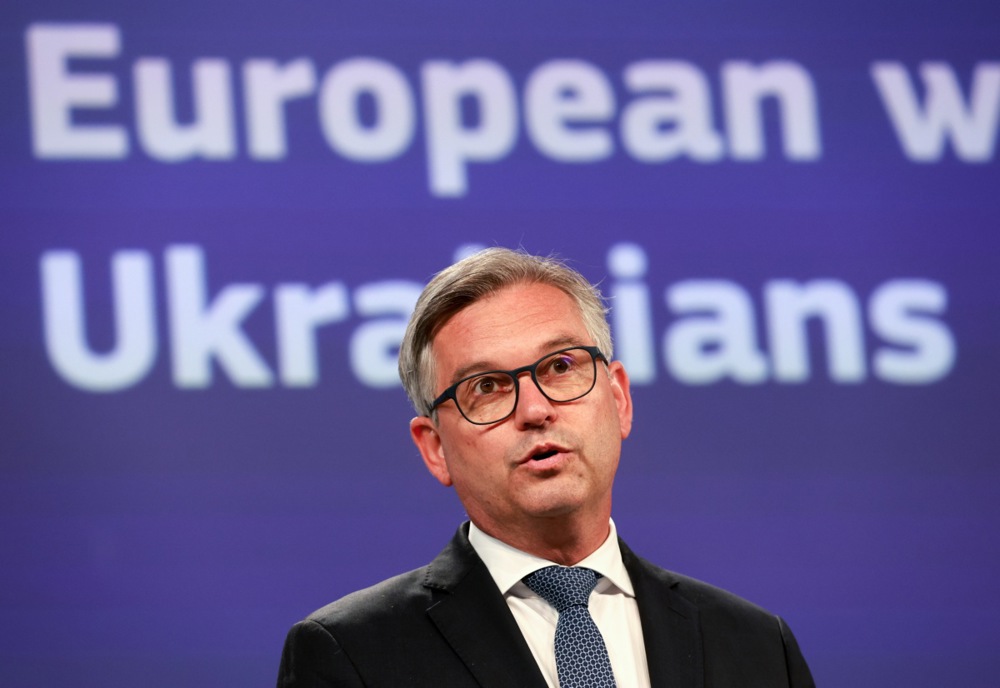
The Council of the EU's meeting on justice and home affairs on June 4 in Luxembourg was supposed to be a technical discussion about extending the temporary protection mechanism. Instead, it recorded a turning point that directly affects more than a million Ukrainian men in the European Union.
"One approach is to exclude men aged 23 to 60 years old, those of draft age. And this is also what the Ukrainians want us to do"
— EU Commissioner for Home Affairs and Migration Magnus Brunner, press conference following the meeting, June 4
According to Brunner, member states have reached consensus on the need to extend the Temporary Protection Directive — but already until 2028 and with significant changes. The key change: men aged 23–60 will no longer receive automatic temporary protection after the new rules are adopted. At the same time, as emphasized at the EU Council, the restrictions will apply only to new applicants — those already in the EU with valid status do not lose their rights.
Who and how many
As of March 2026, 4.33 million Ukrainians have temporary protection in the EU. Among them, 26.6% are men, meaning more than 1.15 million people. The largest numbers are in Germany (1.27 million of all Ukrainians), Poland (961 thousand) and the Czech Republic (380 thousand). Ministers of these countries, according to Brunner, were heard most attentively.
Radio Liberty has found: in preparations for the meeting, Austria — through Interior Minister Gerhard Karner — was the first to publicly formulate the requirement: after March 2027, automatic protection for men should not apply. Poland supported it. However, formally this position aligns with what Kyiv had previously conveyed to partners in private consultations.
What this means in practice
- Men aged 23–60 who have not yet left for the EU or leave after the new rules come into force will not be able to obtain automatic protection with the right to work, healthcare and education.
- For those already in the EU — status is preserved until the expiration of their documents.
- Men aged 18–22 are not subject to the restrictions: under Ukrainian legislation, they received the right to leave from August 2025.
- There is a separate consideration for excluding those who crossed Ukraine's border illegally.
People's Deputy from the "Servant of the People" party and member of the economic development committee Bohdan Kytsak warns: if some EU countries actively cooperate with Kyiv on the issue of returning men, this is not a return but migration within the European Union — people will simply move to countries with a softer regime.
Without a mechanism — no solution
The key gap in the meeting was the absence of any agreed control mechanism or alternative legal status for those excluded from the Directive. The European Commission promises to publish a legislative proposal "in the coming weeks." Until then, neither the men planning to leave nor the receiving countries know the exact conditions.
If the European Commission does not propose an alternative legal pathway for excluded categories in its proposal — for example, a simplified work permit — more than a million men will find themselves in a legal gray zone: formally unprotected, but not deported, which creates the risk of increased illegal employment in the very countries that most loudly demanded changes.





