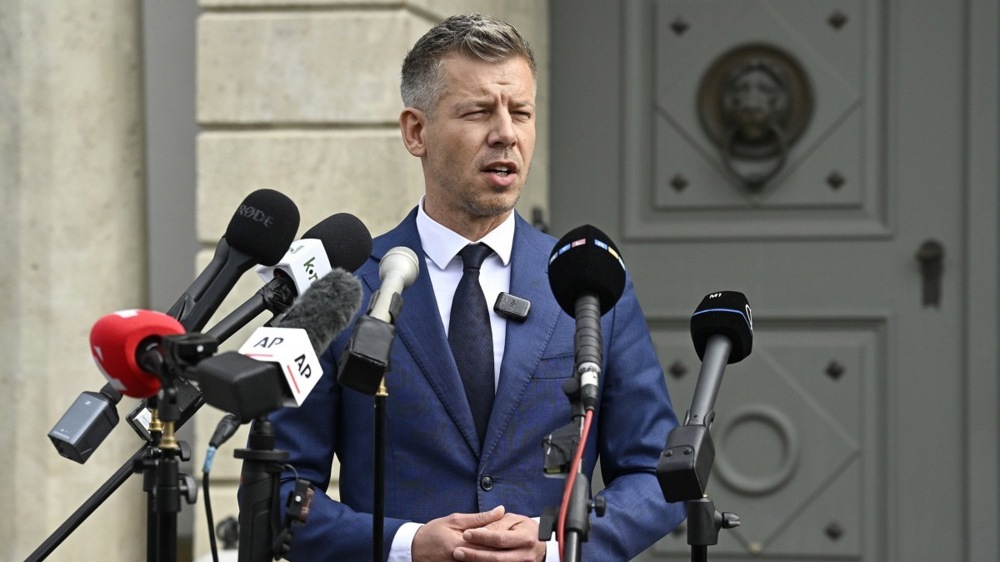
Hungarian Prime Minister Peter Magyar is making his first foreign visit after taking office on May 19-20 — and chose Poland for the trip. The choice is not accidental: Warsaw has been the main critic of Orbán due to his rapprochement with Moscow after 2022.
The route as a message
Magyar started in Krakow, where he visited Wawel Cathedral and met with Archbishop Cardinal Grzegorz Ryś. Next — by train to Warsaw. According to AFP, the prime minister deliberately traveled by rail for part of the journey: to emphasize support for EU-funded projects, in particular the high-speed line between Krakow and Warsaw.
In Warsaw — negotiations with Prime Minister Donald Tusk and a meeting with President Karol Nawrocki. The tour will conclude in Gdańsk, where Magyar will meet with former Polish President and Nobel laureate Lech Wałęsa and lay a wreath at the "Solidarity" memorial.
"The first decisions of the new Hungarian government suggest a possible change in Budapest's policy toward Ukraine, Russia, and the European Union"
Adam Szłapka, spokesman for the Polish government
What's really on the negotiating table
According to Reuters and AFP, key topics include support for Ukraine, energy, and reformatting Central European integration. Magyar proposed merging the Visegrád Group (Hungary, Poland, Czech Republic, Slovakia) with the Austerlitz format (Czech Republic, Slovakia, Austria) — effectively creating a new regional bloc with greater weight in the EU.
However, the diplomatic context is more complex. As noted by Polish analyst Piotr Buras from the European Council on Foreign Relations, Poland has in recent years shifted toward northern and Baltic cooperation — and a return to the Central European vector is not automatic.
A separate issue involves Polish fugitives from justice. Orbán granted political asylum to former Polish Justice Minister Zbigniew Ziobro and his deputy Marcin Romanowski, whom Warsaw accuses of serious crimes. Magyar promised even before the elections to abandon this practice, and both have already left Budapest. However, no official extradition mechanism has been signed.
Orbán's legacy as a starting point
Magyar won the elections in April 2026, ending Viktor Orbán's 16-year rule. Relations between Warsaw and Budapest during this period deteriorated to, according to AFP's assessment, "open hostility" — due to Orbán's blockades of sanctions against Russia, delays in aid to Ukraine, and suspicions of dependence on Moscow in energy matters.
After meetings in Davos in February, Tusk and Magyar have already developed personal contact. But sympathy between leaders is not the same as an agreed position between the two governments on specific issues: weapons quotas for Ukraine, Hungary's participation in EU sanctions regimes, and energy transit.
After Poland, Magyar flies to Vienna — this is the second stop on a tour that he himself positions as a break with Orbanism in foreign policy.
If, as a result of the visit, Warsaw and Budapest announce a joint position on supporting Ukraine — with timelines and instruments, not just declarations — this will be the first real test of whether Hungary has truly changed course, rather than just its rhetoric.





