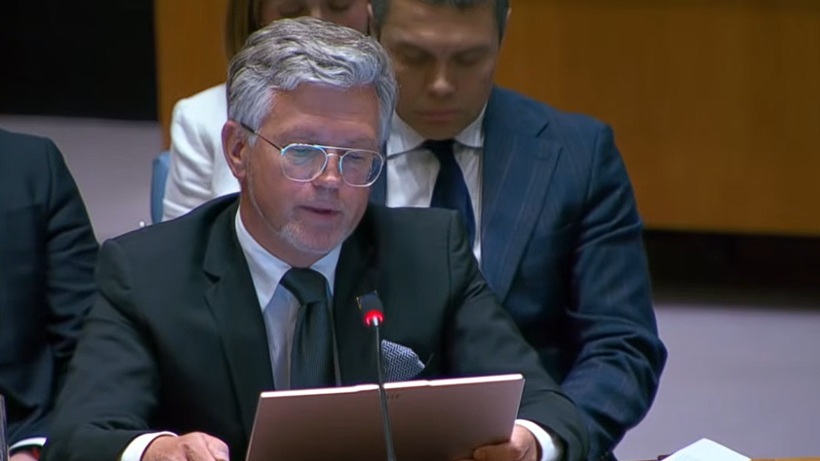
Sergiy Kyslytsia, Ukraine's Permanent Representative to the UN, made a statement that goes beyond conventional diplomatic rhetoric: Russia should be expelled from the United Nations because it illegally occupies a seat that does not belong to it.
The central argument is legal. After the Soviet Union's collapse in 1991, Russia simply declared itself the successor to the Soviet seat on the Security Council. There was no vote, no formal procedure. The General Assembly silently accepted this — and this silence became a precedent that now costs the organization its reputation.
"Russia will continue to spit in our faces — and in the face of the entire world — as long as it is allowed to do so," Kyslytsia stated.
The veto power that Moscow uses as a shield against any decisions regarding its own aggression is based precisely on this unsupported succession. According to Kyslytsia, this is why every resolution on Ukraine is blocked before voting — not because of the strength of arguments, but because of an architectural flaw embedded in 1991.
The problem is not new. Legal experts and diplomats raised the question of the legitimacy of Russian membership after the annexation of Crimea in 2014. The full-scale invasion of 2022 brought the discussion back, but it remains academic — no state has officially challenged Russia's status, either out of fear of a precedent or unwillingness to destabilize the already fragile architecture of international security.
The real conflict here is not between Ukraine and Russia — it is between two understandings of what the UN is. If the organization is a forum of rules, then membership obtained by circumventing procedures undermines its very foundation. If the UN is merely a balance of power among great states, then Kyslytsia's question is simply rhetorical.
The answer to it will determine whether the next act of aggression — anywhere in the world — will be stopped by institutions or blocked again by a single veto.





