On May 26, Zelensky signed a decree: a separate Special Operations Center "North" was given the honorary name "in the name of the Heroes of the UPA." It was timed to coincide with the 10th anniversary of the Special Operations Forces, in the context of — like two other SSO centers that already have historical names (the "East" center — in honor of Prince Sviatoslav the Brave, the "West" center — in honor of Iziaslav Mstislavich).
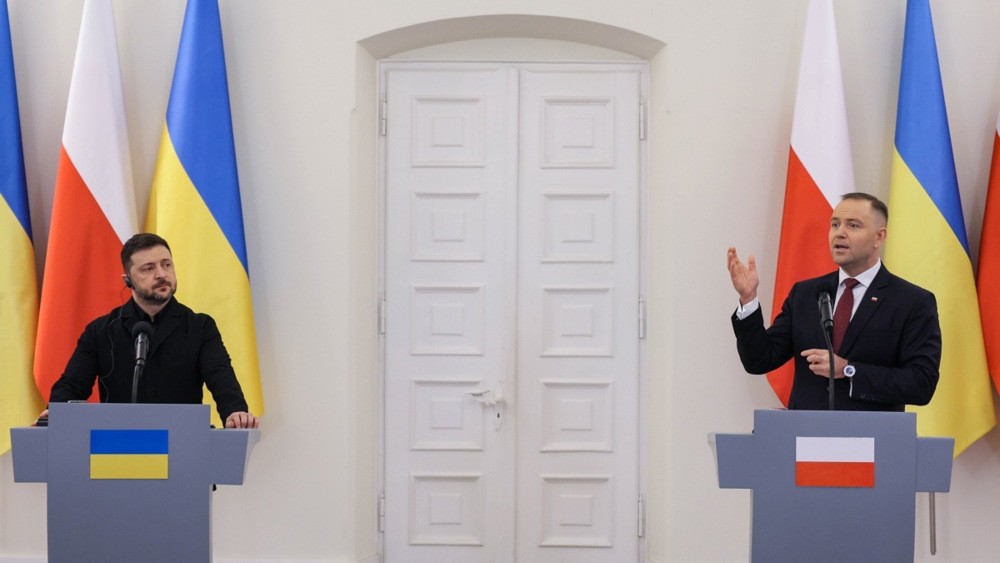
In Warsaw, this was perceived as provocation. Three days later — on May 29 — Polish President Karol Nawrocki announced his intention to strip Zelensky of the "White Eagle" order: the country's highest state decoration, presented to the Ukrainian president in 2023 during Andrzej Duda's presidency.
The Chapter Convened — Decision Postponed
On June 8, a meeting of the Chapter of the "White Eagle" order took place in Poland. Nawrocki participated in it personally. The Chapter formulated its position and presented it to the president. However, the decision has not yet been announced.
"Today the chapter of the Order of the White Eagle convened regarding the order presented to the President of Ukraine Volodymyr Zelensky. The Chapter presented its opinion to the President of the Republic of Poland Karol Nawrocki, who participated in the meeting. The President will make a decision at the appropriate time."
— Rafal Leśkiewicz, spokesman for the Polish president, on social media X
On the air of the Republika television channel, Leśkiewicz clarified: Nawrocki will not make a decision before departing to the USA, where on June 14 he will meet with Donald Trump on the latter's birthday. The spokesman called Zelensky's decision regarding the naming of the unit a "shameful thing" — and at the same time asked to "not give in to pressure" and wait a few more days.
What Warsaw Actually Expects
The formula is simple: Nawrocki will strip the order only if Zelensky cancels the decree. Marcin Przydzac, head of the Bureau of International Policy of the Polish president, stated directly — Zelensky should call Nawrocki and apologize. Leśkiewicz in the same vein: "We will wait a bit longer to see if President Zelensky changes his decision. Diplomacy is guided by the principles of reciprocity."
Kyiv responded quietly, but clearly. A source in the circle of the head of the Presidential Office Kyrylo Budanov told LIGA.net: they do not plan to rename the unit. On June 6, Budanov made an unplanned visit to Warsaw, held negotiations with Polish officials, including Defense Minister Kosiniak-Kamysz. The Polish side offered a compromise — to include in the name only those UPA members who fought against the USSR. Budanov's circle rejected even discussing this option: "The information provided by the Polish press does not correspond to reality."
Who Is Using the Crisis and How
Polish domestic politics gives this scandal an additional dimension. The right-wing camp in Poland — particularly the PiS party and the ultra-right "Confederation" — received a convenient topic on the eve of the election cycle. Vice-Speaker of the Sejm from "Confederation" Krzysztof Bosak called for blocking Ukraine's accession to the EU. In Lublin, the Ukrainian flag was removed from the city hall building.
Prime Minister Donald Tusk found himself caught between two fires. On June 5, he placed responsibility on the Ukrainian side. On June 8, he called on both presidents to "direct and honest" dialogue — a signal that Warsaw understands: full escalation is not in its interest either.
"This scandal has internal Polish causes and is needed by Polish politicians themselves. Neither concessions nor escalation can help Ukraine achieve anything."
— Opinion of Ukrainian experts, Radio Free Europe
The Poles associate the UPA primarily with the Volyn tragedy of 1943–1944, which Poland officially recognized as genocide. In Ukraine, the UPA is a symbol of the struggle for independence against the Nazi and Soviet regimes. Both countries stand by their own positions, and neither has made a mistake in their own internal narrative — this is the essence of the stalemate.
A Precedent That Barely Exists
Throughout Poland's history, only one person has been stripped of the "White Eagle" order — the precedent itself is extraordinary. Nawrocki clearly understands the symbolic weight of such a step: both for bilateral relations and for his own image.
If by the time Nawrocki returns from Washington, Kyiv does not make any gesture — and for now, the Presidential Office has publicly refused to do so — the order will become the first diplomatic trophy of the Polish president in a game with an ally that is simultaneously Poland's main land corridor for weapons supplies.





