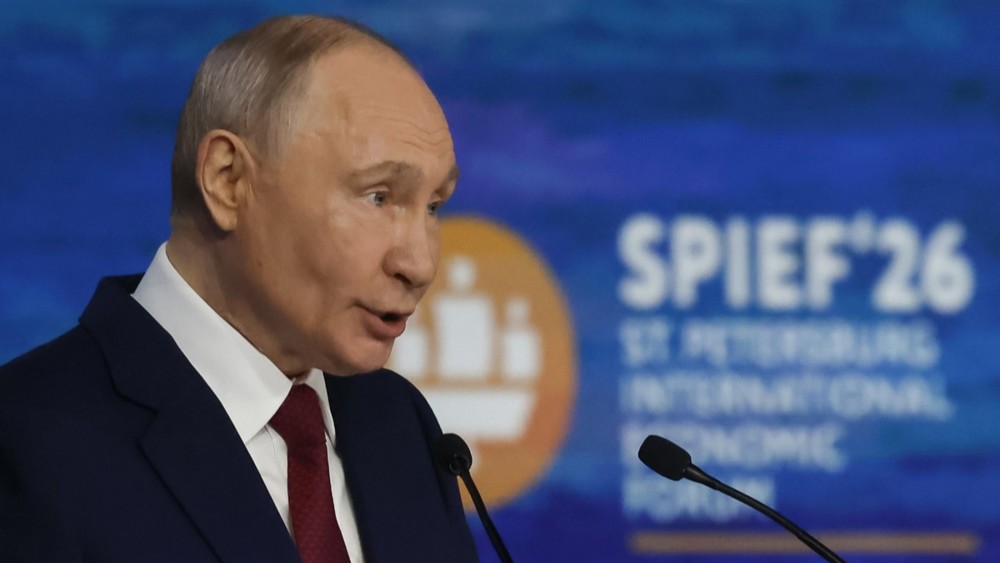
On June 5, between speeches at the St. Petersburg International Economic Forum (SPIEF), Vladimir Putin responded to Zelensky's open letter — and did so in a way that dispelled any illusions about the Kremlin's peaceful intentions.
What exactly did Zelensky propose
On June 4, the President of Ukraine published an open letter to Putin with specific conditions: a personal meeting between the two leaders, a complete ceasefire during negotiations, and a large-scale prisoner exchange using the "all for all" formula. Zelensky also noted that the current frontline would be the starting point for diplomacy, and the US could provide ceasefire monitoring. The letter also contained direct criticism: 26 years in power, dependence on China, inflation, military setbacks. As Foreign Minister Andriy Sybiha noted, the document was officially transmitted to Russia through diplomatic channels and Kyiv expects a substantive response.
Presidential advisor Dmytro Lytvyn explained that the letter had several addressees simultaneously: Putin is the formal recipient, but the text is also addressed to the United States, partners, and a wide audience. According to MP Merezhko, the logic is simple: if Putin refuses even a meeting — his lack of interest in peace becomes obvious to everyone.
How Putin responded at SPIEF
According to Putin, on the morning of June 5, he "briefly skimmed through" the letter — Peskov "thrust it under his nose." This description alone set the tone: a document transmitted through official diplomatic channels was immediately framed by Kremlin propaganda as an insignificant piece of paper.
Putin then drew attention to the fact that Zelensky mentioned his age.
"The main thing is not age, but efficiency and fitness for work"
Putin at SPIEF, June 5, 2025
Then the dictator told a story about some unknown "decent businessman" from his circle who allegedly traveled to Kyiv three weeks ago and conveyed Zelensky's request for a meeting to him. According to Putin's version, he responded: "I never refused." But he immediately explained why meeting "doesn't make sense" — and here the familiar argument about Minsk came into play: they wrote all night, and then Merkel and Hollande themselves admitted it was a "futile story."
"We need agreements not for six months, not for three months, but for a long historical perspective"
Putin, SPIEF
The Kremlin publicly called the letter written with "elements of rudeness" and "designed to make the meeting impossible." The speech ended with a call to occupying troops: "Work, brothers" — after which Putin moved on to the next forum question.
Why this happened now and who benefits
The letter appeared the day after a drone strike on an oil storage facility near St. Petersburg — and just hours before Putin's scheduled speech at SPIEF. Coincidence or not — but the Kremlin had to rewrite its final speech after the letter was published. This in itself is diplomatic pressure.
Meanwhile, American negotiators Steve Witkoff and Jared Kushner have effectively paused their mission due to an American-Iranian conflict. Zelensky publicly proposed a negotiation track independent of Washington — which the New York Times interpreted as a "veiled rebuke of Trump" for separate contacts with Putin in Ankara.
Trump responded neutrally-positively: called both peoples "beautiful," their leaders "very good people," and expressed hope for compromise. He did not express support for Zelensky's specific proposal.
- Zelensky passed the ball to Putin's side: refusal to meet is now a public fact.
- Putin avoided direct discussion of conditions, focusing on rhetoric about "rudeness" and age.
- Peskov repeated the mantra: if you want negotiations — come to Moscow.
- Trump didn't take either side — which for Kyiv means preserving the status quo.
The last direct contact between Zelensky and Putin occurred in 2020. Direct negotiations between the countries took place in Istanbul in spring 2022, and they yielded no results. Putin agreed to personal meetings before, but exclusively to sign an already prepared agreement — that is, after Kyiv accepts Kremlin conditions.
If Trump does exit neutrality mode and publicly support the format of direct negotiations without American mediation — it will become much harder for Putin to explain why he "sees no point" in meeting with the president of the country he has been attacking for the fourth year.





