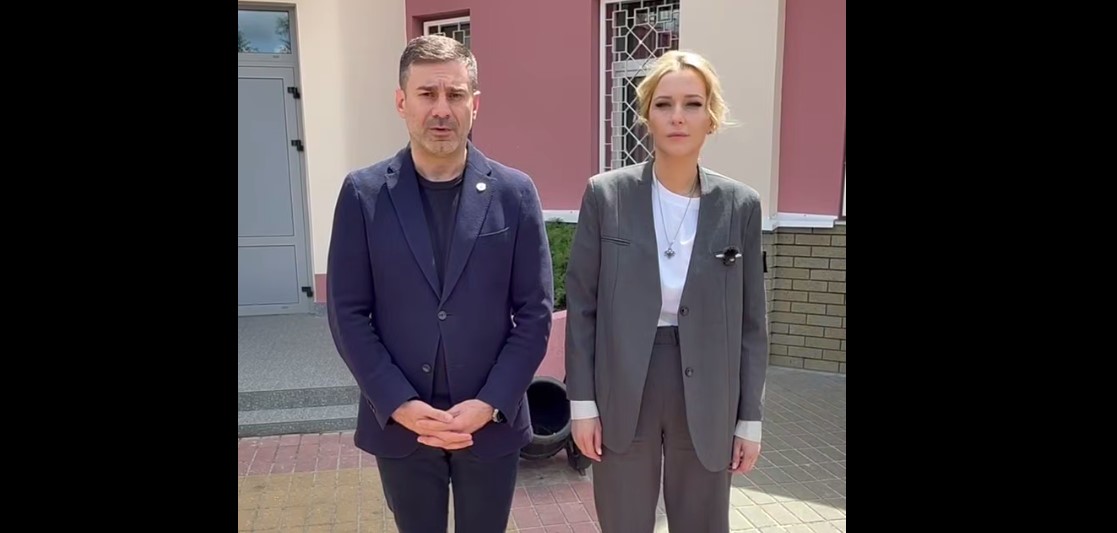
On June 5, on the day of another prisoner exchange, ombudsman Dmytro Lubinets held his first working meeting with Russia's new human rights commissioner Yana Lantratova. The talks lasted over three hours. One of the results, which Lubinets called key: Lantratova agreed to immediately begin monitoring visits to detention facilities where, according to Ukrainian data, the situation is worst.
What the word "monitoring" actually means
Russia detains Ukrainians in over 300 locations — including occupied territories and Belarus. For comparison: Ukraine has five camps and five temporary detention facilities with access granted to the ICRC, UN, and other organizations. There has been no systematic access to any Russian facilities. When the ICRC does receive permission — these are mostly "showcase" facilities, not those from which reports of abuse originate.
"We never send Russians to visit Russian detention facilities. We never send Ukrainians to visit Ukrainian ones."
ICRC representative on the principle of monitoring neutrality
According to UN monitoring mission data, 96% of released Ukrainian prisoners of war reported torture or cruel treatment. An independent OSCE expert mission report from 2025 stated: torture is a widespread and systematic practice that is tolerated or coordinated at the level of the Russian state.
What changed with the change of ombudsman
Lantratova replaced Tatyana Moskalkova, who held the position since 2016. Lubinets stated that the parties decided to "start with a clean slate." Among the agreements are verification of all lists of prisoners of war and civilian hostages from 2014 and 2022, expansion of letter and parcel transfers, work on family reunification and establishing the fate of the missing, and tracing.
On the same day, as a practical result of the meeting, five citizens returned to Ukraine — among them a 74-year-old woman deported from Mariupol.
What the agreements lack
None of the announced agreements contains a mechanism for verifying the commitments themselves: no deadlines for first visits, no independent body to record compliance, no consequences in case of breach. The ICRC has conducted "dialogue with Moscow" since the start of the full-scale invasion, yet the level of access to detention facilities has not become systematic.
- Verification of lists — agreed, but without a completion deadline
- Monitoring visits — "immediately," without a schedule and independent observers
- Prisoner correspondence — to be expanded, but currently occurs only from individual facilities
Lantratova is a new person in the position, but the institution she heads is subordinate to the State Duma and is not an independent human rights structure by any international standard. The question is not whether the new ombudsman has good intentions, but whether she has leverage over the Federal Penitentiary Service and military intelligence, which actually control detention facilities.
If within two months no monitoring visit to facilities with the worst conditions takes place — this will not be a diplomatic failure, but an indicator that the "clean slate" remained blank.





